
 Worksheets
MRE_Yr 13 Organic Revision
Total questions: 73
Worksheet time: 2hrs 26mins
A homologous series is a family of organic compounds with
similar chemical properties and same general formula as found on Table Q
different chemical properties and different general formula as found on Table P
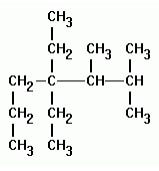
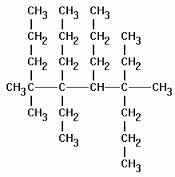
Which is the structures with IUPAC nomenclature
2,2,4-trimethylpentane
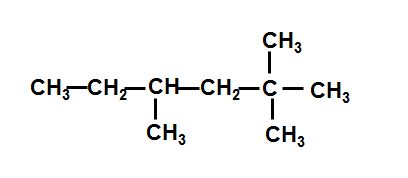
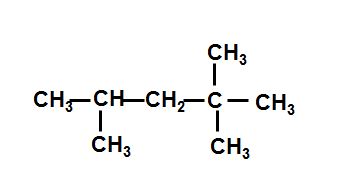
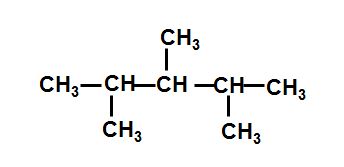
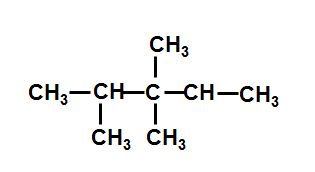

Which the CORRECT reagent and condition for A
HBr
Cl2, H2O
H2, Ni
HBr, H2O2

Deduce the structure for C


Nucleophiles are
electron pair donors that attack regions of high electron density.
electron pair donors that attack regions of low electron density.
electron pair acceptors that attack regions of high electron density.
electron pair acceptors that attack regions of low electron density.
Which of these compounds is a secondary halogenoalkane?
CH3CH(OH)CH3
CH3CCl(CH )CH3
CH3CHClCH3
CH3CH2 CH2 Cl
Which one of the following will undergo nucleophilic substitution with sodium hydroxide (aq)?
ethene
ethane
bromoethane
cyclopentane
what is the mechanism of the reaction when sodium hydroxide in ethanolic condition reacts with cloroethane under reflux?
nucleophilic substitution
electrophilic addition
free radical substitution
elimination
Which of the following is not the product of elimination reaction between ethanolic sodium hydroxide and chloroethane?
sodium chloride
water
ethene
hydrogen chloride gas
Why does the reaction
C2H5X + OH- → C2H5OH + X-
occur faster if X is iodine instead of Bromine?
the I- ion is a stronger nucleophile than the Br- ion.
the I- ion is less hydrated in water than the Br- ion
C-Br bond is more polar than the C-I bond
the C-Br bond is stronger than the C-I bond
What type of organic product is formed from the oxidation of a secondary alcohol?
Carboxylic acid
Aldehyde
Ketone
Alkene
Fehling's reagent shows the following colour change when added to an aldehyde
Colourless to silver mirror
Brick red to blue
Stays blue
Blue to brick red
Dehydration of an alcohol gives
an aldehyde
an alkane
an alkene
a ketone
Fehling's reagent shows the following colour change when added to a ketone
Blue to brick red
Colourless to silver mirror
Stays blue
Silver to colourless
Oxidising reagents are represented by the following symbol in equations
OH-
O
[O]
Ox.
What charge do the orange potassium dichromate ions have?
+3
-6
+6
-3
When reacted with a strong reducing agent, aldehydes turn into
primary alcohols
secondary alcohols
ketones
carboxylic acids

Classify the compound based on the functional group present.
aldehyde
carboxylic acid
ketone
alcohol
The class of compounds containing C=O are called
(a)
How could you prepare this compound: (propanal)?
Reduce
butanoic acid
Oxidize
propan-2-ol
Oxidize
propan-2-one
Oxidize
propan-1-ol
Two physical properties of aldehydes are:
They can form hydrogen bonds
Higher boiling points than hydrocarbons and alcohols of similar molecular weight.
Higher boiling points than hydrocarbons; but lower than alcohols of similar molecular weights.
Aldehydes with high molecular weight are soluble in water.

What will be formed if butanone is reacted with LiAlH4 in dry ether?
Butanoic acid
Butan-1-ol
Butan-2-ol
Butanal
What is the name of the mechanism when KCN (in acidic conditions) reacts with propanal?
Free radical substitution
Nucleophilic substitution
Nucleophilic addition
Electrophilic addition
Boiling points of carboxylic acids is higher than those of corresponding alcohols.
Is the above statement True or False?
True
False

Which is the correct IUPAC name of the following compound?
A. 2-hydroxybutanoic acid
B. 3-hydroxybutanoic acid
C. 2-hydroxypropanoic acid
D. 1-carboxypropan-2-ol
Reaction of a carboxylic acid and sodium hydroxide will produce:
a substituted ammonium salt
a substituted carbonate salt
a substituted water
a substituted carboxylates
What is the suffix for carboxylic acids?
-ic acid
-oic acid
-oic
The reaction between HCOOH and CH3COOH produces an ester called methyl methanoate.
True
False
The molecular formula of pentanoic acid is
C5H11O2
C5H9O2
C5H10O2
C5H12O2

What is the correct IUPAC name for the Carboxylic Acid shown?
1,1,1-trimethylbutanoic acid
1,1,1-trimethylpentanoic acid
4,4-dimethylbutanoic acid
4,4-dimethylpentanoic acid

The diagram shows the partial structure of Terylene. From which pair of compounds is it made?


What is the partial structure of the polymer formed by the polymerisation of propene, CH3CH=CH2?


Which of the following is not a primary amine?
Diethylamine
3-Hexylamine
Cyclohexylamine
1-Butylamine
Which statement about the reaction of 1-bromobutane and NH3 is incorrect?
The reaction may lead to the formation of a quaternary ammonium salt
The reaction initially gives a primary amine
The reaction is a nucleophilic substitution
The reaction specifically gives a primary amine
Which of the following amines do you expect to have the highest boiling point?
Triethyl amine
methyl amine
dimethyl amine
diethyl amine
Which of the following compound is commonly used as cationic surfactant in fabric softening
Quaternary ammonium salt
tertiary amine
primary amine
amide
Which one among the following is a strongest base
methyl amine
Ammonia
Phenyl amine

N-ethyl-N-methylpropanamide
N-ethyl-N-methylbutanamide
N-methyl-N-propylethanamide
N,N-dimethylpropanamide

This compound is an example of
a primary amine
a secondary amine
a tertiary amine
cannot be classified as a primary, secondary or tertiary amine
What is the reagent required to carry out the following conversion?
Hexanamide --> hexanamine
NaOH
Dilute HCl
HNO2
LiAlH4, ether
What is the reagent required to carry out the following conversion?
Methylamine --> N-methylethanamide
NaOH
Methanoyl chloride
HNO2
Ethanoyl chloride
What is the basis for classifying amines as primary, secondary, or tertiary?
the number of carbon atoms bonded directly to the nitrogen atom
the number of carbon atoms bonded to a carbon bearing nitrogen
the number of nitrogen atoms present
the number of hydrogen atoms present
Which one is a neutral amino acid with non-polar side chain?


Which one is a basic amino acid?


Which one has more than one chiral center?


Are these statements about amino acids true or false?
In the solid state amino acids exists as zwitterions
true
false
Are these statements about amino acids true or false?
Amino acids undergo addition polymerisation to form polypeptides
true
false
Are these statements about amino acids true or false?
Peptide links can undergo hydrolysis by reflux with hydrochloric acid
true
false
What's the correct definition of these keywords?
zwitterions
Amino acid molecules with a negative charge on the amine group in the form of COO- and a positive charge on the carboxylic acid group in the form of NH3+
Amino acid molecules with a positive charge on the amine group in the
form of NH3+ and a negative charge on the carboxylic acid group in the
form of COO-
Amino acid molecules with a negative charge on the amine group in the form of NH3- and a positive charge on the carboxylic acid group in the form of COO+
What's the correct definition of these keywords?
polyamide
An addition polymer formed from a dicarboxylic acid and a diol
An condensation polymer formed from a dicarboxylic acid and a diol
An condensation polymer formed from a dicarboxylic acid and a diamine
Which of these structures is a zwitterion?


The structure below is the amino acid valine. What is its structure when in a solution of high pH?


The stucture below is the amino acid glycine. What is its structure when two glycine molecules form a peptide bond?


2-Methylbutylamine can be synthesised from an alkene.
What is the identity of the alkene?
But-2-ene
Methylpropene
2-Methylbut-1-ene
2-Methylbut-2-ene
Which one of the following pairs of reagents reacts to form an organic product that shows only 2 peaks in its proton n.m.r. spectrum?
butan-2-ol and acidified potassium dichromate(VI)
ethanoyl chloride and methanol
propanoic acid and ethanol in the presence of concentrated sulphuric acid
ethene and hydrogen in the presence of nickel
Which one of the following pairs reacts to form an organic product with only 2 singlets in its proton n.m.r. spectrum?
ethene and bromine
propan-2-ol and acidified potassium dichromate(VI)
ethanol and concentrated sulphuric acid
epoxyethane and water in the presence of dilute sulphuric acid

Which one of the following types of reaction mechanism is not involved in the above sequence?
free-radical substitution
nucleophilic substitution
elimination
nucleophilic addition-elimination(

Refer to the following reaction sequence:
Which one of the following types of reaction is not involved in the above sequence?
acylation
oxidation
reduction
dehydration

How many carbon environments?2
1
2
4
6

How many carbon environments?
1
2
3
4

How many carbon environments?
2
3
4
5


Which of the following would not give singlet signal in NMR?
Ethane
Dimethylether
Diethylether
Acetone
How many NMR signals would be given by the compound (CH3)2CHCH2CH3
1
2
3
4

If the molecular ion, M+ m/z = 136 and M+2+ at m/z = 138 of approximately equal intensity, which molecule is it?
C6H13OCl
C10H16
C9H12O
C4H9Br
The amount of energy in infrared light corresponds to:
the amount of energy needed to promote one electron from a
bonding to an antibonding molecular orbital
the amount of energy needed to increase certain molecular
motions, such as bond vibrations, in organic molecules
the amount of energy needed to strip a molecule of one electron to generate a cation radical
the amount of energy needed to "flip" the spin of a 13C or 1H nucleus
Examining the infrared spectrum of a compound allows us to:
determine the types of functional groups present in the compound
determine the nature of the conjugated pi electron system in the compound
determine the molecular weight of the compound
determine the carbon-hydrogen framework of the compound

