wayground logo

Free Printable Worksheets

NEW

Font size

S
M
L
XL
Worksheets

Atoms Review

Total questions: 70

Worksheet time: 2hrs 35mins
Name
Class
Date
1.
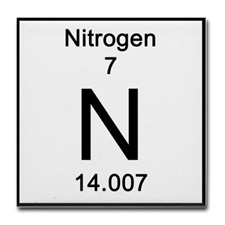
What is the number of protons that the element in this image contain?
a)
14
b)
7
c)
15
d)
18
2.
The positive particles of an atom are 
a)
Electrons 
b)
Positrons 
c)
Neutrons 
d)
Protons 
3.
The central region of an atom where its neutrons and protons are is its _______.
a)
Nucleus 
b)
Electron cloud
c)
Core 
d)
Center 
4.
An atom with atomic number 6 would have how many protons?
a)
6
b)
12
c)
3
d)
Cannot be determined 
5.

Particles in an atom that are large and neutral are ______.

a)

Negatrons

b)

Electrons

c)

Neutrons

d)

Protons

6.

An atom's overall charge is _____.

a)

Positive

b)

Depends on its mood

c)

Neutral

d)

Negative

7.
Which of the following is a negatively charged subatomic particle?
a)
Electron
b)
Proton
c)
Neutron
d)
Quark
8.
The particles that are found in the nucleus of an atom are _____.
a)
Neutrons and electrons
b)
Electrons only
c)
Protons and neutrons
d)
Protons and electrons
9.

The atomic number of an elements is the total number of which particles in the nucleus?

a)

Neutrons

b)

Protons

c)

Electrons

d)

Protons and neutrons

10.
Where are electrons of an atom found?
a)
Nucleus
b)
Electron Cloud
c)
Some are in the nucleus and some in the electron cloud.
d)
They are moving everywhere.
11.
Most of the mass in an atom is concentrated in the _____.
a)
Electrons
b)
Nucleus
c)
Protons
d)
Empty space
12.
Which statement best describes an electron?
a)
Smaller mass than a proton and a negative charge
b)
Smaller mass than a proton and a positive charge
c)
Greater mass than a proton and a negative charge
d)
Greater mass than a proton and a positive charge
13.

If an atom has 12 protons, which of the following must it also have to be considered a neutral atom?

a)

12 neutrons

b)

12 electrons

c)

12 protons

d)

24 protons and neutrons

14.
If an atom has 10 protons, 10 neutrons, and 10 electrons, what is the mass of the atom?
a)
10
b)
20
c)
30
15.

What charge does an atom have when it GAINS electrons?

a)

Positive

b)

Negative

c)

Neutral

16.

When an atom loses an electron, it becomes a(n) _____________ ion.

a)

anion

b)

cation

c)

isotope

17.

If the mass number of this chlorine atom is 35, how many neutrons does it have?

a)

17

b)

18

c)

19

d)

can't be determined

18.

What is the atomic number of this atom shown in the Bohr model?

a)

11

b)

12

c)

13

d)

can't be determined

19.

What is the mass number of the atom shown in the Bohr model?

a)

11

b)

12

c)

23

d)

Can't be determined

20.

Is this atom an ion? If so what would it's charge be?

a)

Yes, 1-

b)

No it is neutral

c)

Yes, 1+

d)

Can't be determined

21.

Two atoms of the same element but with different mass numbers are called________

a)

ions

b)

isotopes

c)

variables

d)

outliers

22.

What is the mass number of carbon-13?

a)

6

b)

7

c)

12

d)

13

23.

What is the atomic number of carbon-13?

a)

6

b)

7

c)

12

d)

13

24.

How many protons are in an atom of carbon-13?

a)

6

b)

7

c)

12

d)

13

25.

How many neutrons are in an atom of carbon-13?

a)

6

b)

7

c)

12

d)

13

26.

How many electrons are in a Ca2+ ion?

a)

18

b)

20

c)

22

d)

not enough information

27.

How many electrons are in a N3- ion?

a)

4

b)

7

c)

10

d)

not enough information

28.

Chlorine exists as two isotopes (35Cl & 37Cl)? Which is more common?

a)

chlorine-35

b)

chlorine-37

c)

neither

29.

Boron has two naturally occurring isotopes: boron-10 and boron-11. What is the average atomic mass for boron?

a)

10

b)

10.5

c)

10.81

d)

11

30.
The first person to ever talk about an atom was
a)
Democritus
b)
Rutherford
c)
Dalton
31.
How did Rutherford discover the proton?
a)
Cathode tube ray experiment
b)
Gold Foil Experiment
c)
Planetary Model
d)
Plum Pudding Model
32.
What scientist is best known for his "Plum Pudding" model of the atom?
a)
J.J. Tomson
b)
Ernest Rutherford
c)
John Dalton
d)
Democritus
33.
J.J. Thomson provided evidence that an atom...
a)
is the smallest particle of matter
b)
contains negatively charged particles
c)
has an overall negative charge
d)
has an overall positive charge
34.
Rutherford's gold foil experiment provided evidence that...
a)
negative and positive charges are spread evenly throughout the atom.
b)
alpha particles have a positive charge.
c)
gold is not a dense as previously thought.
d)
there is a dense positively charged nucleus at the center of an atom.
35.
Who came up with this model of an atom?
a)
J.J. Thompson
b)
Ernest Rutherford
c)
Neils Bohr
d)
James Chadwick
36.
What is the noble gas shorthand electron for Sulfur atom?
a)
[Ar] 3p4
b)
[He] 3s23p4
c)
[Ne] 3s23p4
d)
[Na] 3s23p4
37.
What is the electron configuration for this atom?
a)
1s22s22p6
b)
1s22s22p5
c)
1s22s22p3
d)
2s22p3
38.
What atom matches this electron configuration?
1s22s22p63s2
a)
Neon
b)
Magnesium
c)
Aluminum
d)
Potassium
39.
Which element is depicted from this orbital diagram
a)
Fluorine
b)
Neon
c)
Chlorine
d)
Argon
40.
Which is associated with more energy? 
a)
2p
b)
2s
c)
3p
d)
1s
41.
Which element is pictured?
a)
neon
b)
fluorine
c)
magnesium
d)
argon
42.
How many electron can be found in a s orbital?
a)
2
b)
3
c)
4
d)
1
43.
How many electron can be found in a p orbital?
a)
2
b)
3
c)
4
d)
6
44.
What is the electronic configuration of sodium?
a)
1s22s22p63s1
b)
[Ne]3s1
c)
1s22s22p7
d)
Both A and B are correct
45.
What is the electronic configuration of iron?
a)
1s22s22p63s23p64s23d6
b)
1s22s22p63s23p63d8
c)
1s22p63s23p64s23d6
d)
1s22s22p63s23p64s13d6
46.
What is the shape of s orbitals?
a)
Dumbbell shaped
b)
Peanut shaped
c)
Spherical shaped
d)
Hybrid structure
47.
What is the maximum number of electrons that can be on the p sublevel?
a)
6
b)
3
c)
2
d)
4
48.
Electrons occupy orbitals of lowest energy first is part of what electron configuration rule?
a)
Hund’s Rule
b)
Aufbau Principle
c)
Pauli Exclusion Principle
49.
How many orbitals are there in the "d" sublevel?
a)
1
b)
3
c)
5
d)
7
50.
How many electrons can the f sublevel hold?
a)
14
b)
10
c)
6
d)
4
51.
The quantum number "n" represents:
a)
electron spin
b)
orbital
c)
sublevel
d)
main energy level
52.
What is the Pauli Exclusion Principle?
a)
An atomic orbital can only hold a maximum of 2 electrons, each with opposite spins
b)
An atomic orbital can hold a minimum of 6 electrons, each with opposite spins
c)
An atomic orbital can hold a maximum of 6 electrons, each with the same spin
d)
An atomic orbital can hold a minimum of 2 electrons, each with opposite spins
53.
Hund’s rule states…
a)
Atomic orbitals have opposite spins and 2 electrons each
b)
Electrons occupy orbitals of highest energy first and energy level changes as you go up
c)
Electrons occupy orbitals of lowest energy first, starting with 1s
d)
Electrons occupy orbitals of equal energy, one electron enters EACH orbital ONE AT A TIME until orbitals of the entire energy level have one electron with the SAME SPIN.
54.

What are the orbitals for n=4

a)

s

b)

s, p

c)

s, p, d

d)

s, p, d, f

55.
Which of the following statements is true about the 3s and the 4s sublevels?
a)
These sublevels have the same energy
b)
These sublevels are the same distance from the nucleus
c)
These sublevels hold different amounts of electrons
d)
These sublevels have the same shape
56.

What part of the atom gains energy from the flame and then loses it in the form of light?

a)

Proton

b)

Neutron

c)

Nucleus

d)

Electrons

57.
A wave with a large wavelength will have a ______ frequency and _____ energy
a)
high, low
b)
high, high
c)
low, high
d)
low, low
58.
Select the correct order increasing energy of waves on the electromagnetic spectrum.
a)
Radio, Micro, Infra, Visible, Ultra, X-ray, Gamma
b)
Gamma, X-ray, Ultra, Vis, Infra, Micro, Radio
c)
Vis, Micro, Infra, Ultra, X-ray, Gamma, Radio
d)
Micro, Radio, Vis, Infra, Ultra, X-ray, Gamma
59.
The _______________ determines the color of visible light. 
a)
wavelength
b)
speed
c)
amplitude
d)
light
60.
Which color has the least amount of energy?
a)
red
b)
orange
c)
green
d)
blue
61.
All electromagnetic waves have the same...
a)
frequency
b)
speed
c)
wavelength
d)
energy
62.
Emission of light from an atom occurs when an electron
a)
drops from a higher to a lower energy level.
b)
   jumps from a lower to a higher energy level.   
c)
   moves within its atomic orbital.
d)
falls into the nucleus.
63.

λ and ν are:

a)

inversely proportional

b)

directly proportional

c)

they are proportional in 10 different ways

d)

they are proportional in 20 differentways

64.

A hydrogen discharge tube will produce a(n)...

a)

continuous spectrum just like the sun

b)

absorption spectrum

c)

line spectrum

d)

no spectrum

65.

What is the wavelength (λ) of electromagnetic radiation with a frequency (ν) of 9.01 x 10¹⁵ s-1 ?

a)

3.32 x 10⁻⁸ m

b)

6.66 x 10⁻⁷ m

c)

4.13 x 10⁻⁹ m

d)

1.88 x 10¹⁵ m

66.

When white light (like sunlight) passes through a prism we see a(n)...

a)

Absorbance Spectra

b)

Emission Spectra

c)

Continuous Spectra

67.

Every element has its own unique line spectrum.

a)

True

b)

False

68.
Which drawing represents the process by which an emission line is formed?
a)
A
b)
B
c)
C
d)
D
69.
Emission of light from an atom occurs when an electron
a)
drops from a higher to a lower energy level.
b)
   jumps from a lower to a higher energy level.   
c)
   moves within its atomic orbital.
d)
falls into the nucleus.
70.
What is the number of wave cycles that pass a given point per unit of time
a)
crest
b)
wavelength
c)
frequency
d)
amplitude