
NEW
Font size
 Worksheets
Evolution
Total questions: 36
Worksheet time: 24mins


What is the process in which populations CHANGE gradually over time?
evolution
species
variation
competition

What do we call structures that no longer perform their original function?
Natural Selection
Analogous Structure
Vestigial Structure
Homologous Structure
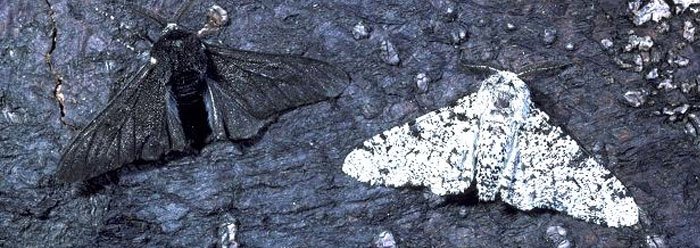
According to natural selection, light colored tree trunks would favor
light colored moths
dark colored moths
red colored moths
red and light colored moths


This picture is showing
endosymbiotic theory: prokaryotic cells eventually becoming the organelles in eukaryotic cells
endosymbiotic theory: eukaryotic cells eventually becoming the organelles in prokaryotic cells
cell theory: cells can consume other cells to obtain energy
germ theory: microorganisms are the causes of many diseases in the animal kingdom
What is it called when all of the organisms of a species completely die out?
Extinction
Adaptation
Mutations
Fossilization
Who proposed the theory that evolution happens as a result of natural selection?
Charles Darwin
Robert Hooke
Matthias Schleiden
James Watson
The preserved remains or physical evidence of an organism that lived in the past are called ___.
fossils
evolutionary features
variations
mutations
On a trip to the mountains, students observed seashells on the top and sides of a cliff. What is the most reasonable explanation for this discovery?
The rocks that make up this mountain were once under water.
The seashells were washed ashore during violent storms.
The seashells were carried to the top of the mountain by the forces of nature.
People carried the seashells to the top of the mountains.

If the entire insect population migrated out of the spider's habitat, which spider would most likely become extinct if it could not adapt to this change?
2
1
3
4

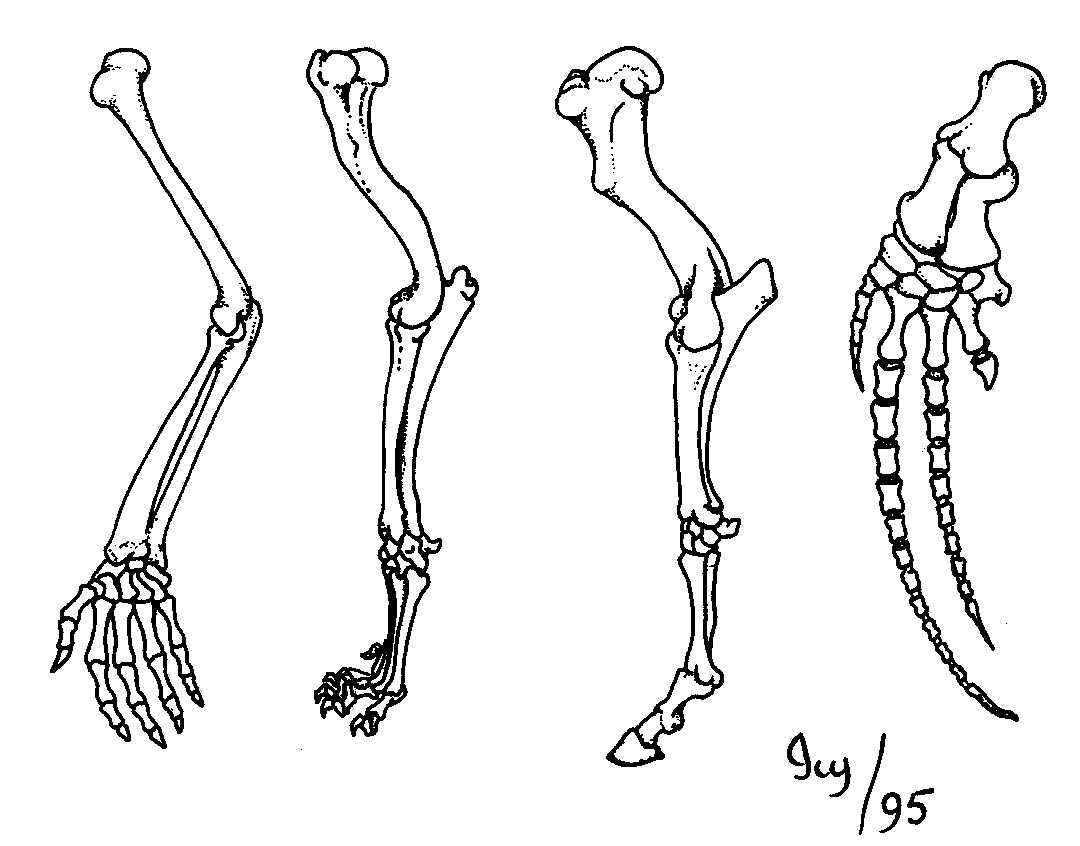
All the organisms shown above belong to the Phylum Chordata. The structural similarity in the organisms suggests that
the humerus is attached to the skeleton by immovable joints
the humerus is the same size in all chordates
only animals that walk on 4 legs need the humerus
chordates have common ancestors

The skulls below belong to different animals. Which skull belongs to the animal that is probably unrelated to the other three?
F
G
H
J

Which statement is best supported by the phylogenetic tree shown?
Species V is still alive today and is the oldest species.
Species W is still developing from a prior species.
Species W first came into existence 10 million years ago.
Species X, Y, and Z became extinct 20 million years ago.

Analyze the seashell found in the white layer. Which statement is true of the rock layer that contains this fossil?
It could also contain a fossil from the bottom layer.
It is older than the layers below it.
It is younger than the layers above it.
It is older than the layers above it.
Using the half-lives of radioactive isotopes to determine the age of a sample is referred to as
Carbon dating
Absolute dating (radiometric dating)
Relative dating (comparative dating)
Speed dating


What
type
of structure?
Homologous
Analogous
Embryological
Vestigial

What
type
of structure?
Homologous
Analogous
Embryological
Vestigial

What
type
of structure?
Homologous
Analogous
Embryological
Vestigial

Which layer contains the oldest fossil?
Layer 1
Layer 2
Layer 3
Layer 4

The trend for a certain type of fish is that over time, the species increases in the number of teeth they have. A new fossil is found to have 34 teeth. Use the chart to estimate the age of this fossil.
20 million years old
30 million years old
70 million years old
100 million years old
During natural selection, the organisms with the best adaptations..
Are better adapted to survive
Reproduce
Pass on their genes
All of the above
Ability of bacteria or to resist the effects of an antibiotic
natural selection
photosynthesis
symbiosis
antibiotic resistance

