wayground logo

Free Printable Worksheets

Font size

S
M
L
XL
Worksheets

Physical Science SOL Review

Total questions: 245

Worksheet time: 3hrs 24mins

Name
Class
Date
1.

What change will most likely increase the strength of a magnetic field produced by an electromagnet?

a)

reduce the number of turns of the coil

b)

switch the direction in which the battery is connected

c)

remove the iron nail

d)

add a battery

2.

A group of campers travels to a cabin which has no electrical power. In order to provide the power needed, which device would be appropriate?

a)

a resistor

b)

an insulator

c)

a generator

d)

a voltmeter

3.

Laundry in a clothes dryer often becomes charged with static electricity while drying. Which of these best explains why this happens?

a)

Short circuits in the dryer charge the laundry

b)

clothes with metal pieces conduct electricity in the dryer

c)

electrons are transferred as clothes rub against each other in the dryer

d)

heat from the dryer charges the air and prduces lightning

4.

Which of these is an example of static electricity?

a)

a dry-cell battery connected to wires to light a lightbulb

b)

a balloon sticks to a wall after it is rubbed with a piece of wool

c)

a magnet sticks to the refrigerator

d)

a light switch that is turned on powers a ceiling fan

5.

Which is the result of using a more powerful motor to run an elevator

a)

the same amount of work is done in less time

b)

less work in done in the same amount of time

c)

the same amount of time is needed to move the same distance

d)

a longer time is needed to move a shorter distance

6.

To complete a project, 200,000 Joules of work are needed. The time taken to complete the project is 20 seconds. How much power is needed?

P= W/T

a)

.0001 J/s

b)

10,000 J/s

c)

200,020 J/s

d)

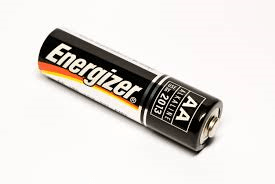
1,000,000 J/s

7.
The tendency of an object to resist a change in its motion
a)
acceleration
b)
inertia
c)
mass
d)
frame of reference
8.
What kind(s) of objects have inertia?
a)
all objects with mass
b)
only objects at rest
c)
only objects in motion
d)
only objects whose motion is being changed
9.
What is Newton's First Law
a)
F=ma
b)
Every action has an equal and opposite reaction
c)
An object at rest stays at rest, an object in motion stays in motion. 
d)
Friction 
10.
If one object has twice as much mass as another object, it also has twice as much...
a)
inertia
b)
velocity
c)
acceleration due to gravity
d)
DO NOT PUSH ME
11.
Which type of force(s) will cause a change in an object's motion?
a)
gravity
b)
zero net force
c)
balanced forces
d)
unbalanced forces
12.
You push on a car and it does not move.  What is true about the inertia?
a)
The inertia is changing
b)
The inertia of the car is too great 
c)
The inertia of the person is equal to the car
d)
There is not inertia because of no movement
13.
Why is the net force 0 in the image?
a)
Because the elephants are the same size
b)
Because they are both pulling the same amount of force in opposite directions
c)
Because they are elephants
d)
Because they are pulling away from each other.
14.
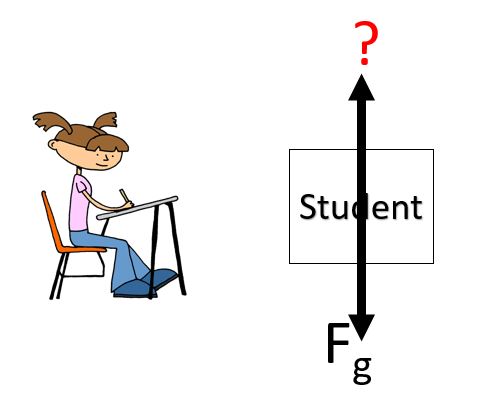
Name the missing force....
a)
weight force
b)
normal force
c)
frictional force
d)
tension force
15.

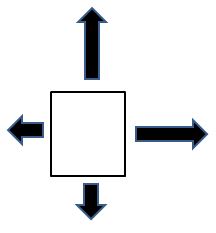
This object would be moving (pick all that are correct):

a)

up

b)

down

c)

left

d)

right

16.

What do waves carry and transfer?

a)

Nothing

b)

Only Sound

c)

Only sunlight

d)

Energy

17.

A wave can not travel without a ____________.

a)

Light

b)

Medium

c)

Sound

18.

A medium is _________.

a)

a sound wave

b)

a light beam

c)

a olid, liquid or gas.

19.

The bottom part of the wave is called trough.

a)

True

b)

False

20.

The bottom part of the wave is called trough.

a)

True

b)

False

21.

The highest part of the wave is called the _______________.

a)

Amplitude

b)

Wavelength

c)

Trough

d)

Crest

22.

_________________________ is the distance between a point on one wave and the identical point of the next wave.

a)

Amplitude

b)

Frequency

c)

Crest

d)

Wavelength

23.

Which wave has the greatest wavelength?

a)

Red Wave

b)

Orange Wave

c)

Green Wave

d)

Purple Wave

24.

________is the distance between the crest and the medium.

a)

Crest

b)

Trough

c)

Amplitude

d)

Wavelength

25.

When the amplitude of a wave increases _______.

a)

the sound gets louder

b)

the sound gets lower

c)

the sound doesn't change

26.

When the amplitude of a wave decreases_______.

a)

the sound gets louder

b)

the sound gets lower

c)

the sound doesn't change

27.

Can you make a sound in space?

a)

No

b)

Yes

c)

Only if you yell really loud

d)

Maybe

28.

As the frequency of the wave decreases, the wave's

a)

period decreases

b)

amplidude increases

c)

speed decreases

d)

wavelength increases

29.

Which wavelength can humans see?

a)

Microwaves

b)

Radio waves

c)

Visible light

d)

Gamma rays

30.

What kind of wavelength does radar use?

a)

Radio waves

b)

Microwaves

c)

Ultraviolet

d)

X-Rays

31.

Which has the longest wavelength?

a)

Gamma Rays

b)

Visible Light

c)

Microwaves

d)

Radiowaves

32.

Which has the highest frequency?

a)

Gamma Rays

b)

Visible Light

c)

Microwaves

d)

Radiowaves

33.
A wave with a large wavelength will have a ______ frequency and _____ energy
a)
high, low
b)
high, high
c)
low, high
d)
low, low
34.
The distance between two crests or two troughs of a wave is called:
a)
frequency
b)
amplitud
c)
wavelength
d)
hertz
35.
All electromagnetic waves have the same...
a)
frequency
b)
speed
c)
wavelength
d)
energy
36.

Which electromagnetic waves carry more energy?

a)

If it has a long wavelength

b)

If it has a short wavelength

c)

If it has a low frequency

d)

They all carry the same amount of energy

37.
A disturbance that travels through a medium as a longitudinal wave
a)
sound
b)
wavelength
c)
pitch
d)
frequency
38.
What is B?
a)
crest
b)
trough
c)
compression
d)
rarefaction
39.
Which state of matter has particles that are tightly packed?
a)
liquid
b)
gas
c)
solid
40.
This state of matter has a changeable shape but the volume does not change. What is it?
a)
Solid
b)
Liquid
c)
Gas
d)
Energy
41.
____ is matter that has a definite shape and takes up a definite amount of space.
a)
Solid
b)
Liquid
c)
Gas
42.
In which state of matter are molecules moving the fastest?
a)
solid 
b)
liquid
c)
gas
d)
the molecules move equally fast in all states of matter
43.
Salt, sugar, and snow are examples of _________ solids.
a)
amorphous
b)
slippery
c)
gritty
d)
crystalline
44.
The resistance of a liquid to flowing is called ___________.
a)
surface tension
b)
freezing
c)
water weight
d)
viscosity
45.
Using the picture, match the state of matter in glass B with its correct name.
a)
Gas
b)
Liquid
c)
Solid
d)
Plasma
46.
Using the picture, match the state of matter in glass C with its correct name.
a)
Gas 
b)
Air
c)
Solid
d)
Goo
47.
Using the picture, match the state of matter in glass A with its correct name.
a)
Lava
b)
Plasma
c)
Liquid
d)
Gas
48.
What state of matter has NO definite volume and NO definite shape?
a)
solid
b)
liquid
c)
gas
d)
plasma
49.
A measurement of how strongly particles attract one another at the surface of a liquid is ______________________.
a)
viscosity
b)
surface area
c)
surface tension 
d)
pull attraction
50.
What state of matter has particles that are far apart and move freely?
a)
solid
b)
liquid
c)
gas
d)
plasma
51.

Which of these best describes the particle motion taking place as gas is exposed to freezing temperatues

a)

the particles decrease in speed

b)

the particles move with more force

c)

the motion of the particles becomes random

d)

the motion of the particles in unchanged

52.

A metal spoon was placed in a dish of ice cream and became cool. which correctly describes the heat transfer process that resulted in the cooling of the spoon?

a)

conduction, because the spoon was in contact with the cold ice cream

b)

convection, because the spooon was in contact with the cold ice cream

c)

conduction because the cold air currents affected the temperature of the spoon

d)

convection beause cold air currents affected the temperature of the spoon

53.

Which of these properties of an unknown liquid can be found using a beaker, hot plate, and a temerature probe?

a)

density

b)

boiling point

c)

oxygen level

d)

chemical composition

54.

During the phase change between solid and a liquid, the freezing and melting stage does not change temperature.

a)

True

b)

False

55.
The phase change from water vapor to liquid water is known as...
a)
evaporation
b)
precipitation
c)
condensation
d)
sublimation
56.
2. A change of state from a liquid to a solid is called....
a)
Melting
b)
Freezing
c)
Evaporation
57.
4. What type of state of matter is a gas that has electrons flowing through it?
a)
Gas
b)
Liquid
c)
Plasma
d)
Solid
58.
5. What is it called when a solid turns directly into a gas?
a)
Sublimation
b)
Condensation
c)
Liquid
59.
7. All phase changes (changing states) requires energy to be added or taken away.
a)
True
b)
False
60.
Change from Gas to Solid is called........
a)
Sublimation
b)
Deposition
c)
Fusion
d)
condensation
61.
Change from gas to liquid...
a)
condensation
b)
evaporation
c)
expansion
d)
movement
62.
Change from Liquid to Solid is call......
a)
fusion
b)
Freezing
c)
sublimation
d)
evaporation
63.
change from liquid to gas is called....
a)
expansion
b)
evaporation
c)
condensation
d)
sublimation
64.
All changes in the state of matter of a substance requires
a)
vibration
b)
water
c)
permission
d)
energy
65.
What happens to particles when they are heated?
a)
They speed up and spread out
b)
They slow down and compress
c)
They stop moving
d)
They move closer together and speed up
66.
What is deposition?
a)
Phase change from gas to solid
b)
phase change from liquid to solid
c)
Phase change from solid to gas
d)
Phase change from liquid to gas
67.
What is sublimation?
a)
phase change between solid and liquid
b)
pahse change from gas to solid
c)
phase change from solid to gas
d)
phase change from solid to solid
68.
Melting is ...
a)
liquid to solid
b)
solid to liquid
c)
solid to gas
d)
gas to liquid
69.
Freezing is...
a)
Solid to gas
b)
Liquid to solid
c)
Gas to solid
d)
Liquid to gas
70.
Boiling is ...
a)
liquid to gas
b)
gas to solid
c)
gas to liquid
d)
solid to liquid
71.
What kind of energy is in a moving skateboard?
a)
Potential
b)
Kinetic
72.
What kind of energy is in a rock at the edge of a cliff?
a)
Potential
b)
Kinetic
73.
What kind of energy is in flowerpot sitting on a windowsill?
a)
Potential
b)
Kinetic
74.
What kind of energy is in a battery?
a)
Potential
b)
Kinetic
75.
Which is the best example that something has kinetic energy?
a)
a. a car parked on a steep hill 
b)
b. a tennis ball rolling across the court
c)
c. a picture hanging on the wall 
d)
d. a piece of coal before it's burned 
76.
When a pendulum swings, at which point is kinetic energy highest?
a)
1
b)
2
c)
3
d)
4
77.
Which point has the most potential energy?
a)
G
b)
f
c)
b
d)
a
78.
Which 2 letters have the most kinetic energy
a)
W & Y
b)
X & Z
79.
How much potential energy is at the top of a hill on a rollar coaster ride
a)
100%
b)
50%
c)
0%
d)
20%
80.
At which point is potential energy greatest?
a)
W
b)
X
c)
Y
d)
Z
81.
At which point is kinetic energy greatest?
a)
W
b)
X
c)
Y
d)
Z
82.
As a pendulum swings from its highest to lowest position, what happens to its kinetic and potential energy? 
a)
Both the potential energy and kinetic energy decrease
b)
The potential energy decreases while the kinetic energy increases 
c)
The kinetic energy decreases while the potential energy increases 
d)
Bothe the potential energy and kinetic energy increase 
83.
 What kind of energy is in gasoline in a car tank (car is not on)?
a)
Potential
b)
Kinetic
84.
What kind of energy is in basketball passing through the hoop?
a)
Potential
b)
Kinetic
85.
What kind of energy is in a waving hand?
a)
Potential
b)
Kinetic
86.
What kind of energy is in an acorn hanging from an oak tree?
a)
Potential
b)
Kinetic
87.
What energy is pulling an arrow back 
a)
kinetic energy
b)
potential energy
c)
energy
88.
A rubber band has been pulled backward but hasn’t been let go yet.
a)
Potential
b)
Kinetic
89.
A basketball is being held in the hands of a player.
a)
Potential
b)
Kinetic
90.
Girl serving a volleyball
a)
Potential
b)
Kinetic
91.

What type of energy transformation occurs, when a hawk eats a mouse and then uses the energy from the mouse to fly?

a)

mechanical energy to chemical energy

b)

thermal energy to mechanical energy

c)

chemical energy to mechanical energy

d)

mechanical energy to thermal energy

92.
Which of the following energy transformations occur when a lamp that is plugged into a wall socket is functioning correctly?
a)
Chemical to light
b)
Electrical to chemical
c)
Electrical to light
d)
Chemical to electrical
93.

The roller coaster cart has the most kinetic energy at position-

a)

W

b)

X

c)

Y

d)

Z

94.

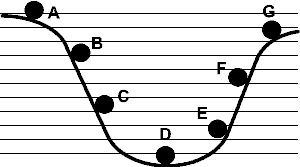
Where is the kinetic energy the greatest?

a)

A

b)

B

c)

C

d)

D

95.
A hairdryer converts -- 
a)
electrical energy into chemical
b)
electrical energy into thermal
c)
chemical energy into mechanical
d)
thermal energy into mechanical
96.

What kind of energy is represented in the picture?

a)

Thermal

b)

Chemical

c)

Sound

d)

Kinetic

97.

Which form of energy would most likely be affected by change in weather

a)

geothermal

b)

natural gas

c)

wind

d)

nuclear

98.

What energy transformation occurs when a crock pot is plugged into an outlet and then the control knob is turned "on"?

a)

thermal to electrical

b)

mechanical to thermal

c)

electrical to thermal

d)

electrical to sound

99.

What type of energy is electrons flowing through a wire?

a)

Electrical energy

b)

Chemical energy

c)

Kinetic energy

d)

Mechanical energy

100.

What type of energy is stored in batteries or food?

a)

Potential energy

b)

Thermal energy

c)

Chemical energy

d)

Mechanical energy

101.

Energy that transfers heat is?

a)

Thermal energy

b)

Potential energy

c)

Mechanical energy

d)

Kinetic energy

102.

A solar calculator has to have light in order to work. What does the radiant light energy transform into?

a)

Radiant

b)

Mechanical

c)

Potential

d)

Chemical because of the battery.

103.
According to the Law of Conservation of Energy, energy cannot be _________ or ____________. 
a)
destroyed, destroyed
b)
created, saved
c)
created, destroyed
d)
lost, found
104.
Gravitational potential energy depends on the ________ and ________ of the object. 
a)
Height and mass
b)
Friction and movement
c)
Mass and Movement
d)
Height and Friction 
105.
Mechanical energy
a)
energy built up before being in motion
b)
energy released in a chemical reaction
c)
energy of motion
d)
sum of kinetic and potential energy
106.
According to the Law of Conservation of Energy, energy cannot be _________ or ____________. 
a)
destroyed, destroyed
b)
created, saved
c)
created, destroyed
d)
lost, found
107.
What is energy changing from one form to another?
a)
energy conservation
b)
energy transformation
c)
energy creation
d)
mechanical energy
108.
what type of energy is stored in a battery?
a)
electrical
b)
chemical
c)
thermal
d)
mechanical
109.
Solar Energy is transferred to _____ Energy.
a)
Mechanical
b)
Solar
c)
Sound
d)
Electrical
110.
Which items would have this energy transformation: light energy -> chemical energy?
a)
tree growing fruit
b)
person running
c)
solar calculator
d)
windmill turning
111.

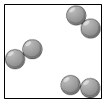
Select two words that describe this diagram

a)

molecule

b)

element

c)

atom

d)

compound

112.

Select two words that describe this diagram

a)

molecule

b)

element

c)

atom

d)

compound

113.

Select two words that describe this diagram

a)

molecule

b)

element

c)

atom

d)

compound

114.

Select two words that describe this diagram

a)

molecule

b)

element

c)

atom

d)

compound

115.

Select two words that describe this diagram

a)

molecule

b)

element

c)

atom

d)

compound

116.

Select two words that describe this diagram

a)

molecule

b)

element

c)

atom

d)

compound

117.
Hydrogen is a pure substance represented by the chemical symbol H. Which of the following best describes hydrogen?
a)
Hydrogen is an element made of two or more kinds of atoms.
b)
Hydrogen is a compound made of only one kind of atom.
c)
Hydrogen is a compound made of two or more kinds of atoms.
d)
Hydrogen is an element made of only one kind of atom.
118.
Carbon (C) and hydrogen (H) are pure substances. Each is made of only one type of atom, but carbon atoms are different from hydrogen atoms. Carbon and hydrogen chemically combine to form methane (CH4).
a)
methane is an element and carbon and hydrogen are compounds.
b)
carbon, hydrogen, and methane are all elements.
c)
carbon, hydrogen, and methane are all compounds.
d)
carbon and hydrogen are elements and methane is a compound.
119.
Atoms combine to form _______. 
a)
electrons
b)
molecules
c)
nuclei
d)
neutrons
120.
A compound is...
a)
a substance made up of one type of atom in its molecular form.
b)
a substance formed by the reaction of two or more elements.
c)
a mixture formed by the mixing of two or more elements.
d)
a substance made up of one type of atom in its atomic form.
121.
Carbon dioxide is formed when two oxygen atoms chemically combine with a carbon atom. Which term best describes carbon dioxide?
a)
atom
b)
mixture
c)
element
d)
compound
122.
What defines a mixture?
a)
described by a chemical formula
b)
can be broken down into its basic substances through physical means
c)
created through a chemical reaction
d)
cannot be broken down into simpler substances
123.

What is a compound?

a)

Two different elements bonded together.

b)

Two of the same elements bonded together.

c)

A mixture of different substances.

d)

Two substances stuck together with glue.

124.

Which statements are true about molecules and compounds?

a)

The particles that make up compounds are always molecules.

b)

Molecules are made of one atom and compounds are made of two or more atoms.

c)

HCl is both a compound, but not a molecule.

d)

Both molecules and compounds are mixtures of elements.

125.
The smallest particle of any element that still has the properties of that element is called
a)
an atom
b)
a compound
c)
a solution
d)
a mixture
126.
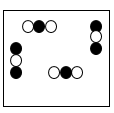
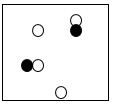
What does the diagram show?
a)
A mixture of two elements
b)
A pure compound
c)
A mixture of two compounds
d)
A mixture of a compound & element
127.
What does the diagram show?
a)
A mixture of two elements
b)
A pure compound
c)
A mixture of two compounds
d)
A mixture of a compound & element
128.
Which description below is a true statement about the diagram?
a)
The diagram can be classified as an element and a molecule
b)
The diagram can be classified as a compound
c)
The diagram can be classified as a mixture of two compounds
d)
The diagram can be classified as a mixture of two elements
129.

Xenon

a)

Xe

b)

X

c)

Xn

d)

Xo

130.

Mg

a)

Manganese

b)

Mangium

c)

Magnesium

d)

Manzanium

131.

Neon

a)

N

b)

No

c)

Ne

d)

Nn

132.

Sulfur

a)

Sf

b)

Su

c)

Sr

d)

S

133.

Carbon

a)

CA

b)

C

c)

Ca

d)

Cn

134.

Protons have a ________________ charge.

a)

positive

b)

negative

c)

neutral

d)

nuclear

135.

Electrons have a ________________ charge.

a)

positive

b)

negative

c)

neutral

d)

nuclear

136.

Neutrons have a ________________ charge.

a)

positive

b)

negative

c)

neutral

d)

nuclear

137.

A/an ____________ is the smallest part of an element that still has the element's properties.

a)

atom

b)

molecule

c)

compound

d)

mixture

138.

The center of the atom is made up of a positive dense core called the

a)

proton

b)

neutron

c)

electron cloud

d)

nucleus

139.

What particles are found in the nucleus? (Select all that apply.)

a)

protons

b)

electrons

c)

neutrons

d)

nuclei

e)

electron clouds

140.

The 1st energy can hold a maximum of _____ electrons.

a)

2

b)

8

c)

18

d)

32

141.

The 2nd energy can hold a maximum of _____ electrons.

a)

2

b)

8

c)

18

d)

32

142.

The 3rd energy can hold a maximum of _____ electrons.

a)

2

b)

8

c)

18

d)

32

143.

The atomic number is equal to the number of

a)

protons

b)

neutrons

c)

protons + neutron

d)

electrons + neutrons

144.

The atomic mass number is equal to the number of

a)

protons

b)

neutrons

c)

electrons

d)

protons + neutrons

145.

What is the symbol for gold?

a)

G

b)

Go

c)

Au

d)

Ag

146.

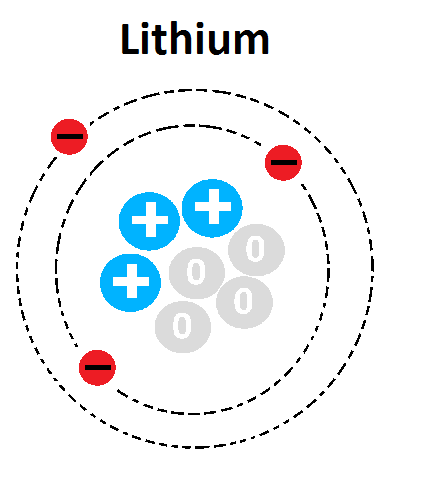
The model shown is an example of a

a)

Helium atom

b)

Carbon atom

c)

Sodium atom

d)

Lithium atom

147.

What is the name of the element with the symbol "Cu"?

a)

Cobalt

b)

Copper

c)

Curium

d)

Cesium

148.

What is name of the element with the symbol "Sn"?

a)

Sodium

b)

Strontium

c)

Lead

d)

Tin

149.

How many protons are in Bromine?

a)

35

b)

79.904

c)

80

d)

40

150.

How many electrons are in Bromine?

a)

35

b)

79.904

c)

80

d)

45

151.

How many neutrons are in Fluorine?

a)

9

b)

18.998

c)

19

d)

10

152.

What is the atomic number of Iron?

a)

26

b)

55.845

c)

56

d)

30

153.

What is the atomic mass or mass number of Sulfur?

a)

16

b)

32.065

c)

17

d)

8

154.
What element is represented in this Bohr Model?
a)
Helium
b)
Hydrogen
c)
Argon
d)
Silver
155.
What element is represented in this Bohr Model?
a)
Boron
b)
Carbon
c)
Nitrogen
d)
Lithium
156.
What element is represented in this Bohr Model?
a)
Lithium
b)
Boron
c)
Carbon
d)
Neon
157.
What element is represented in this Bohr Model?
a)
Beryllium
b)
Boron
c)
Barium
d)
Bromine
158.
What element is represented in this Bohr Model? 
a)
Carbon
b)
Hydrogen
c)
Aluminum
d)
Lithium
159.
What is the mass number of this atom?
a)
1
b)
3
c)
4
d)
7
160.
What is the atomic number of this atom?
a)
2
b)
4
c)
6
d)
none of the above
161.
How many valence electrons?
a)
2
b)
3
c)
5
d)
10
162.

How many electrons can the 3rd energy level hold?

a)

1

b)

18

c)

16

d)

2

163.

How many valence electrons does this atom have?

a)

2

b)

6

c)

8

d)

16

164.

How many electrons can fit on the 1st energy level for any Bohr Model?

a)

2

b)

6

c)

8

d)

10

165.

What is the mass number of this atom of Chlorine?

a)

17

b)

18

c)

35

d)

35.453

166.

If an atom of Phosphorus has 16 neutrons, what is it's mass number?

a)

15

b)

16

c)

30.974

d)

31

167.

If an atom of Fluorine has 10 neutrons, which of the following is FALSE?

a)

The mass number is 19.

b)

There are 10 total electrons.

c)

There are 7 valence electrons.

d)

There are 9 protons.

168.

How many valence electrons chlorine (Cl) contain?

a)

1

b)

3

c)

6

d)

7

169.
An element with five valence electrons is
a)
phosphorus
b)
oxygen
c)
beryllium
d)
rubidium
170.
What does the Law of Conservation of Mass state?
a)
Matter cannot be gained or lost in a chemical reaction.
b)
Matter can only be lost in a chemical reaction.
c)
Matter can only be gained in a chemical reaction.
d)
Matter can be gained and lost in a chemical reaction. 
171.
What is the left part of a chemical equation called?
2H2 + O2 --> 2H2O
a)
Reactants
b)
Products 
c)
Yields 
d)
Chemical Equation 
172.
What is the right part of a chemical equation called...
2H2 + O2 --> 2H2O
a)
Reactants
b)
Products 
c)
Yields 
d)
Chemical Equation 
173.
What is the total number of atoms present in 5Na3PO4
a)
5
b)
40
c)
55
d)
8
174.
How many Mn atoms are found in the following compound?
3Cr(MnO4)6
a)
3
b)
4
c)
6
d)
18
175.
What is the little number after an element in a chemical equation called.
Example: H2
a)
Coefficient 
b)
Subscript
c)
Atom
d)
Equation
176.
Is the following equation balanced?...
Al + O2 --> 2Al2O3
a)
Yes!
b)
No!
177.
How many elements are in C6H12O6?
a)
1
b)
2
c)
3
d)
4
178.
Element or compound?
H2O
a)
Element
b)
Compound
179.
Element or compound?
O2
a)
Element
b)
Compound
180.
What is the number before a chemical formula called?
Ex: 2H2 + O2 --> 2H2O
a)
Coefficient
b)
Subscript
c)
Atom
d)
Equation
181.
How many aluminum atoms are in Al2(SO4)3?
a)
1
b)
2
c)
3
d)
4
182.
In which of these compounds are there twice as many oxygen atoms as hydrogen atoms?
a)
H3PO4
b)
H2SO4
c)
HClO3
d)
H2O
183.
How many atoms are in the neurotransmitter serotonin? The formula for serotonin is C10H12N2O
a)
10
b)
20
c)
25
d)
23
184.
What information could a student determine from only the chemical formula of a protein?
a)
The color of the protein
b)
The number of molecules in each sequence of the protein
c)
The physical arrangement of atoms in the structure of the protein
d)
The number of atoms of each element in the protein
185.
Is the following equation balanced?
2C2H2 + 5O2 --> 4CO2 + 2H2O
a)
yes
b)
no
186.
Is the following equation balanced?
4Fe + 3O2 --> 2Fe2O3
a)
yes
b)
no
187.
Is the following reaction balanced?
NaHCO3 --> Na2CO3 + H2O + CO2
a)
yes
b)
no
188.
Is the following reaction balanced?
2CH3OH + 3O2 --> 2CO2 + 4H2O
a)
yes
b)
no
189.
Which of the following equations are correctly balanced?
a)
12CO2 +H2O --> C6H12O6 + O2
b)
CO2 + 9H2O --> C6H12O6 + O2
c)
CO2 + H2O --> 3C6H12O6 + O2
d)
6CO2 + 6H2O --> C6H12O6 + 6O2
190.

Network of bonded ions

a)

Ionic bonds

b)

Covalent bonds

191.

Molecules

a)

Ionic compounds

b)

Covalent compounds

192.

Valence electrons are transferred

a)

Ionic bonds

b)

Covalent bonds

193.

Valence electrons are shared

a)

Ionic bonds

b)

Covalent bonds

194.

Conducts electricity well when melted or dissolved

a)

Ionic compounds

b)

Covalent compounds

195.

Poor electrical conductivity

a)

Ionic compounds

b)

Covalent compounds

196.

Always a solid at room temperature

a)

Ionic compounds

b)

Covalent compounds

197.

Can be a solid, liquid, or gas at room temperature

a)

Ionic compounds

b)

Covalent compounds

198.

Generally high melting & boiling points

a)

Ionic compounds

b)

Covalent compounds

199.

Generally low melting and boiling points

a)

Ionic compounds

b)

Covalent compounds

200.

Generally, atoms form bonds so that _______________.

a)

Each atom loses its electrons

b)

Each atom has a stable electron configuration

c)

Each atom has an unstable electron configuration

d)

Each atom gains electrons

201.

What kind of bond does this show?

a)

Ionic

b)

Covalent

202.

What kind of bonds are shown here?

a)

Covalent

b)

Ionic

203.

What happens when you put an ionic compound in water?

a)

The ions separate

b)

The ions pack more closely together

c)

Nothing happens

204.

What type of bonding does this picture show?

a)

Ionic

b)

Covalent

205.

What type of bonding does this picture show?

a)

Ionic

b)

Covalent

206.
An atom is made up of protons, neutrons, and electrons.  Which is the smallest subatomic particle?
a)
Proton
b)
Neutron
c)
Electron
d)
Idontknowatron
207.
Each row in a periodic table is called a 
a)
Group
b)
Period
c)
Row
d)
Column
208.
Each column in the periodic table is called a 
a)
period
b)
group
c)
cluster
d)
unit
209.
The atomic number tells you what?
a)
number of electrons
b)
number of protons
c)
number of neutrons
d)
both electrons and protons in an atom.
210.
Which group of the periodic table is composed of inert (not reactive)  gases?
a)
alkali metals
b)
alkaline earth metals
c)
halogens
d)
noble gases
211.
Elements which are shiny, conduct electricity and heat are called
a)
metal
b)
nonmetal
c)
metalloid
d)
nonexistent
212.
The atoms along the staircase are called 
a)
metals
b)
nonmetals
c)
metalloids
d)
noble gases
213.
Which is an alkali metal?
a)
Magnesium
b)
Iron
c)
Sodium
d)
Europium
214.
How many protons are in this element?
a)
79
b)
196
c)
117
d)
Cannot be determined
215.
How many electrons does potassium K contain? (click to see image)
a)
19
b)
39
c)
20
d)
40
216.
How many neutrons are in a Gold atom?
a)
79
b)
196
c)
118
d)
275
217.
What element is represented in this Bohr Model? 
a)
Carbon
b)
Hydrogen
c)
Aluminum
d)
Lithium
218.
What's a valence electron?
a)
electrons in the second energy level
b)
electrons in the outermost energy level
c)
the atomic number
d)
electrons in the first level
219.
What element is this?
a)
Helium
b)
Hydrogen
c)
Argon
d)
Silver
220.
?
a)
Lithium
b)
Boron
c)
Carbon
d)
Neon
221.
?
a)
Beryllium
b)
Boron
c)
Barium
d)
Bromine
222.
What identifies the element?
a)
Protons
b)
Neutrons
c)
valence electrons
d)
Nucleus
223.
?
a)
Helium
b)
Oxygen
c)
Sodium
d)
Phosphorous
224.
The groups of the period table tell us:
a)
Number of electron shells
b)
Number or electrons
c)
Number of protons
d)
Number of valence electrons
225.
The periods of the periodic table tell us:
a)
Number of valence electrons
b)
Number of electron shells
c)
Number of protons
d)
What's a period?
226.

Choose which one is a physical property

a)

Flammability

b)

Solubility

c)

Water Reaction

d)

Magic

227.

The melting point of a substance is the temperature at which the substance changes from a solid to

a)

Gas

b)

Liquid

c)

Solid

d)

Plasma

228.

Choose the one that is a chemical property

a)

Magnetism

b)

Size

c)

Color

d)

Reactivity with water

229.

Flammability is the ability of a substance to _________

a)

Burn

b)

Transfer heat

c)

Transfer electricity

d)

Cook

230.

The characteristics of a substance depends on its size.

a)

True

b)

False

231.

If you describe a substance as being corrosive, you have given a __________ property of that substance

a)

Chemical

b)

Large

c)

Physical

d)

Thermal

232.

Electrical conductivity is an example of what kind of property?

a)

Chemical

b)

Large

c)

Physical

d)

Boiling

233.

Choose the 3 that are physical properties of aluminum foil

a)

Malleable

b)

Luster

c)

Oxidation

d)

High melting point

234.

What effect does observing the physical properties of a substance have on the substance?

a)

Measuring physical properties changes the chemical identity of the substance

b)

Observing physical properties has no effect on the substance

c)

It makes to substance develop a deep seeded distrust of humans

d)

The substance will undergo an exothermic reaction

235.

Which of the following statements is accurate?

a)

After observing a chemical property, the substance remains the same as before

b)

All metals have the same physical properties

c)

When you see water turn into steam, you have observed a chemical property

d)

A physical property can change without causing a change in the chemical identity of the substance

236.

What is the outcome of observing a chemical property?

a)

Nothing

b)

A new substance is formed with different properties

c)

NaCl

d)

A rise in thermal conductivity

237.

Describe the physical and chemical properties of an emergency raft that will take you to safety

a)

Reacts with exposure to water

b)

Less dense than water (floats)

c)

Corrosive

d)

Solid at room temperature

238.

If you had two different substances that looked exactly the same, which properties would you use to tell them apart?

a)

Sound

b)

Size

c)

Color

d)

Density

239.

Which of these statements best describes a chemical property of a substance?

a)

It reacts with an acid to form water

b)

The object has a blue color

c)

The substance has a powdery texture

d)

It has a density of 2.11 g/cm3

240.

Choose whether the following is a physical or chemical property: Malleability

a)

Physical

b)

Chemical

241.

Choose whether the following is a physical or chemical property: Reacts with oxygen

a)

Physical

b)

Chemical

242.

Choose whether the following is a physical or chemical property: Magnetic

a)

Physical

b)

Chemical

243.

Choose whether the following is a physical or chemical property: Non-flammable

a)

Physical

b)

Chemical

244.

Choose whether the following is a physical or chemical property: Oxidation

a)

Physical

b)

Chemical

245.

Which option best describes the difference between a physical and chemical property?

a)

There is no difference between a physical and chemical properties?

b)

Physical properties are usually room temperature but chemical properties are very hot

c)

Observing a chemical property results in the creation of a new substance while observing a physical change does not change the substance

d)

The difference between physical and chemical properties are the states of matter