Worksheets
Spring Final SHHS Biology
Total questions: 22
Worksheet time: 42mins


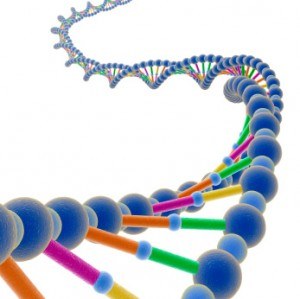
Which of the following best describes a DNA molecule?
double helix
contains ribose
made of amino acids
contains Uracil
AGA-TTC-ATA-GCG
Mutant-
AGA-TTC-AAT-AGC-G
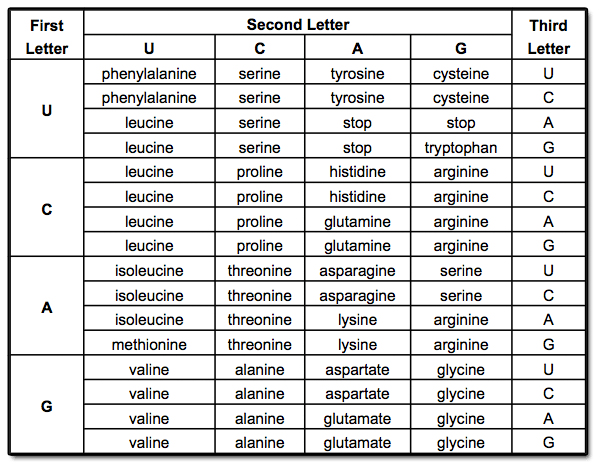
What amino acid would be added to the protein being formed during translation if the mRNA codon reads "AUG?"
Phenylalanine
Tyrosine
Leucine
Methionine

Identify the image. How does this image provide evidence for evolution?
Homologous structures show that even animals from different species have the same basic structure, suggesting they may share one common ancestor.
Homologous structures show that animals for different species have a variety of different structures, suggesting that each has a different ancestor.
Analogous structures show that bones length plays a vital role in the evolution of various species.
Analogous structures show that the same basic bone structure may be used in a variety of different functions.

Which group of animals on this tree are most closely related to birds?
Saurischian dinosaurs
Ornithischian dinosaurs
Crocodiles
None of these are related to birds
Charles Darwin realized that
the birds on the Galapagos Islands were identical.
all life is related and descended from a common ancestor
all life is not related and did not descended from a common ancestor.
the oldest layer in the fossil record is located on the top.
Scientists around the world use a standardized taxonomic system. Why would scientists want to use a taxonomic system that is standardized?
In order to avoid confusion with the identification of organisms
Because Linnaeus established the system
So that Latin names can be applied for a practical purpose
In order to place organisms in different groups
The Linnaean taxonomic system classifies organisms into divisions called taxa. If two organisms belong to the same taxonomic group, they are related. Similarity at which of these levels indicates the closest relationship?
Kingdom
Class
Order
Genus


Several structures work together to allow flowering plants to reproduce. The diagram shows a typical flower. Which table correctly identifies the function of each structure or group of structures in the reproduction of a plant?
X-pollen production, Y-pollen transfer, Z-production of eggs
X-attraction of pollinators, Y-production of male sex cells, Z-egg production and embryo development
X-protection for embryo, Y-supply nourishment to embryo, Z-place of embryonic development
X-photosynthesis, Y-production of cells that protect internal organs, Z-production of egg and sperm
What does xylem transport?
Water and minerals
Water only
Sugar
Food
Which does only eukaryotic cells contain?
nucleus
DNA
cell membrane
ribosomes