Wayground logo

Free Printable Worksheets

Font size

S
M
L
XL
Worksheets

Thermodynamics

Total questions: 63

Worksheet time: 2hrs 57mins

Name
Class
Date
1.
A(n) _____________ is a device for measuring temperature.
a)
thermometer
b)
barometer
c)
anemometer
d)
psychrometer 
2.
Temperature is a measure of the...
a)
total energy in a substance
b)
total kinetic energy in a substance
c)
average potential energy in a substance
d)
average kinetic energy of molecules in a substance
3.
A slower particle has a lower energy than an identical, faster particle.
a)
True
b)
False
4.
When thermal energy is added to a substance, the substance's particles move:
a)
More rapidly at an increased diestance from each other.
b)
More rapidly with less distance between each other.
c)
More slowly with a greater distance between each other.
d)
More slowly with a reduced distance between each other.
5.
Heat transfer by conduction occurs when...
a)
particles bump into each other
b)
large numbers of atoms move from place to place
c)
atoms give off heat in the form of electromagnetic waves
d)
electromagnetic waves travel from place to place through a vacuum
6.
Heat transfer by convection occurs when...
a)
electrons bump into other electrons
b)
large numbers of atoms move from place to place
c)
atoms give off heat in the form of electromagnetic waves
d)
electromagnetic waves travel from place to place through a vacuum
7.
A substance with a high specific heat:
a)
Is always extremely hot.
b)
Requires a lot of energy to become hot.
c)
Is not heavy.
d)
Does not requires a lot of energy to become hot.
8.
Thermal energy always moves:
a)
From a high temperature object to a lower temperature object.
b)
From a lower temperature object to a higher temperature object.
c)
From an object with lower kinetic energy to an object with higher kinetic energy.
d)
From an object of higher mass to an object of lower mass.
9.
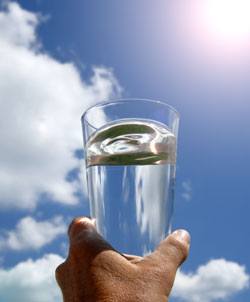
The temperature of a glass of cold water will eventually...
a)
Match the temperature of the surrounding environment.
b)
Always be colder than the surrounding environment.
c)
Become warmer than the surrounding environment.
d)
Never change temperature.
10.
The first law of thermodynamics states that energy is
a)
created
b)
destroyed
c)
conserved
d)
created and destroyed
11.

Do molecules generally move faster at 45 C or 106 C?

a)

45 C because molecules have more energy than in 106C

b)

106 C because molecules have more energy than in 45C

c)

106 C because molecules have less energy than in 45C

d)

45C because molecules have less energy than in 106 C

12.

When you place the metal in boiling water, heat flows from the _________ to the _______.

a)

metal to the boiling water

b)

bottom of the metal to the top half of the metal

c)

bottom of the water to the top of the water

d)

boiling water to the metal

13.

Define Exothermic

a)

Energy is released; ΔH is negative; Going from Gas to Liquid, Liquid to Solid

b)

Energy is absorbed; ΔH is positive; Going from Gas to Liquid, Liquid to Solid

c)

Energy is released; ΔH is positive; Going from Solid to Liquid, Liquid to Gas

d)

Energy is absorbed; ΔH is negative; Going from Gas to Liquid, Liquid to Solid

14.

Define Endothermic

a)

Energy is absorbed; ΔH is negative; Going from Liquid to Gas, and Gas to Liquid

b)

Energy is released; ΔH is negative; Going from Solid to Liquid, and Liquid to Gas

c)

Energy is released; ΔH is positive; Going from Solid to Liquid, and Liquid to Gas

d)

Energy is absorbed; ΔH is positive; Going from Solid to Liquid, and Liquid to Gas

15.

Specific Heat is..

a)

the temperature initial minus temperature final

b)

the amount of heat/energy required to raise 1 gram of a substance by 1°C (or K) aka "C"

c)

the temperature final minus temperature initial

d)

the item in a system with given weight in grams

16.

Is this phase change representing an exothermic or endothermic reaction?

GAS to LIQUID

a)

Exothermic

b)

Endothermic

17.

Is the phase change representing an exothermic or endothermic reaction?

SOLID to LIQUID

a)

Endothermic

b)

Exothermic

18.
The diagram represents which type of reaction
a)
endothermic
b)
exothermic
19.
What kind of graph is this?
a)
endothermic
b)
exothermic
20.

The variable foe HEAT

a)

Q

b)

C

c)

T

21.

The variable for Specific Heat

a)

Q

b)

C

c)

T

22.

Gold cools more quickly than aluminum. This means …

a)

gold has a larger heat capacity

b)

aluminum has a larger heat capacity

c)

they have the same heat capacity

d)

What is heat capacity?

23.

An electric stove top works primarily through

a)

thermal conduction

b)

thermal convection

c)

thermal radiation

24.

Condensation is ...

a)

when a liquid turns to a gas

b)

when a gas turns to a liquid

c)

when a solid turns to a gas

d)

when a gas turns to a solid

25.

To freeze water …

a)

energy must be added to the water

b)

energy must be removed from the water

26.
Copper, Stainless Steel, Carbon Steel, and Zinc were all heated using the same thermal energy.  What material would be the coolest after being heated?
a)
Copper
b)
Carbon Steel
c)
Zinc
d)
Stainless Steel
27.
The temperature of an unknown piece of metal with a mass of 30.00 g changes from 25.0 °C to 35.0 °C when the metal absorbs 350.0 J of energy. What is the specific heat of the metal?
a)
1.17 J/g°C
b)
-1.17 J/g°C
c)
0.857 J/g°C
d)
-0.857 J/g°C
28.
What  is the formula to calculate heat energy required to raise the temperature of any substance?
a)
Q=mc∆t
b)
Q=mc
c)
Q= ½mv
d)
m=QC
29.
To turn a liquid into a gas, you _____ energy.
a)
Add
b)
Remove
30.
Warm air rises and the cool air sinks demonstrates this type of heat transfer. 
a)
conduction
b)
convection
c)
radiation
d)
Insolation 
31.

Select the state changes that latent heat of vaporisation applies to.

a)

melting

b)

evaporating

c)

freezing

d)

condensing

e)

sublimation

32.

Select the state changes that latent heat of fusion applies to.

a)

melting

b)

evaporating

c)

freezing

d)

condensing

e)

sublimation

33.

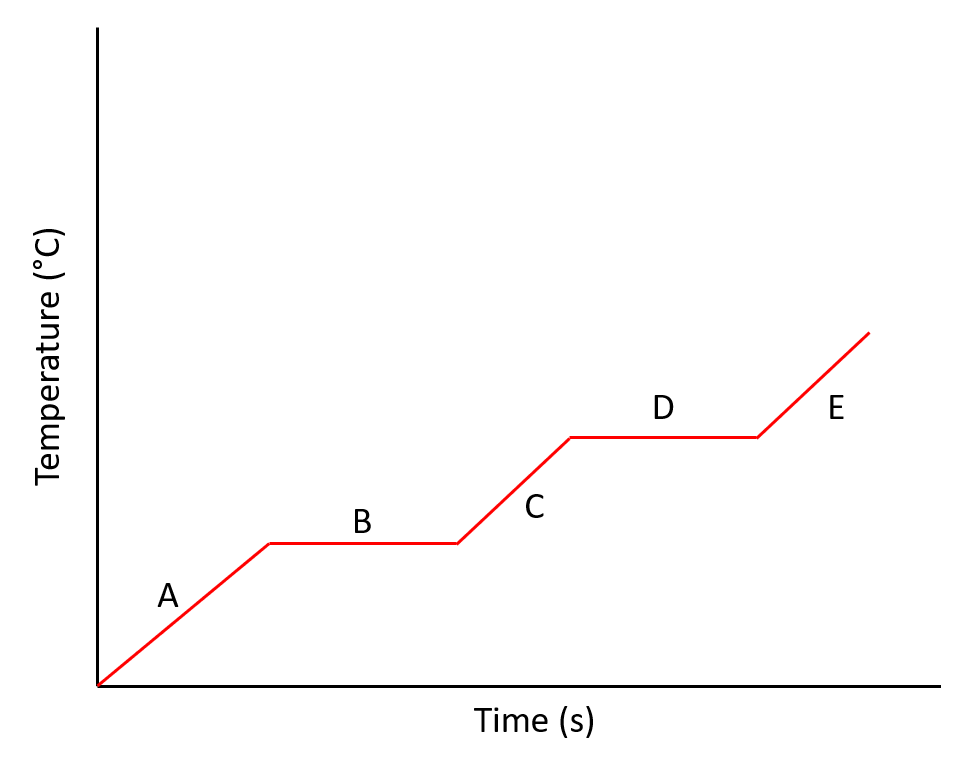
The diagram shows a heating curve for ice. Which line represents the ice melting?

a)

A

b)

B

c)

C

d)

D

e)

E

34.

The diagram shows a heating curve for ice. Which line represents the ice in a liquid state (water)?

a)

A

b)

B

c)

C

d)

D

e)

E

35.
Heat always moves from an object of __________ temperature to an object of _________ temperature.
a)
moderate, high
b)
higher, lower
c)
lower, higher
d)
zero, high
36.

Is the following reaction endothermic or exothermic

a)

endothermic

b)

exothermic

37.

Is the following reaction endothermic or exothermic

a)

endothermic

b)

exothermic

38.
Heat is a form of _______________.  
a)
movement
b)
energy
c)
melting
39.

Stir frying vegetables is an example of

a)

Convection

b)

Conduction

c)

Radiation

40.

Hot water rises and cold water sinks. Is this:

a)

Convection

b)

Conduction

c)

Radiation

41.
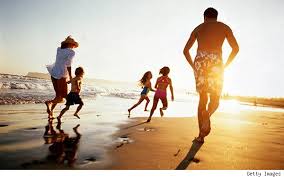
The sun shines down on this family as the play on the beach.
a)
conduction
b)
convection
c)
radiation
42.

What takes place when water changes from a liquid to a gas?

a)

Condensation

b)

Melting

c)

Evaporation

d)

Freezing

43.

What takes place when water changes from a solid to a liquid?

a)

Condensation

b)

Melting

c)

Freezing

d)

Evaporation

44.

What takes place when water changes from a gas to a liquid?

a)

Sublimation

b)

Evaporation

c)

Condensation

d)

Melting

45.

When a gas forms directly from a solid, skipping the liquid phase. it is called

a)

sublimation

b)

condensation

c)

evaporation

d)

deposition

46.

What is it called when the state of matter changes from a liquid to a solid?

a)

Melting

b)

Freezing

c)

Condensation

d)

Boiling

47.

When ice sits out on a counter and melts, it is because the ice has...

a)

gained mass

b)

gained energy

c)

lost mass

d)

lost energy

48.

When water sits in the freezer and freezes into ice, it is because the water has...

a)

gained mass

b)

gained energy

c)

lost mass

d)

lost energy

49.

In an endothermic reaction, heat is ...

a)

taken in

b)

given out

50.
In an exothermic reaction, heat is ...
a)
taken in
b)
given out
51.
What is the symbol for Thermal Energy?
a)
Q
b)
t
c)
m
d)
C
52.
What unit do you use to measure Thermal Energy?
a)
J/Kg ºC
b)
Kg
c)
ºC
d)
J
53.
What is the symbol for Specific Heat
a)
Q
b)
t
c)
m
d)
C
54.
The amount of energy required to raise the temperature 1ºC for every kilogram is called____?
a)
Thermal Energy
b)
Specific Heat
c)
Temperature
d)
Kinetic Energy
55.
What is the equation to measure change in Thermal Energy?
a)
Q=mc∆t
b)
Q=mc
c)
Q= ∆mct
d)
m=QC
56.
Copper, Stainless Steel, Carbon Steel, and Zinc were all heated using the same thermal energy.  What material would be the coolest after being heated?
a)
Copper
b)
Carbon Steel
c)
Zinc
d)
Stainless Steel
57.
A material was cooled from 100ºC to 40ºC.  What is the temperature change?
a)
60ºC
b)
40ºC
c)
-60ºC
d)
-40ºC
58.
How does heat flow?
a)
Always from cold to warm
b)
Always from warm to cold
c)
Both warm to cold & cold to warm
d)
It depends on the temperature
59.
A high specific heat means...
a)
It requires less energy to change temperature
b)
It requires more energy to change temperature
c)
It heats up very quickly
60.

Which will heat up the fastest? (a)  

Choose from the below words
copper
granite
iron
basalt
61.

Which of the following best explains why the sand at the beach is hotter than the water?

a)

Sand has a higher specific heat than water.

b)

Sand has a lower specific heat than water.

c)

Sand has a greater mass than water.

d)

Water has a greater mass than sand.

62.

If two objects have different temperatures when they come in contact, heat will flow from the warmer object to the cooler one UNTIL ____________

a)

one reaches a temperature of zero

b)

they both have an equal temperature

c)

one runs out of energy

63.

For a skillet, used for cooking, do you want a high or low specific heat

a)

High, so that it will need more energy to heat up

b)

Low, so that it will change temperature quickly