wayground logo

Free Printable Worksheets

Font size

S
M
L
XL
Worksheets

Atom Models and Quarks

Total questions: 67

Worksheet time: 44mins

Name
Class
Date
1.

How many valence electrons does this element have?

a)

12

b)

8

c)

2

d)

10

2.

How many valence electrons does this element have?

a)

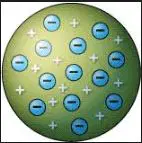
1

b)

2

c)

3

d)

4

3.

The sum of the number of protons and the number of neutrons is called the _____

a)

Atomic Number

b)

Mass number

c)

Atomic Symbol

d)

Atomic Name

4.

In the Bohr model of the atom, what is the maximum number of electrons in the first shell?

a)

2

b)

8

c)

1

d)

6

5.

How many electrons can the second and third (for our intents and purposes) energy levels hold?

a)

1

b)

2

c)

8

d)

Unlimited

6.

Is this the correct Bohr model for silicon (Si)?

a)

Yes

b)

No

7.

Is this the correct Bohr model for carbon (C)?

a)

Yes

b)

No

8.

What element is this the Bohr model of?

a)

Fluorine (F)

b)

Potassium (K)

c)

Aluminum (Al)

d)

Boron (B)

9.
What is the name of this element?
a)
Helium
b)
Hydrogen
c)
Argon
d)
Silver
10.

An atom has a full first energy level and 7 electrons in its second level. How many electrons does this atom have?

a)

2

b)

7

c)

9

d)

Need more information

11.

An atom has a full first and second energy level and 8 electrons in its third level. This atom is neutral. What element is this atom?

a)

Chromium (Cr)

b)

Argon (Ar)

c)

Magnesium (Mg)

d)

Need mor information

12.

How many valence electrons does this element have?

a)

12

b)

8

c)

2

d)

10

13.

Which model below represents Bohr's model of the atom?

a)

b)

c)

d)

14.

What was Rutherford responsible for discovering about the atom?

a)

electrons orbit like planets around the sun based on quanta of energy

b)

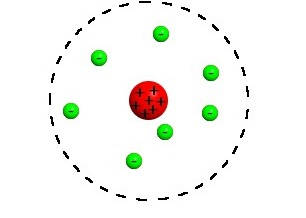
the atom is mostly empty space with a positive nucleus in the center

c)

electrons are located in orbitals outside the nucleus based on quanta of energy

d)

The atom is full of positive pudding with negative electrons distributed in the pudding

15.

Which scientist below discovered neutrons in the atom?

a)

Chadwick

b)

Dalton

c)

Democritus

d)

Rutherford

16.

The image shows Rutherford's experiment setup when he fired positive particles at a piece of gold foil. His results are listed below:

  1. 1. Most of the particles passed straight through the foil and struck the back of the screen

  2. 2. Some particles deflected of the gold foil and struck the side of the screen

  3. What conclusion did he come to about the atom? Choose all the apply.

a)

Since most particles passed straight through, the atom couldn't have positive pudding. Instead, it is mostly empty space.

b)

Since some particles bounced back, the electrons must orbit in energy levels around the nucleus based on how much energy they have

c)

There was a positive particle in the center of the atom that he named the nucleus causing some particles to deflect and hit the screen on the sides.

d)

Since particles were bouncing back, the atom must be a solid ball and not positive pudding.

17.

Which experiment helped disprove Dalton's model of the atom and led to the model shown in the image?

a)

Thomson's Cathode Ray Tube Experiment

b)

Rutherford's Gold Foil Experiment

c)

Millikan's Oil Drop Experiment

d)

Schrodinger's Cat Experiment

18.

Choose the name and image of our modern day model of the atom. Choose all that apply.

a)

Plum Pudding Model

b)

c)

Quantum Mechanical Model

d)

e)

19.

Which of the following forces holds electrons in their orbitals?

a)

Weak Force

b)

Gravity

c)

Electromagnetic Force

d)

Strong Force

20.

An atom of Zinc (Zn) contains ______ _______ electrons.

a)

30, positive

b)

30, negative

c)

65, negative

d)

35, neutral

21.

Which of the following correctly describes the p orbital?

a)

b)

c)

d)

22.

Juan ran tests on a substance he discovered. He found each atom in the substance contained 34 protons. What can he conclude about the identity of the substance?

a)

The identity cannot be determined with the information given

b)

It's either Lithium (Li) or Beryllium (Be)

c)

It's Chlorine (Cl)

d)

It's selenium (Se)

23.

Lucas found an unknown substance. After using the electron microscope and running some tests, he found the atoms in the unknown substance were neutral and contained 17 electrons per atom. How many protons should the atom have?

a)

16, the number of protons is always one less than the number of electrons

b)

17, the number of electrons should equal the number of protons in a neutral atom.

c)

34, the number of electrons is always half of the number of protons

d)

The number of protons cannot be determined from the information given.

24.

Which of the following particles are considered the largest?

a)

Neutron

b)

Proton

c)

Quarks

d)

Electron

25.
This was the first model of the atom ever proposed. It was simple and described atoms as tiny spheres that could not be broken down into smaller pieces.
a)

Dalton's model of the atom

b)
The "Plum Pudding Model" of the atom
c)
The "Rutherford Model" of the atom
d)
The "Quantum Mechanical Model" of the atom
26.
This model this model was the first to show a nucleus, consisting of protons and neutron.  Electrons surround the nucleus but are not shown in distinct energy levels. 
a)
The "Rutherford Model" of the atom
b)
The "Plum Pudding Model" of the atom
c)
The "Quantum Mechanical Modell" of the atom
d)
Democritus's model of the atom
27.
This model was developed after J.J. Thompson discovered electrons, a particle smaller than an atom. Is shows electrons floating freely in a positive space.
a)
The "Plum Pudding Model" of the atom
b)
The "Rutherford Model" of the atom
c)
Democritus's model of the atom
d)
The "Quantum Mechanical Model" of the atom
28.
Ernest Rutherford discovered that atoms were mostly _________________. 
a)
negatively charged
b)
positively charged
c)
electrons
d)
empty space. 
29.
What does the nucleus of an atom contain?
a)
Electrons & Neutrons
b)
Protons & Neutrons
c)
Neutrinos & Positrons
30.
Discovered the electron using cathode ray tube
a)

J. J. Thomson

b)
John Dalton
c)
Ernest Rutherford
d)
Robert Millikan
31.
His atomic model included a dense positive core in an atom, surrounded by negatively charged particles
a)
Joseph Thomson
b)
Niels Bohr
c)
Ernest Rutherford
32.
Idea was of an indivisible particle of matter he called "atomos"
a)
John Dalton
b)
Aristotle
c)
Democritus
d)
Plato
33.

Who was the first to suggest the idea of atoms?

a)

Thomson

b)

Proust

c)

Democritus

d)

Dalton

34.
Dalton showed that common substances always broke down into _____
a)
the same elements in the same proportions
b)
elements in equal quantities
c)
hydrogen and oxygen
d)
earth, wind, water and fire
35.
Who stipulated that electrons orbit the nucleus at fixed energies and distances?
a)
Albert Einstein
b)
Max Planck
c)
Ernest Rutherford
d)
Niels Bohr
36.
Who showed it was impossible to determine both the exact position and speed of electrons as they moved around an atom?
a)
Werner Heisenberg
b)
Niels Bohr
c)
Max Planck
d)
Albert Einstein
37.

The mass number is equal to

a)

# of electrons + # of protons.

b)

# of neutrons + # of protons.

c)

# of neutrons + # of electrons.

d)

# of neutrons + # of protons + # of electrons.

38.

Carbon 12, Carbon 13 and Carbon 14 are all isotopes of Carbon. What is the difference between the three isotopes?

a)

all three have a different number of neutrons.

b)

all three have a different number of electrons.

c)

all three have a different number of protons.

39.

What are the shapes of p orbitals ?

a)

cloverleaf

b)

spherical

c)

dumbbell

40.

How many electrons can occupy any single subshell orbital?

a)

1

b)

2

c)

6

d)

10

41.
For an electron to change from ground state to an excited state it must...
a)
Absorb energy
b)
Release energy
42.

What is the shape of the s orbital?

a)

dumbbell

b)

sphere

c)

clover

d)

flat

43.
An electron occupies the lowest energy orbital that can receive it.
a)
Hund’s rule
b)
Pauli exclusion principle
c)
Bohr model of the atom
d)
Aufbau principle
44.
All orbitals of equal energy are occupied by one electron before any single orbital is occupied by a second electron.
a)
Aufbau principle
b)
Pauli exclusion principle
c)
Hund’s rule
d)
Core Notation
45.
No two electrons in the same atom can have the same four quantum numbers.
a)
Aufbau principle
b)
Pauli exclusion principle
c)
Hund’s rule
d)
Noble gas notation
46.

On the periodic table, Groups are

a)

Horizontal rows

b)

Vertical columns

47.

On the periodic table, Periods are

a)

Horizontal rows

b)

Vertical columns

48.

What group does this element belong to?

a)

1

b)

2

c)

17

d)

18

49.

The period an element belongs to tells you...

a)

how many valence electrons it has.

b)

how many energy levels it has.

c)

how many protons it has.

d)

how many total electrons it has.

50.

The group an element belongs to tells you...

a)

how many valence electrons it has.

b)

how many energy levels it has.

c)

how many protons it has.

d)

how many total electrons it has.

51.
The electron configuration of an atom is 1s22s22p6.  The number of electrons in the atom is 
a)
3
b)
6
c)
8
d)
10
52.
What is the noble gas shorthand electron for Sulfur atom?
a)
[Ar] 3p4
b)
[He] 3s23p4
c)
[Ne] 3s23p4
d)
[Na] 3s23p4
53.

Which model required the discovery of the electron?

a)

A.

b)

B.

54.
All atoms consist of mostly empty space.
a)
True
b)
False
55.
A proton is made up of two up quarks and one down quark with charges of +2/3, +2/3, and –1/3. 
a)
True 
b)
False
c)
More information is needed
56.

Which quarks form a neutron?

a)

up, up, down

b)

down, down, down

c)

up, up, up

d)

up, down, down

57.

Which particle has electric charge of 2/3?

a)

up quark

b)

down quark

c)

strange

d)

kaon

58.

Which particle has electric charge of - 1/3?

a)

top quark

b)

bottom quark

c)

gluon

d)

graviton

59.
He developed the planetary model of the atom.
a)
Rutherford
b)
Bohr
c)
Chadwick
d)
Dalton
60.

as the principal energy level increases in an atom's orbitals, the average distance of an electron energy level from the nucleus

a)

increases

b)

decreases

c)

stays the same

d)

varies

e)

none of these

61.

The lowest energy orbital in the quantum-mechanical model is the:

a)

zero orbital.

b)

2s orbital.

c)

1p orbital.

d)

1s orbital.

62.
A line spectrum is produced when an electron moves from one energy level
a)
into the nucleus.
b)
to another position in the same sublevel.
c)
to a higher energy level.
d)
to a lower energy level.
63.
If electrons in an atom have the lowest possible energies, the atom is in the
a)
ground state.
b)
inert state.
c)
excited state.
d)
radiation-emitting state.
64.
Which element is depicted from this orbital diagram
a)
Fluorine
b)
Neon
c)
Chlorine
d)
Argon
65.
Electrons occupy orbitals of lowest energy first is part of what electron configuration rule?
a)
Hund’s Rule
b)
Aufbau Principle
c)
Pauli Exclusion Principle
66.
Which guideline, Hund’s rule or the Pauli exclusion principle, is violated in the following orbital diagrams?
a)
Hund's
b)
Aufbau's
c)
Pauli's Exclusive
67.

Region of high probability of finding an electron

a)

atomic orbital

b)

ground state

c)

Heisenberg uncertainty principle

d)

electron configuration