wayground logo

Free Printable Worksheets

NEW

Font size

S
M
L
XL
Worksheets

Chemistry I Final Exam Review

Total questions: 60

Worksheet time: 3600secs

Name
Class
Date
1.

The nucleus of an atom contains which subatomic particles?

a)

protons and electrons

b)

protons and neutrons

c)

electrons and neutrons

d)

protons, electrons, and neutrons

2.

Typically in an atom, which two subatomic particles are equal in number?

a)

protons and neutrons

b)

all subatomic particles are equal in number

c)

neutrons and electrons

d)

protons and electrons

3.

Which subatomic particle is counted to determine the type of element the atom represents?

a)

proton

b)

neutron

c)

electron

d)

boron

4.

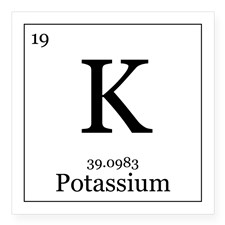
How many neutron are in the atom "K"?

a)

29

b)

19

c)

58

d)

20

5.
Adding or subtracting neutrons (charge = 0, mass = 1) makes the element change into an...
a)
ion
b)
mixture
c)
isotope
d)
neutral atom
6.
What charge does a potassium (K) ion have?
a)
+1
b)
-1
c)
+2 
d)
-2
7.
What charge does a bromine (Br) ion have?
a)
-1
b)
-2
c)
-3
d)
-4
8.

Periodic law states that the elements are arranged according to their atomic ________ so that elements with similar chemical properties are in the same ________ and properties repeat periodically.

a)

numbers, rows

b)

masses, rows

c)

masses, column

d)

numbers, column

9.

Which element is found in group 2, period 6?

a)

Oxygen (O)

b)

Barium (Ba)

c)

Selenium (Se)

d)

Carbon (C)

10.

Which halogen is found in period 4?

a)

Krypton (Kr)

b)

Xenon (Xe)

c)

Bromine (Br)

d)

Iodine (I)

11.

Elements that have the same number of energy levels (electron shells) are said to be in the same ______.

a)

group

b)

period

c)

family

d)

classification

12.

What is the formula to solve for the number of neutrons?

a)

Mass + Atomic Number= Neutrons

b)

Mass x Atomic Number = Neutrons

c)

Mass - Atomic Number = Neutrons

d)

Mass + Number of Protons = Neutrons

13.

an atom or group of atoms that has gained or lost one or more electrons and is now either positively or negatively charged

a)

isotope

b)

ion

c)

orbital

d)

nucleus

14.

Frank has a paper clip. It has a mass of 9g and a volume of 3cm3. What is its density?

a)

3 g/cm3

b)

0.33 g/cm3

c)

27 g/cm3

d)

39 g/cm3

15.
Helium balloons rise on earth because
a)
helium is less dense than air
b)
helium is more dense than air
c)
helium is cooler than air
d)
helium is warmer than air
16.

A mechanical pencil has the density of 3.0 g/mL. The volume of the pencil is 15.8 mL. What is the mass of the pencil?

a)

47.4 g

b)

50 g

c)

0.190 g

d)

5.27 g

17.

A screwdriver has the density of 5.5 g/mL. It has a mass of 2.3 g. What is the screwdriver’s volume?

a)

2.4 mL

b)

0.42 mL

c)

12.65 mL

d)

0.42 g

18.

Which unit of measurement is used for volume?

a)

g

b)

cm

c)

g/mL

d)

mL

19.
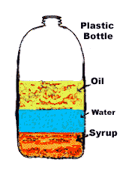
Which liquid is the least dense?
a)
oil
b)
water
c)
syrup 
d)
plastic bottle
20.
Which property is an example of a chemical property?
a)
The ability to burn
b)
The ability to dissolve
c)
The ability to evaporate
d)
The ability to melt
21.
Blue Color
a)
Physical Property
b)
Chemical Property
22.
Flammability (burns)
a)
Physical Property
b)
Chemical Property
23.
Solubility (dissolves)
a)
Physical Proeprty
b)
Chemical Property
24.
Reacts with acid
a)
Physical Property
b)
Chemical Property
25.
Chewing food to break it down into smaller particles represents a _________ change, but the changing of starch into sugars by enzymes in the digestive system represents a ___________change. 
a)
Chemical then Physical 
b)
Physical then Chemical
c)
Both Physical
d)
Both Chemical
26.
This could be the dot diagram of
a)
O
b)
B
c)
Li
d)
Ne
27.
This is a correct dot diagram for fluorine (F)
a)
true
b)
false
28.

This is a Bohr Diagram of Neon. How many valence electrons does Neon have?

a)

2

b)

4

c)

6

d)

8

29.

How would you draw a Lewis dot diagram for Magnesium?

a)
b)
c)
d)
30.
Who stated that atoms cannot be divided?
a)
Democritus
b)
Dalton
c)
Thomson
d)
Bohr
31.
What scientist is best known for his "Plum Pudding" model of the atom?
a)
J.J. Thomson
b)
Ernest Rutherford
c)
John Dalton
d)
Democritus
32.
What contribution did John Dalton make to atomic theory? 
a)
He discovered that every atom was positively charged. 
b)
He discovered that every element consisted of one type of atom that couldn't be divided. 
c)
He discovered that atoms had nuclei. 
d)
He discovered that atoms could be divided into smaller parts. 
33.
In an atom, electrons move in definite orbits around the nucleus.
a)
Thomson
b)
Rutherford
c)
Bohr
d)
Democritus
34.
Place the following scientists in order, from earliest to latest: 
Rutherford, Dalton, Bohr, Thomson
a)
Dalton, Rutherford, Bohr, Thomson
b)
Thomson, Dalton, Rutherford, Bohr
c)
Dalton, Thomson, Rutherford, Bohr
d)
Bohr, Dalton, Rutherford, Thomson
35.
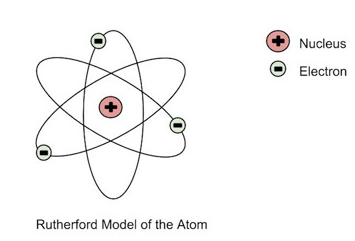
Rutherford's gold foil experiment provided evidence that...
a)
negative and positive charges are spread evenly throughout the atom.
b)
alpha particles have a positive charge.
c)
gold is not a dense as previously thought.
d)
there is a dense positively charged nucleus at the center of an atom.
36.
How did each model of the atom help to develop the atomic theory? 
a)
Each model provided opinions that were added.
b)
Each model showed different properties of the same structure. 
c)
Each model showed new particles that had been discovered.
d)
Each model built upon the other to show new particles or properties of previously discovered particles. 
37.

Subatomic particles with a negative charge

a)

Electrons

b)

Neutrons

c)

Protons

d)

Quarks

38.
Subatomic particles with a positive charge
a)
neutrons
b)
atomic mass
c)
protons
d)
isotopes
39.
Subatomic particles that are neutral in charge
a)
Neutrons
b)
Protons
c)
Nucleus 
d)
Electrons
40.
Where electrons are likely to be found as they travel around the nucleus
a)
Nucleus
b)
Electron Cloud
c)
Within a Proton
d)
Within a Neutron
41.

Which is an image of a beaker?

a)
b)
c)
d)
42.

Which is an image of a Erlenmeyer flask?

a)
b)
c)
d)
43.

Which is an image of a ring stand?

a)
b)
c)
d)
44.

Which is an image of a test tube clamp?

a)
b)
c)
d)
45.

Which piece of lab equipment would be most useful for the following task: Crush a chunk of chemical into a powder?

a)

Watch glass

b)

Thermometer

c)

Beaker

d)

Mortar and pestle

46.

Which piece of lab equipment would be most useful for the following task: Scoop ammonium nitrate out of its container and onto weigh paper to be measured?

a)

Watch glass

b)

Graduated cylinder

c)

Beaker

d)

Scoopula

47.

Which piece of lab equipment would be most useful for the following task: Find the mass of 125 grams of sodium chloride?

a)

Watch glass

b)

Thermometer

c)

Test tube rack

d)

Electronic balance

48.
The lab equipment seen in the image should be worn during a lab investigation when...
a)
using glassware.
b)
using chemicals.
c)
using heat/fire.
d)
using any of the above.
49.

What is the ground state electron configuration for oxygen?

a)

1s22s12p5

b)
1s22s22p4
c)

2s22p4

d)

2p42s21s2

50.

What is the ground state electron configuration for Chlorine (Cl)?

a)
1s2s2p3s3p5
b)
1s2s2p3s3p6
c)
1s2s2p3s3p7
51.
Which element is depicted from this orbital diagram
a)
Fluorine
b)
Neon
c)
Chlorine
d)
Argon
52.

What kind of matter is this?

a)

Element

b)

Compound

c)

Mixture of elements

d)

Mixture of compounds

e)

Mixture of elements and compounds

53.

What kind of matter is this?

a)

Element

b)

Compound

c)

Mixture of elements

d)

Mixture of compounds

e)

Mixture of elements and compounds

54.

What kind of matter is this?

a)

Element

b)

Compound

c)

Mixture

55.

What kind of matter is this?

a)

Element

b)

Compound

c)

Mixture of elements

d)

Mixture of compounds

e)

Mixture of elements and compounds

56.

What kind of matter is Calcium (Ca)?

a)

Element

b)

Compound

c)

Homogeneous Mixture

d)

Heterogeneous Mixture

57.

What kind of matter is salt (NaCl)?

a)

Element

b)

Compound

c)

Homogeneous Mixture

d)

Heterogeneous Mixture

58.

What kind of matter is soil?

a)

Element

b)

Compound

c)

Homogeneous Mixture

d)

Heterogeneous Mixture

59.

What kind of matter is Kool-Aid?

a)

Element

b)

Compound

c)

Homogeneous Mixture

d)

Heterogeneous Mixture

60.

Matter is...

a)

everything

b)

anything that takes up space.

c)

anything that has mass.

d)

anything that takes up space and has mass.