
 Worksheets
World History Final
Total questions: 140
Worksheet time: 1hrs 22mins
Where does the silk road ends?
Peru
Indian Ocean
Europe
Mediterranean Sea
The silk road starts in
Wakanda
China
India
Egypt


Which of the following organizational structures is ordered correctly?
low power - - - → - - - high power
serf → knight → noble → monarch
serf → noble → knight → monarch
knight → noble → serf → monarch
serf → monarch → knight → noble
The belief in one god.
polytheism
deity
monotheism
holy
The belief in many gods.
polytheism
monotheism
deity
holy
A monotheistic religion. Believers believe in the teachings of Jesus and the Bible.
Christianity
Judaism
Hinduism
Buddhism
Belief in Hinduism that your next life will depend on your good or bad deeds in this life. The cycle of cause and effect.
holy
karma
Siddhartha Gautama
Vedas
Judaism's holy book or text
Bible
Qur'an
Torah
Vedas
Who is the founder (based on his teaching) of Buddhism?
Jesus
Siddartha Guatama
Abraham
Mohammed
The holy books (pick 3)
Bible
Vedas
Mosque
Quran
Which monotheistic religion was founded by the prophet Muhammad?
Christianity
Islam
Hinduism
Buddhism

What is the polytheistic religion in India?
Islam
Christianity
Judaism
Hinduism
Which countries in the region have the greatest economic wealth?
those in the north
those with natural resources
those in the interior
those with deepwater lakes
What aspects of Sub-Saharan African culture were influenced by Arab Traders?
agriculture and technology
language and religion
cities and transportation
sculpture and dance
What was the reason behind the African slave trade?
Plantation owners thought slaves were harder workers.
Slaves were better at growing tobacco, sugar, and cotton.
Plantation owners could make more money using slave labor.
It was easy to bring large numbers of slaves safely across the ocean.
Which of these statements describes a change brought about by the Renaissance?
Society was dominated by the church.
Society began to value individualism.
Society was focused on warfare.
Society was dominated by lords.
Developments in cartography made it easier for explorers in their travels to new lands. Which of the following best describes cartography?
the study of the Earth's natural processes
the study of the Earth's weather patterns
the study and practice of making maps
the study of past human societies

• Venetian explorer who visited the court of Kublai Khan
• One of the first Westerners to travel the Silk Road to China
• Travels increased the interest of Europeans in the lands of the East
Who is described above?
Marco Polo
Ferdinand Magellan
Vasco da Gama
Christopher Columbus
During the Renaissance, a new intellectual movement known as humanism evolved. What was the significance of the humanist movement?
Humanists felt formal education was impractical and unnecessary; therefore, many schools were closed.
Humanists spread the teachings of Eastern philosophers such as Confucius throughout Europe.
Humanists were very interested in religious studies and sought to increase the influence of the Church.
Humanists were inspired by classical texts and emphasized the dignity and worth of the individual.
Which of these changes occurred during the Renaissance?
The Church was all-powerful.
The Church’s power declined.
Factories began using electricity.
Women gained equal rights with men.
• Nicolaus Copernicus
• Galileo Galilei
• Tycho Brahe
• Johannes Kepler
All of the above were famous Renaissance
philosophers.
priests.
artists.
scientists.
Which of these statements reflects an influence of the Renaissance?
dominance of the church
constant feudal warfare
lack of any governance
increased interest in the arts
Which of these events influenced the changing role of religion during the Renaissance?
the humanist movement
the removal of the pope
the burning of bibles
the invention of movable type

• Gunpowder
• Printing press
• Compass
All of the above were results of what in the Renaissance?
the move toward using money
a shift from science to religion
an increased interest in the arts
an increase in scientific inquiry
the Columbian Exchange was the exchange of plants, animals and diseases between.... (read all options)
the Americas and Europe
Asia and Europe
the Old World and the New World
Lynwood and Compton
Aztecs used ___________ to make incredibly sharp blades
pyrite
metal
wood
obsidian
Aztecs used ________________ as floating gardens to grow crops
Cachinampas
Tenochtitlan
share cropping
bardering
Europeans brought _________________ which killed 90% of the population
tobacco
onions
oranges
disease
the exchange of tobacco, sugar cane and the death from disease led to
many deaths
a larger population
more money for luxuries
slavery
What was the spark of the Enlightenment?
French Revolution
English Civil War
American Revolution
Scientific Revolution
The Enlightenment is also known as the Age of what?
Age of Reason
Age of Wisdom
Age of Knowledge
Age of Thought
What was Denis Diderot's big contribution to the Enlightenment?
3 natural rights
Separation of powers
Encylcopedia
Salons
True or False, The Monarchy and Catholic Church in France were against the Enlightenment ideas?
True
False
True or False, the enlightenment would inspire events leading to the American and French Revolutions?
True
False
Baron de Montesquieu's big contribution was what?
Rights of the accused
Separation of powers
Direct Democracy as Government
Social Contract
John Locke's big contribution was what?
Direct Democracy for Government
Anything natural is good
Social Contract for Absolute Monarchy
3 natural rights
True or False, Thomas Hobbes' social contract gave Absolute Monarchy a right to rule because the people were too evil to rule themselves?
True
False
Thomas Paine's big contribution was what?
Confirming that the American Revolution was common sense
3 natural rights
Anything natural is good
Absolute Monarchy should rule
Voltaire's big contribution to the Enlightenment was what?
Separation of Powers
Fix the Justice system
Anything natural is good
Freedom of Speech and Religion
Jean Jacques Rousseau's big contribution was what?
Direct Democracy is the only legitimate way to govern
3 natural rights
People are naturally evil
The American Revolution was good and was common sense
Who was Mansa Musa?
First Emperor of Songhai
Moroccan Muslim Traveler
A Ruler of Mali
Griot


The process of an area growing larger, with an increase in population, production of goods and services, and availability of a variety of options to fulfill one's wants and needs is called
industrialization
urbanization
materialism
commercialism
During the Industrial Revolution, a new social and economic class that developed was the
serfs
rich, or the upper class
expanded lower class
middle class
In the early days of the Industrial Revolution, which item was manufactured in great numbers at newly built factories?
textiles
industrial machines
cars
household goods like cookware
Which of the following best defines the term capital when referencing the Industrial Revolution?
a city where industrial production increased, became an important city for a nation's economy
money, equipment, and/or resources that were used in the production of goods
a type of investment that helped a factory or business get started
none of these best define capital
Which of the following best describes industrialization?
nations began to rely on one another for trade of various goods and resources after the beginning of the Industrial Revolution
smaller nations needed assistance from their larger neighbors, so they formed trade alliances
more and more people began to move to cities, away from rural areas
advancement in technology to produce goods on a larger scale and a reliance on manufacturing of goods instead of individuals producing goods themselves
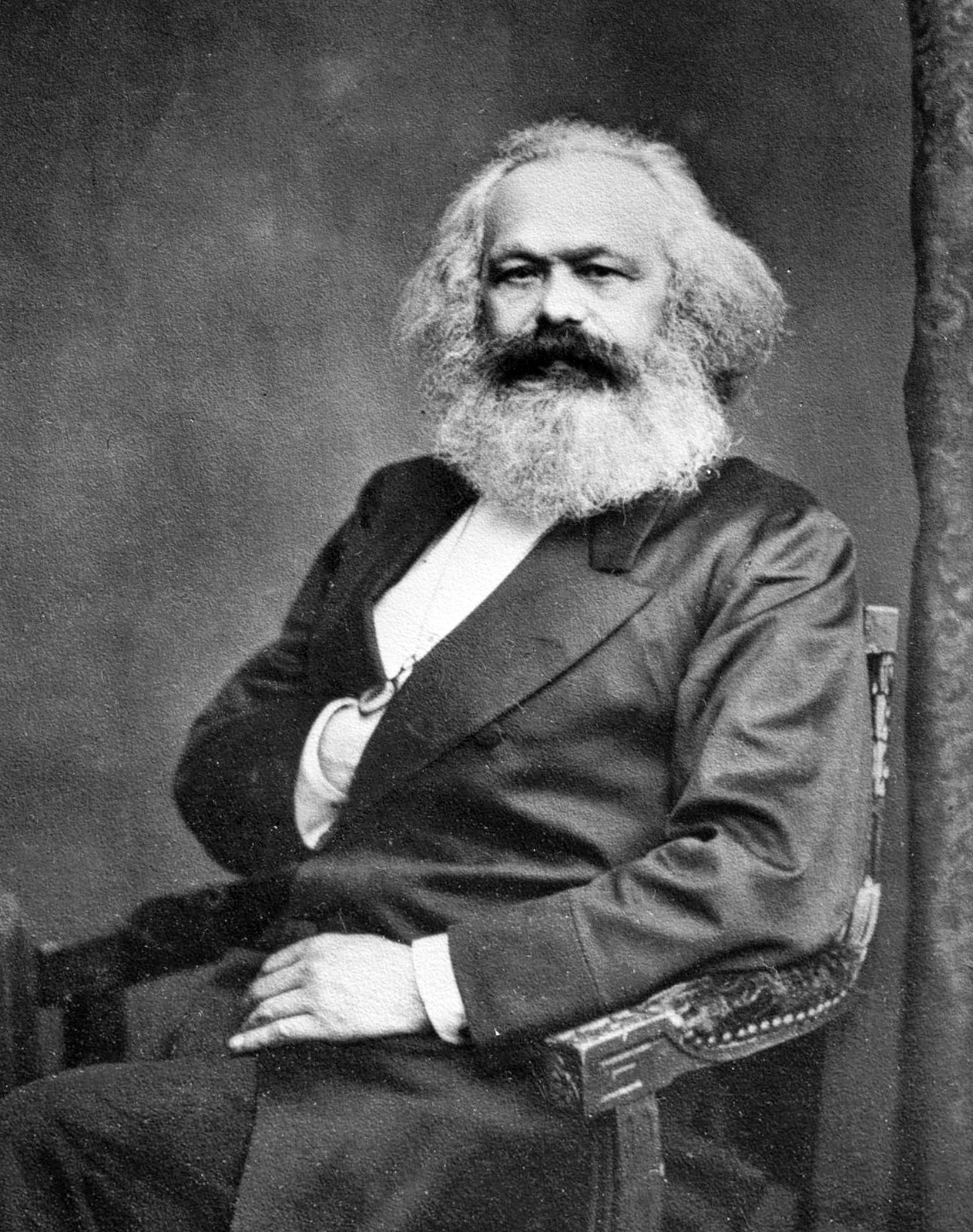
Karl Marx spelled out how he believed that workers should rise up against factory owners, outlining the basic principles of
capitalism
socialism
communism
command economies
Why was England the site of the beginnings of the Industrial Revolution?
England was the most powerful nation in the world
It wasn't; history has unfairly given England credit for the Industrial Revolution
England had an abundance of natural resources such as coal, iron ore, and waterways where water wheels and steam engines could be built
England was centrally located to many areas like France, Germany, Spain, and Ireland, giving them an advantage to bring in resources and talent from many places
Why did European countries want to imperialize Africa?
They wanted more raw materials and new people to sell too
They were just mean
They needed the land for their people
Their military needed bases
Europeans believed that they had a duty to civilize the uncivilized is a ____ motive of imperialism.
political
economic
religious
social
Which of the following was not an economic motive for imperialism
racism
acquire markets
acquire resources
land for population growth
How is industrialization related to imperialism?
Industrialized countries need markets and resources which can be gained through imperialism.
Imperialism pushed for industrial development in Africa due to all the resources on the continent.
Imperialism convinced industrial countries to increase the production of goods.
Industrialized countries needed more trade partners. Imperialism provided greater opportunities for global trade.
Some Europeans believed that their industrial progress and wealth (being fit) allowed them to take advantage of those areas of the world not industrialized or civilized (the unfit). This concept is called
Nationalism
Racism
Assimilation
Imperialism
Social Darwinism

actions based on the belief that one's race is superior to others
Racism
Prejudice
Discrimination
ethnic cleansing

The purpose of propaganda during World War I was to
censor the press
inform the public
expose antiwar activity
influence public opinion

What is the policy of glorifying power and keeping an army prepared for war?
Nationalism
Militarism
Imperialism
Patriotism

Which nation’s actions caused the United States to fight in World War I?
Austria-Hungary
Mexico
Germany
Russia

What action on November 11, 1918 brought World War I to an end?
An armistice was signed
The allies won a major battle
A propaganda campaign was waged
France surrendered
In the years before WWII Japan invaded
France
India
China
The United States
Which of the following countries remained free from Nazi occupation?
France
Great Britain
Poland
Czechoslovakia
Before Jews were sent to concentration camps they were segregated into poor, crowded neighborhoods called
Stalingrad
Sudetenland
Ghettos
Newport Beach
A major turning point in the European Theater was when Allied forces invaded the beaches of Normandy, France. This invasion is known as
Battle of the Bulge
Invasion of Italy
Island Hopping
D-Day
The US was forced to join the war when
The Japanese attacked Pearl Harbor
The Japanese invaded the Philippines
China invaded Manchuria
Germany attacked New York City
Many Nazi Generals were tried as war criminals after WWII for their involvement in the Holocaust. These trials are known as
The Nazi Trials
The Czech Trials
The Auschwitz Trials
The Nuremberg Trials
After WWII most nations joined a new international organization for the purpose of maintaining peace. This organization is called
The League of Nations
The European Union
The United Nations
NATO
The US
Allied Powers
Axis Powers
Japan
Allied Powers
Axis Powers
Germany
Allied Powers
Axis Powers
France
Allied Powers
Axis Powers
China
Allied Powers
Axis Powers
The Soviet Union
Allied Powers
Axis Powers

During the Cold War, what bill did the U.S. Congress pass to provide financial assistance to western European countries?
Truman Doctrine
Open Door Policy
Marshall Plan
Domino Theory

What policy implemented in the Cold War said the U.S. would give military aid to a country that needed to resist communism?
Marshall Plan
Truman Doctrine
Domino Theory
Open Door Policy
During the Cold War, what policy did the U.S. follow to stop the spread of communism?
Open Door Policy
Big Stick Policy
Containment Policy
Dollar Diplomacy

What happened as a result of the launch of Sputnik in 1957?
It started the space race between the USSR and U.S.
The U.S. government started NASA.
U.S. began to spend more money on math and science to maintain national security.
All of the above

During the Cuban Missile Crisis, what did President J.F. Kennedy do when he heard that the Soviet Union was constructing nuclear missile sites in Cuba.
He launched a nuclear missile at the Kremlin in Moscow.
He gave into the demands of the Soviet & Cuban government.
He ordered a naval blockade around Cuba to prevent Soviet ships from bringing the necessary materials.
He declared war on the Soviet Union & Cuba.

What legislation helped American soldiers get an education and buy homes in the suburbs during the Cold War?
Interstate Commerce Act
Federal Housing Authority Act
Social Security Act
GI BIll

How did the Counter-culture movement of the 1960s impact the Vietnam War?
The hippies protested and organized mass demonstrations.
They helped turn public opinion against the war.
They helped get the 26th amendment passed.
All of the above
How did the Marshall Plan aim to contain the spread of communism?
It built up the western European armed forces.
It helped rebuild and strengthen European economies.
It forced Americans to take loyalty oaths to avoid losing their jobs.
It created a military alliance among western European and North American nations.
Why did the United States not share the plan to develop the atomic bomb with the Soviet Union during World War II?
The Soviet Union already had an atomic bomb.
The United States did not trust the Soviet Union.
The Allies would have been against its development on moral grounds.
Scientists were unsure if they would be successful.
Which of the following terms refers to the indirect but hostile conflict between the U.S. and Soviet Union that began at the end of WWII and lasted until 1991?
Iron Curtain
Soviet-Communist War
Korean War
Cold War

The launch of Sputnik I intensified Cold War tensions and caused the —
United States to increase spending on technology, education and weapons to compete with the Soviet Union
Soviet Union to move missiles and warships to Cuba in order to threaten the United States
United States to send troops and aid to East Berlin to free it from Soviet control
Soviet Union to threaten Europe with nuclear attack if Soviet airspace were violated
Which statement best explains how the United States responded to the presence of the "Iron Curtain"?
The United States established a blockade of East Berlin.
The United States worked to stop the spread of communism.
The United States withdrew from its European alliances
The United States declared war on the Soviet Union.

