wayground logo

Free Printable Worksheets

NEW

Font size

S
M
L
XL
Worksheets

weather

Total questions: 69

Worksheet time: 50mins

Name
Class
Date
1.
a)
nimbostratus cloud
b)
cumulonimbus cloud
c)
cirrocumulus cloud
d)
altostratus cloud
2.
What type of cloud looks like cotton and is in the lower altitudes?
a)
Cumulus
b)
Stratus
c)
Cirrus
3.
what type of cloud is shown?
a)
cumulus
b)
cirrus
c)
stratus
4.
what type of cloud is shown?
a)
cumulus
b)
cirrus
c)
stratus
5.
Clouds are made up of tiny drops of ______ or ice. The moisture in the cloud affects the weather.
a)
dust
b)
water
c)
cloud particles
d)
precipitation
6.
This is sometimes called a thunderhead cloud. It looks very tall like mountains and heavy rain comes from it. 
a)
Cumulus
b)
Cirrus
c)
Stratus
d)
Cumulonimbus
7.
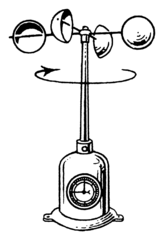
This weather instrument is a...
a)
anemometer
b)
barometer
c)
wind vane
d)
thermometer
8.
This weather instrument is a...
a)
thermometer
b)
anemometer
c)
rain gauge
d)
barometer
9.
This weather instrument is a...
a)
anemometer
b)
Christmas ornament
c)
wind vane
d)
barometer
10.
This weather instrument is an...
a)
wind vane
b)
anemometer
c)
barometer
d)
thermometer
11.
Temperature is measured in...
a)
degrees
b)
inches
c)
centimeters
d)
feet
12.
This tool measures the wind speed.
a)
barometer
b)
anemometer
c)
thermometer
d)
my dog when he sticks his head out the window
13.
Someone who studies the weather.
a)
rain gauge
b)
taxonomists
c)
meterologist
d)
satellites
14.
At which humidity is it more likely to rain?
a)
50%
b)
20%
c)
77%
d)
99%
15.
What type of map is shown?
a)
satelite
b)
radar
c)
isobar
d)
isotherm
16.
What type of map is shown?
a)
satellite
b)
radar
c)
isobar
d)
isotherm
17.
What weather instrument is pictured?
a)
Anemometer
b)
Thermometer
c)
Barometer
d)
Hygrometer
18.
What weather instrument is pictured?
a)
Anemometer
b)
Wind Vane
c)
Barometer
d)
Hygrometer
19.
What weather factor does a wind vane measure?
a)
Air Pressure
b)
Air Temperature
c)
Wind Speed
d)
Wind Direction
20.

How are the convection currents in the lava lamp different than convection currents in the atmosphere?

a)

warm air in the atmosphere sinks instead of rises

b)

The earth gets its heat from the sun and the lava lamp gets its heat from the light bulb below.

c)

Convection cells in the atmosphere flow in the same direction instead of opposite

d)

Cold air is less dense instead of being more dense.

21.

The number one thing hurricanes need is...

a)

warm water

b)

cold air from cold fronts

c)

cold water

d)

strong warm front

22.

What causes global convection currents

a)

Forests

b)

greenhouse gases

c)

more land forms

d)

uneven heating of the Earth's surface

23.

Where do warm ocean currents come from

a)

the poles

b)

near the land

c)

the equator

d)

middle of the oceans

24.

How to oceans form hurricanes?

a)

warm air over the equator rises and faster than cold air from the poles

b)

warm waters provide the energy for hurricanes

c)

cold water provides the energy for hurricanes

d)

cold air at the poles is more dense and falls faster than warm air from the equator

25.

How to warm waters contribute to hurricane development

a)

evaporating water adds heat to the atmosphere

b)

rising tides cause the ocean level to rise

c)

waves cause the hurricane to develope

d)

currents carry the warm water to the hurricane

26.

What city will experience decreasing temperatures in the next day?

a)

Denver

b)

El Paso

c)

Memphis

d)

Los Angeles

27.

What city is most likely going to see temperatures rise?

a)

San Jose

b)

El Paso

c)

Jacksonville

d)

Chicago

28.

Where do the most violent storms form

a)

The poles

b)

Tropic of Cancer

c)

The Equator

d)

Tropic of capricorn

29.

Where do warm ocean currents come from?

a)

warm ocean currents come from the southern hemisphere

b)

warm ocean currents come from the equator

c)

Warm ocean currents come from the poles

d)

Warm ocean currents come from the beach

30.

Where do cold ocean currents come from?

a)

cold ocean currents come from the southern hemisphere

b)

cold ocean currents come from the equator

c)

cold ocean currents come from the poles

d)

cold ocean currents come from the beach

31.

What does this symbol represent?

a)

Cold Front

b)

Warm Front

c)

Stationary Front

d)

Occluded Front

32.

What does this symbol represent?

a)

Cold Front

b)

Warm Front

c)

Stationary Front

d)

Occluded Front

33.

What does this symbol represent?

a)

Cold Front

b)

Warm Front

c)

Stationary Front

d)

Occluded Front

34.

What does this symbol represent?

a)

Cold Front

b)

Warm Front

c)

Stationary Front

d)

Occluded Front

35.

hurricanes are

a)

extreme low pressures

b)

extreme high pressures

c)

small rain storms

d)

formed over land

36.

Low Pressures are associated with what type of weather

a)

fair weather

b)

cold weather

c)

warm weather

d)

rainy weather

37.

high Pressures are associated with what type of weather

a)

fair weather

b)

cold weather

c)

warm weather

d)

rainy weather

38.

Warm Fronts bring

a)

rain followed by cool dry air

b)

hurricanes

c)

rain followed by hot humid air

d)

fair weather

39.

cold Fronts bring

a)

rain followed by cool dry air

b)

hurricanes

c)

rain followed by hot humid air

d)

fair weather

40.
What is storm that contains storm surges and has wind speeds of 74 mph - 200 mph?
a)
thunderstorms
b)
severe thunderstorms
c)
tornadoes
d)
hurricanes
41.
Most of the damage done by a hurricane is the result of _____
a)
water
b)
wind
c)
tornadoes
d)
lightning
42.
What are thunderstorms?
a)
a storm with thunder and lighting and typically also heavy rain or hail
b)
a storm that can be the same as thunderstorms, but even more dangerous
c)
a mobile, destructive vortex of violently rotating winds having the appearance of a funnel shaped cloud and advancing beneath a large storm system.
d)
a huge storm with strong winds and storm surges
43.
What are tornadoes?
a)
a storm with thunder and lighting and typically also heavy rain or hail
b)
a storm that can be the same as thunderstorms, but can be even more dangerous
c)
a mobile, destructive vortex of violently rotating winds having the appearance of a funnel shaped cloud and beneath a large storm system.
d)
a huge storm with strong winds and storm surges
44.
What do hurricanes feed on?
a)
warm tropical water
b)
hot water
c)
cold artic water
d)
rain
45.
What is the scale used to measure hurricanes?
a)
MPH scale
b)
Fujita Scale
c)
Weight Scale
d)
Saffir/Simpson Scale
46.
Does lightning or thunder come first?
a)
thunder
b)
lightning
c)
it depends
47.
Which of the following have been linked to climate change?  
a)
droughts
b)
flooding
c)
melting of polar ice caps
d)
all of the above
48.
If the water temperature increases, what will happen to the strength of hurricanes?
a)
Increase
b)
Decrease
c)
Stay the same
49.

An air mass is a large mass of air that is defined by its temperature and ____________________.

a)

Elevation (altitude)

b)

Water vapor content (humidity)

c)

Strength

d)

Weather

50.

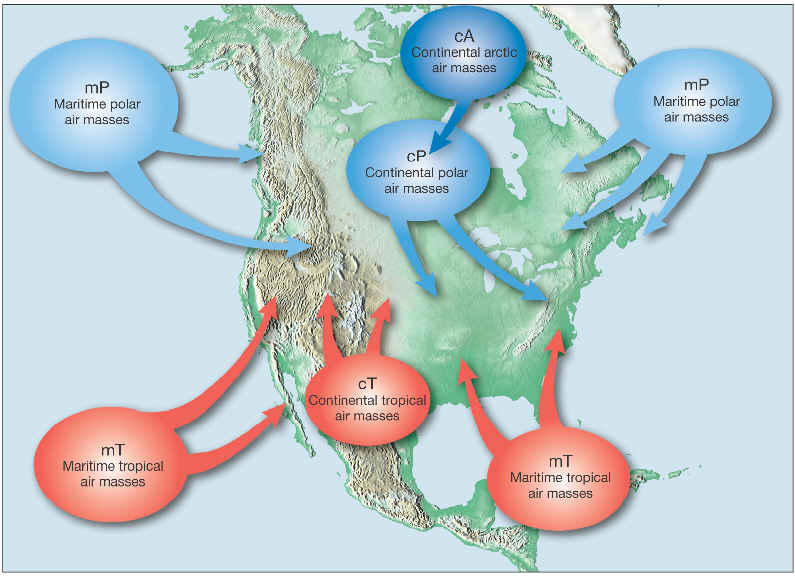
Which type of air mass is dry and warm?

a)

Continental polar

b)

Continental tropical

c)

Maritime polar

d)

Maritime tropical

51.

This is the symbol for a _____________ weather front.

a)

Cold

b)

Warm

c)

Stationary

d)

Occluded

52.

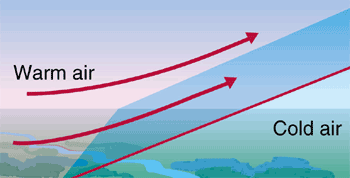
A _____________ weather front occurs when a cold air mass moves forward, pushing the warm air mass up.

a)

Cold

b)

Warm

c)

Stationary

d)

Occluded

53.

A _____________ weather front occurs when a cold air mass and a warm air mass meet, but cannot move one another so they both stay still for several days.

a)

Cold

b)

Warm

c)

Stationary

d)

Occluded

54.

Why does warm air rise above cold air?

a)

Warm air is less dense

b)

Warm air is more dense

c)

Cold air is stronger than warm air

55.

Which type of weather front can produce precipitation (rain or snow)?

a)

Cold

b)

Warm

c)

Stationary

d)

Occluded

e)

All of the above

56.

What is the correct symbol for maritime polar?

a)

MP

b)

Mp

c)

mP

d)

mp

57.

Applying what you know about air masses, which air mass would you expect to find here in Chad, Africa? (circled on the picture **hint: find the equator line**)

a)

Continental polar

b)

Continental tropical

c)

Maritime polar

d)

Maritime tropical

58.
It's cloudy
a)
Hace sol.
b)
Hace calor.
c)
Está nublado.
d)
Nieva.
59.
It rains.
a)
Nieva.
b)
Llueve.
c)
Hace fresco.
d)
Hace calor.
60.
It's hot
a)
Hace viento.
b)
Hay tormenta.
c)
Hace mucho calor.
d)
Nieva.
61.
It snows
a)
Llueve.
b)
Hace fresco.
c)
Hace sol.
d)
Nieva.
62.
It is windy =
a)
Hace frío.
b)
Hace fresco.
c)
Hace sol.
d)
Hace viento.
63.
Nieva=_______
a)
It's raining.
b)
It's snowing.
c)
It's cloudy.
d)
It's drizzling.
64.
Llueve=_______
a)
It's sleeting.
b)
It's hailing.
c)
It's raining.
d)
It's snowing.
65.
 It's cold
a)
Hace mal tiempo
b)
Hace sol
c)
Hace viento
d)
Hace frío
66.
Which season is it?
a)
spring
b)
summer
c)
autumn
d)
winter
67.
What is the weather like?
a)
warm
b)
hot
c)
cool
d)
cold
68.
What is the weather like?
a)
warm
b)
dry
c)
rainy
d)
foggy
69.
What is the weather like?
a)
hot
b)
humid
c)
wet
d)
cool