
 Worksheets
Moon Phases
Total questions: 67
Worksheet time: 1hrs 7mins
True or False? The moon does not produce its own light.
True
False
What is a way of describing how the moon looks during the QUARTER phase?
invisible
a pizza pie
a half circle
a thin banana
True or False? The moon does not produce its own light.
True
False
What is a way of describing how the moon looks during the QUARTER phase?
invisible
a pizza pie
a half circle
a thin banana
When the moon waxes, it ________.
goes from a new moon to a full moon
seems to get bigger in size
goes from a full moon back to a full moon
A & B only
When the moon wanes, it ________.
goes from a new moon to a full moon
goes from a full moon back to a new moon
seems to get smaller in size
B and C only
What happens right after the full moon phase?
The moon becomes new.
The moon goes through its phases in the reverse order.
The moon seems to disappear in the sky.
The moon starts to wax.
What is the correct order of the first five phases of the moon?
new, crescent, quarter, gibbous, full
new, crescent, gibbous, quarter, full
full, crescent, quarter, gibbous, new
full, quarter, gibbous, crescent, new
What is true of a new moon?
The moon appears invisible.
You can see about half the moon.
The moon looks like a pizza pie.
It's the second phase of the moon.

Which phase of the moon is shown in the picture?
new
crescent
quarter
gibbous

Which phase of the moon is shown in the picture?
full
gibbous
quarter
crescent
Why does the moon appear bigger than the planets and stars?
The lack of atmosphere on the moon makes it look bigger.
In reality, the moon is much bigger than the planets and stars.
The planets and stars are farther away.
The moon's gravity makes it look bigger.

The diagram shows the moon in various positions around Earth.
At which position would the moon appear to be full to people in the United States?
1
2
3
4
The diagram shows the moon in various positions around Earth.
At which position would the moon appear to be full to people in the United States?
1
2
3
4
As seen from Earth, the appearance of the moon changes throughout the month. What causes the appearance of the Moon to change?
Earth rotating on its axis
The moon rotating on its axis
Earth revolving around the sun
The moon revolving around Earth
The moon revolves around Earth about once every..
day
year
week
month
Which model correctly shows the position of the Sun, Earth, and the Moon during a solar eclipse?


What is the approximate length of time it takes the moon to complete one lunar cycle?
14 days
29 days
180 days
365 days

Here are the four phases of the lunar cycle, but they are NOT in the correct order.
Which sequence BEST shows the correct order of one lunar cycle?
1, 4, 3, 2
4, 3, 1, 2
3, 4, 2, 1
3, 2, 1, 4
Which term describes the path the Moon travels around Earth?
rotation
day
orbit
phase
All of these are examples of the ways Earth and the Moon interact EXCEPT
the phases of the moon
the tides on Earth
seasons on Earth
lunar eclipses

This picture shows the position of the Sun, Earth, and the Moon on one night.
What moon phase did people on Earth see on this night?
new moon
first quarter
full moon
third quarter

Natalie observed the Moon for over a couple of weeks. Each night, the Moon appeared a little fuller. Natalie wants to predict which phase of the moon she can expect to see in the next few days.
Based on Natalie's observations, which phase of the moon will appear next?


Sally is studying how the moon changes phases as it revolves around Earth.
How would the Moon appear from Earth when the Sun, Earth, and the Moon are arranged as shown in the diagram?


Students looked at a calendar for February 2007. They saw that the full moon occurred on February 2nd of that year.
Based on the cycle of moon phases, what date would the students predict that the next full moon occurred in 2007?
February 16
February 22
March 3
March 10
About how long is a lunar cycle?
1 day
1 week
1 month
1 year
During the new moon phase, the Moon cannot be seen in the night sky. Which diagram shows how the Moon, Earth, and Sun are arranged during the new moon phase?


Tamara made a diagram modeling the sizes of orbits that included the Sun, Earth, and Moon.
What is happening in Orbit 2?
The Sun is orbiting Earth
Earth is orbiting the Sun
The Moon is orbiting Earth
Earth is orbiting the Moon

Three students modeled orbits. Each student represented one space object. They moved around each other to model the orbits.
Which motion would show a real orbit?
Susanna orbits Erin
Erin orbits Molly
Susanna orbits Molly
Erin orbits Susanna

third quarter
starts to get smaller and is greater than half but not a full moon
the phase of the moon when it is three-quarters of the way through its orbit, and we see half of the moon lighted
shows the least of its' curved edge of the moon's side.
the phase of the moon in which we see the entire moon lighted, and it appears bright and round

waning crescent
starts to get smaller and is greater than half but not a full moon
the phase of the moon when it is three-quarters of the way through its orbit, and we see half of the moon lighted
shows the least of its' curved edge of the moon's side.
the phase of the moon in which we see the entire moon lighted, and it appears bright and round

waning gibbous
starts to get smaller and is greater than half but not a full moon
the phase of the moon when it is three-quarters of the way through its orbit, and we see half of the moon lighted
shows the least of its' curved edge of the moon's side.
the phase of the moon in which we see the entire moon lighted, and it appears bright and round

full moon
starts to get smaller and is greater than half but not a full moon
the phase of the moon when it is three-quarters of the way through its orbit, and we see half of the moon lighted
shows the least of its' curved edge of the moon's side.
the phase of the moon in which we see the entire moon lighted, and it appears bright and round

waxing gibbous
starts to become visible again and only a curved edge of the moon's side is visible
moon phase that occurs when the Moon is between Earth and the Sun, at which point the Moon cannot be seen
the moon is a quarter of the way around the Earth. You can see the right half of the moon
when the size of the illuminated portion of the moon is greater than half

first quarter
starts to become visible again and only a curved edge of the moon's side is visible
moon phase that occurs when the Moon is between Earth and the Sun, at which point the Moon cannot be seen
the moon is a quarter of the way around the Earth. You can see the right half of the moon
when the size of the illuminated portion of the moon is greater than half

waxing crescent
starts to become visible again and only a curved edge of the moon's side is visible
moon phase that occurs when the Moon is between Earth and the Sun, at which point the Moon cannot be seen
the moon is a quarter of the way around the Earth. You can see the right half of the moon
when the size of the illuminated portion of the moon is greater than half

new moon
starts to become visible again and only a curved edge of the moon's side is visible
moon phase that occurs when the Moon is between Earth and the Sun, at which point the Moon cannot be seen
the moon is a quarter of the way around the Earth. You can see the right half of the moon
when the size of the illuminated portion of the moon is greater than half
What causes the moon's phases
Where you are standing on Earth
the amount of sunlight reflected onto the moon from the sun
The tilt of Earth
how fast the moon is moving

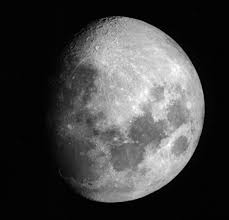
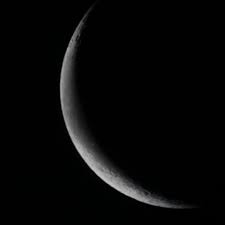
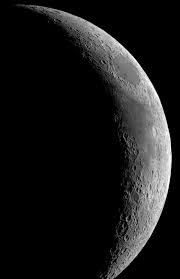
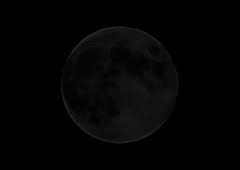
Name the moon phase
First Quarter
Third Quarter
New Moon
Full Moon
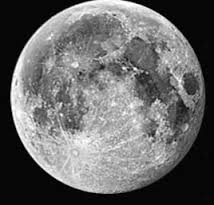
Name the moon phase
First Quarter
Third Quarter
New Moon
Full Moon
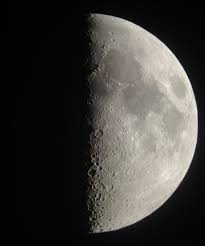
Name the moon phase
First Quarter
Third Quarter
New Moon
Full Moon


Which moon is in a FULL MOON phase? (fully illuminated)


Which moon is in a NEW MOON phase? (Not illuminated)
Which moon is in a 1st QUARTER phase? (light on right 50/50 split)
Which moon is in a 3rd QUARTER phase? (light on left 50/50 split)
Changes in the moon's appearance are
phases.
eclipses.
What causes the moon's phases?
The amount of sunlight reflected onto the Moon from the Sun.
Where you are standing on Earth.
How many TOTAL phases does the Moon go through?
8
4
2
Going from Full Moon to Full Moon lasts about how long?
Day
Year
Week
Month

