
 Worksheets
Natural Selection and Evolution
Total questions: 61
Worksheet time: 35mins
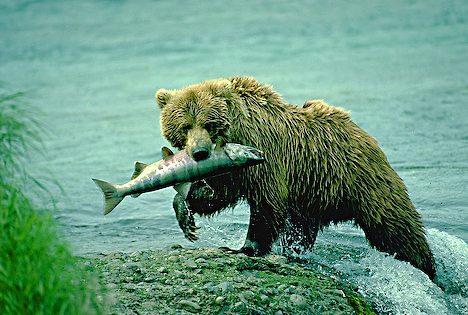
A grizzly bear survives because he is well-adapted to his environment. When he reproduces he passes on those traits to his offspring. this process is called
Natural Selection
Selective Breeding
Random mutations
Variations in a species
What is natural selection?
When reproduction occurs and mutations happen.
When a offspring has the traits from its parents.
When an organism is able to camoflauge in its environment.
the process whereby organisms that are better adapted to their environment tend to survive and reproduce more offspring.
In a cold environment what would be some adaptive traits? Sellect all that apply.
thick blubber
thick fur
thin fur
strong muscles
What is a trait?
a color
the quality or characteristic of an organism
the DNA of an organism
when mutatuons cause extra limbs.

Which of these are possible traits of a rattle snake?
Select all that apply
venom
rattle
hair
legs
scales
What is an adaptive trait?
A genetic trait that helps an organism to maximize its survival and reproduction ability
A trait that makes an animal strong
a trait that makes an animal weak
a poisonus plant
What is a non-adaptive trait?
a trait that does not help an organism surive and reproduce.
a trait that causes animals to be come more fit
a trait that allows animals to camoflauge
it causes a mutation
Can mutations be passed down to offspring?
Yes
No
Why do offspring share traits from both parents?
offspring choose the traits they want
offspring get 75 percent of the traits from their father
offspring get 50 percent of each parents DNA
Where are genes located?
on the cell
in the mitochondria
on chromosomes
on an organism
What is a gene?
sections of DNA
sections of UNA
a trait
an adaptive trait
Do genes code for traits?
yes
no

Gigantopithecus were very large primates that lived 500,000 years ago. Since none of these mammals are still today, they are said to be....
Extinct
Threatened
Endangered
Declining

Scientists have collected millions of fossils of different organisms, and have developed a timeline of life on Earth. What do we call this?
Mutation
Natural Selection
The theory of evolution
Fossil Record

Sometimes bones in the front limbs of animals are very similar in structure. What do we call similar bone structures that indicate a link to a common ancestor?
Adaptations
Gradualism
Homologous Structures
Extinction
What most likely caused the finches on the Galapagos Islands to have beaks that were different from the finches on the mainland?
There were different types of predators on the island.
There were different types of food available on the island.
The finches had no water to drink.
The finches on the mainland could not fly high enough.
What is the study of organisms at the early stages of development?
DNA studies
Comparative Embryology
Extinction
Fossil Record
What do we call a change in a species over time?
Adaptation
Evolution
Extinction
Environmental influences

Beak shape, camouflage, and webbed feet are all examples of which type of adaptation?
Behavioral Adaptation
Physical Adaptation

Select ALL that show evidence of evolution.
DNA
mutations
fossils
skeletal structures




This fossil turtle and this living hawk both have a structure in their neck called the atlas bone. What best explains why both species have an atlas bone?
Those two different species inherited their atlas bone structure from separate ancestor populations.
Those two different species inherited this structure from a common (the same) ancestor population.
We cannot make observations, or explain the body structures, or discover their ancestors because the fossils are too old.
All species have their own specific body structures, so it is a coincidence that they both happen to have the atlas bone structure.

The process by which one population evolves into two or more different species. Choose the BEST answer.
Natural selection
Speciation
Evolution
Segregation

Choose the BEST answer. A graph that uses bars to show how characteristics or values are distributed within a group is:
A pie chart
A line graph
A histogram
A scatterplot

Living things, or biotic factors, such as plants, animals, and bacteria are all examples of
abiotic factors
rocks
cycles
organisms

In the picture above, the bones that are the SAME color in the human arm bones and in the cat front leg bones indicate that they are
unrelated structures.
shared or homologous structures.
the artist's favorite color.
Nothing. The coloring is random.

an organism's arm, leg, or wing
evolution
limb
paleontologist
shared structure

The body structures for a population of chimpanzees were stable for a long time. Then, their body structures changed, making the chimpanzees stronger. Why did this happen?
Organisms naturally become stronger over time.
It is impossible to say without more information.
The chimpanzee population wanted to be stronger.
Their environment must have changed.

What is camouflage?
an event or process that leads to a result or change
a way of hiding by looking the same as the background
a trait that makes it more likely that an individual will survive in a specific environment
a result or change that happens because of an event or process

What are prey?
a group of the same type of organism living in the same area
an animal that is hunted or killed by another animal for food
a way of hiding by looking the same as the background
living things, such as plants, animals, and bacteria
What is an adaptive trait?
a trait that makes it less likely that an individual will survive in a specific environment
an instruction for making a protein molecule
a trait that makes it more likely that an individual will survive in a specific environment
the number of individuals with each trait in a population
What is variation?
a specific characteristic of an individual organism
a group of the same type of organism living in the same area
to receive genes from a parent
any difference in traits between individual organisms
What is a trait?
a specific characteristic of an individual organism
living things, such as plants, animals, and bacteria
an organism produced as a result of reproduction
an instruction for making a protein molecule
What is a protein molecule?
an organism produced as a result of reproduction
to receive genes from a parent
an instruction for making a protein molecule
a type of large molecule that performs important functions inside organisms
What is the definition of distribution?
the number of individuals with each trait in a population
a group of individuals born and living at about the same time
a graph that uses bars to show how characteristics or values are distributed within a group
any difference in traits between individual organisms
What is the definition of environment?
the number of individuals with each trait in a population
a group of the same type of organism living in the same area
everything (living and nonliving) that surrounds an organism
an animal that is hunted or killed by another animal for food
What is a population?
living things, such as plants, animals, and bacteria
an organism produced as a result of reproduction
any difference in traits between individual organisms
a group of the same type of organism living in the same area
What is a generation?
everything (living and nonliving) that surrounds an organism
living things, such as plants, animals, and bacteria
a group of the same type of organism living in the same area
a group of individuals born and living at about the same time
What is an offspring?
a rock band
an animal that is hunted or killed by another animal for food
an organism produced as a result of reproduction
a group of individuals born and living at about the same time
What is the definition of non-adaptive trait?
a trait that makes it less likely that an individual will survive in a specific environment
a trait that makes it more likely that an individual will survive in a specific environment
a specific characteristic of an individual organism
an instruction for making a protein molecule
What does inherit mean?
a specific characteristic of an individual organism
an instruction for making a protein molecule
living things, such as plants, animals, and bacteria
to receive genes from a parent

