wayground logo

Free Printable Worksheets

NEW

Font size

S
M
L
XL
Worksheets

Final Exam Review Physical Science

Total questions: 60

Worksheet time: 1hrs 25mins
Name
Class
Date
1.

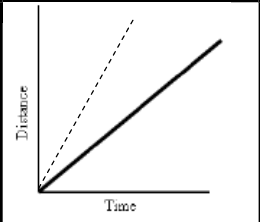
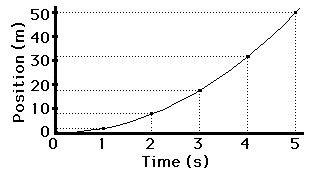
The picture of the position vs. time graph shows an object that is...

a)

speeding up

b)

moving at a constant speed

c)

not moving

d)

slowing down.

2.

What does either line on this graph represent?

a)

Constant Speed

b)

Speeding up

c)

Not moving

3.

What does a negative sloped line mean on a position vs time graph?

a)

The object is not moving at all

b)

The object is slowing down.

c)

The object is moving at a constant back to where it started.

4.
During which interval is the object not moving?
a)
B to C
b)
C to D
c)
D to E
d)
only at point A
5.
During which interval is the object speeding up?
a)
A to B
b)
B to C
c)
D to E
d)
E to F
6.

At which position is the object accelerating the fastest?

a)

c

b)

k

c)

neither because they are slowing down, which isn't acceleration

7.
If it takes Heather 3 seconds to run from the batter's box to first base at an average speed of 6.5 meters per second, what is the distance she covers in that time?
a)
19.5 m
b)
0.46 m
c)
2.2 m
d)
3.5 m
8.
Calculate the acceleration for segment A.
a)
2 m/s2
b)
20 m/s2
c)
-2 m/s2
d)
0 m/s2
9.
At which point in time, does this person turn around?
a)
3 seconds
b)
5 seconds
c)
10 seconds
d)
25 seconds
10.
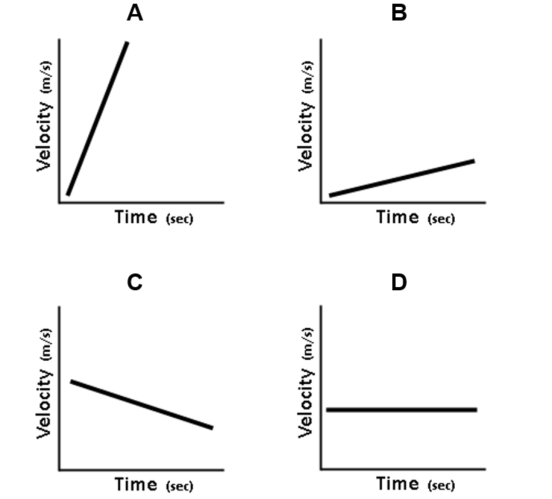
Which of the lines represent a constant velocity?
a)
A
b)
B
c)
C
d)
D
11.

What is the speed of an object traveling for 8 hours, a distance of 48 kilometers?

a)

6 km/hr

b)

56 km/hr

c)

0.16 km/hr

d)

40 km/hr

12.
Which graph represents the greatest acceleration?
a)
A
b)
B
c)
C
d)
D
13.
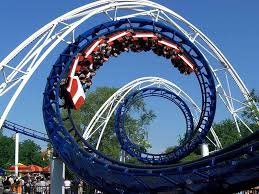
A roller coasters accelerates from an initial velocity of of 6.0 m/s to a final velocity of 70 m/s over 4 seconds.  What's the acceleration?
a)
24 m/s2
b)
18 m/s2
c)
16 m/s2
d)
16 m/s
14.
A car starts from rest at a stop light and reaches 20 m/s in 3.5 s. Determine the acceleration of the car.
a)
2.2m/s2
b)
7.0m/s2
c)
5.7m/s2
d)
70m/s2
15.
Liza is swimming laps from one end of a 50 meter pool to the other. Going from one end to the other is considered one lap. If she swims four complete laps, which statement is TRUE?
a)
Her distance and displacement are both zero.
b)
Her distance is zero, but her displacement is 200 meters.
c)
Her distance is 200 meters, but her displacement is zero.
d)
Her distance and displacement are both 200 meters.
16.
What type of force is shown in the picture?
a)
The Cat force
b)
Star Wars Force
c)
Unbalanced force
d)
Balanced  force
17.
An _______ force must act on an object for it to CHANGE it's motion
a)
balanced
b)
unbalanced
c)
gravitational
d)
electrical
18.

Use the picture as reference. If the force of the girl pushing is 30N, and the force of the boy who is also pushing is 30N, what is the net force?

a)

0N

b)

60N

c)

900N

d)

1N

19.

Use the picture as reference. If the force of the girl pushing is 20N, and the boy who is also pushing is 15N, what is the net force?

a)

5N

b)

300N

c)

35N

d)

1.33N

20.
Jupiter has about 317 times more mass than Earth. What can you infer from this fact? 
a)
That Jupiter’s gravitational force is much weaker than on Earth’s gravitational force.
b)
That Jupiter’s gravitational force is much stronger than Earth’s gravitational force.
c)
That Jupiter’s and Earth’s gravitational forces are equal.
d)
Mass has no effect on the gravitational force between two objects
21.
What is the net force?
a)
5000 N right
b)
4000 N right
c)
40 N left
d)
4000 N left
22.
Name the missing force....
a)
weight force
b)
normal force
c)
frictional force
d)
tension force
23.
Friction is a force that acts in an ___________ direction of movement.
a)
similar
b)
opposite
c)
parallel
d)
west
24.

Letting go of a balloon full of air is demonstrating Newton's ______ _______ ________ _________ because the air comes out of the back and the balloon moves forward.

a)

1st law of motion

b)

2nd law of motion

c)

3rd law of motion

d)

13th law of motion

25.

Which law of motion says that you must push or pull objects harder if they have more mass?

a)

1st

b)

2nd

c)

3rd

d)

4th

26.

What law is best described by inertia?

a)

1st

b)

2nd

c)

3rd

d)

law of conservation of mass

27.

A 20 kg bike accelerates at 10 m/s2. what was the force

F = m x a

a)

25 Newtons

b)

20 Newtons

c)

200 Newtons

d)

10 Newtons

28.

An evil ewok threw a rock with a force of 24.6N and an acceleration of 6m/s2 at an innocent stormtrooper. What was the rocks mass?

a)

4Kg

b)

41kg

c)

4.1kg

d)

46kg

29.

Your car has a mass of 2500 kg and a force of 5000 N. How fast will it accelerate?

a)

20 m/s2

b)

2 m/s2

c)

0.5 m/s2

d)

120 N

30.

What happens when unbalanced forces act on an object at rest?

a)

the object remains at rest

b)

the object begins moving in an unpredictable direction

c)

the object begins moving in the direction of the net force

d)

the object begins moving opposite to the direction of net force

31.
Jorge noticed a collision outside the coffee shop where two cars collided and stuck together.  What type of collision did he observe?
a)
Elastic
b)
Inelastic
c)
Completely inelastic
d)
none
32.
While playing pool, Emma notices that the pool balls bounce apart.  What type of collision is this?
a)
Elastic
b)
Inelastic
c)
Explosive
d)
Force
33.

The Law of Conservation of Momentum states that the amount of momentum in a system is ___________________ before and after a collision.

a)

greater

b)

decreased

c)

the same

d)

unknown

34.
At which point is potential energy greatest?
a)
W
b)
X
c)
Y
d)
Z
35.
At which point is kinetic energy greatest? 
a)
W
b)
X
c)
Y
d)
Z
36.

Which point has the most potential energy?

a)

A

b)

B

c)

C

d)

A and C

37.

Which point has the least potential energy?

a)

A

b)

B

c)

C

d)

A and C

38.
As a boulder rolls from the top of a hill to the bottom, how does its potential and kinetic energy change?
a)
Potential and Kinetic energy both increase
b)
Potential increases and Kinetic decreases
c)
Potential decreases and Kinetic increases
d)
Potential and Kinetic energy both decrease
39.

What is the KE of a football which has a mass of 0.8 kg and is kicked at a velocity of 10m/s?

a)

80 J

b)

3.2 J

c)

160 J

d)

40 J

40.
A leopard with a mass of 55.00 kg climbs 12.0 m up a tree. What is its GPE?
a)
6,468 J
b)
660 J
c)
4.58 J
d)
0.22 J
41.
Gravity on Jupiter is 24.79 m/s2. If a 5 kg box is 32 m above the surface of Jupiter, calculate the GPE of the box.
a)
160 J
b)
3,966.4 J
c)
158.66 J
d)
6.45 J
42.
Which is NOT true of a series circuit
a)
One light bulb can be broken and other lights will still work.
b)
All loads are a single loop
c)
Adding more loads will lessen the current in the loop
43.
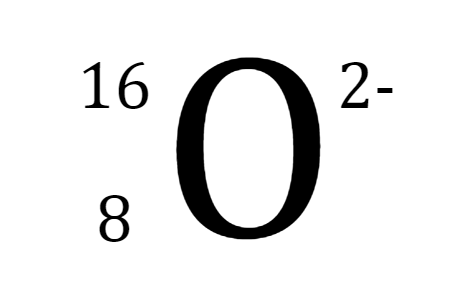
How many oxygen atoms in 
Mg(NO3)2
a)
1
b)
2
c)
3
d)
6
44.
The red numbers in the image below represent ________
a)
subscripts
b)
coefficients
c)
I don't know, and don't want to try
d)
None of the answers are correct
45.

An atom that gains or loses an electron becomes

a)

an isotope

b)

a new element

c)

an ion

d)

a molecule

46.

When an atom gains an electron it becomes

a)

negatively charged

b)

positively charged

c)

neurtal

47.

What type of bond forms CaF2

a)

covalent bond

b)

ionic bond

c)

metallic bond

d)

all answers are correct

48.

Is this equation balanced? C3H8 + 5O2 = 4H2O + 3CO2

a)

yes

b)

no

49.
What atom matches this electron configuration?
1s22s22p63s2
a)
Neon
b)
Magnesium
c)
Aluminum
d)
Potassium
50.

Covalent bonding is between a

a)

nonmetal and nonmetal

b)

metal and nonmetal

c)

metal and metal

d)

It depends on the situation

51.
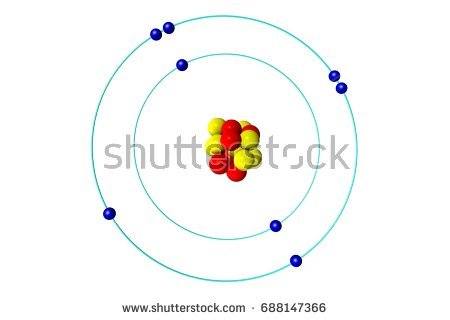
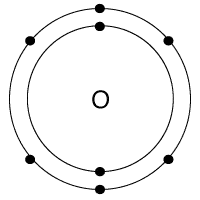
How many valence electrons in this structure?
a)
6
b)
5
c)
4
d)
7
52.

Which is the correct Lewis Structure for oxygen?

a)
b)
c)
d)
53.

Methane, CH4, has polar bonds but is not a polar molecule because ___

a)

of geometrical asymmetry

b)

of geometrical symmetry

c)

it's linear

d)

of no electronegativity differences

54.
When dissolved in water, bases produce:
a)
acids
b)
salts
c)
hydrogen ions
d)
hydroxide ions
55.
What is decomposition?
a)
putting substances together
b)
breaking substances apart
c)
element replacing another element in a compoud
d)
burning of a subtance
56.
The following is what type of reaction:
PbCl2 + AgNO3 → Pb(NO3)2 + AgCl
a)
Synthesis
b)
Decomposition
c)
Single Replacement
d)
Double Replacement
57.
When dissolved in water, acids produce:
a)
bases
b)
salts
c)
hydrogen ions
d)
hydroxide ions
58.
a)
Longitudinal Wave
b)
Transverse Wave
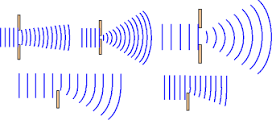
59.
a)
Diffraction
b)
Interference
60.
a)
Constructive Interference
b)
Destructive Interference