
 Worksheets
ECON Final Exam Quizizzes
Total questions: 195
Worksheet time: 3hrs 53mins
A saving account in a bank represents the function of money:
Store of value
A medium of exchange
A standard for deferred payments
A measure of value
Choose the most accurate definition of "money".
Money is anything generally accepted in payment for goods or services or in the repayment of debts.
Money is anything recognized in trading and transaction for goods.
Money is legal currency that is released by banks to satisfy the financial needs of the people.
A medium of exchange is_______
something that is generally acceptable in exchange for goods and services
a legally recognized asset that is generally accepted in exchange for goods and services.
something that circulates and provides a standardized means of evaluating the relative price of goods and services.
The ability of money to command purchasing power in the future
1 of 3 functions of money allowing people to preserve value for future use.
Store of value
Divisibility
Portability
Measure of value
1 of the 3 functions of money that allows it to serve as a common denominator to measure value.
Measure of value
Store of value
Divisibility
Medium of exchange
All of the following are among the 6 characteristics of money EXCEPT:
Acceptability
Domesticity
Scarcity
Portability
Divisibility
An example of commodity money is:
Wampum Belts
The US Dollar
Gold/silver coins
An example of Commodity-Backed Money is:
The modern US Dollar
Gold and silver coins
The US Dollar on the Gold Standard
Cocoa beans
Fiat money is different from other forms of money because:
Fiat money has no value on its own, and is only worth anything because it is commonly accepted
Fiat money has high value on its own, but its value is degraded through trade
Fiat money is backed by physical goods with real value - e.g. gold
I'm an institution which performs the function of accepting deposits, lending funds & making an investment with the main aim of profit maximization.
What am I?
Commercial Bank
Central Bank
Government
None of these
A _____________ consists of checks, currency, or coins put into a bank account.
direct deposit
ATM
deposit
checking account
The amount of money that the lender lends to the borrower is called ....
principal
tenure
default
collateral
The principal that banks lend to businesses is ....
auto loans
commercial loans
personal loans
application loans
Money lent to an individual for personal or family purpose.
Consumer Loan
Business Loan
Stock Index
Par Value
Money lent specifically for a business purpose.
Stock
Business Loan
Consumer Loan
Bond
Money lent specifically for purchasing a home
Stock
Business Loan
Consumer Loan
Mortgage Loan
Influencing the economy by changing the overall supply of money is called:
Which of the following investment options has the LOWEST risk?
Mutual Funds
Government bonds
Corporate Bonds
Stocks
Which of the following investment options has the HIGHEST possible returns?
Mutual Funds
Government bonds
Corporate Bonds
Stocks
How does product differentiation promote global trade?
Some countries produce unique versions of products you can't get anywhere else
Non-specialized nations will not trade non-differentiated goods
Differentiation makes economic activity sustainable
A business owned and operated by only one person
Partnership
Sole Proprietor
Cooperative
Limited Liability Company (LLC)
Sole Proprietors have ______ for any debts or losses incurred by their business
limited liability
no liability
50% liability
unlimited liability
A business owned and operated by two or more co-owners
Partnership
Sole Proprietor
Corporation
Limited Liability Company (LLC)
A business owned by many shareholders, who do not have direct responsibility for its debts
Partnership
Sole Proprietor
Corporation
Limited Liability Company (LLC)
Where a business sells the right to produce and sell their brand to another
A worker with little to no professional experience or training is considered:
Unskilled
Semi-Skilled
Skilled
Professional
what is Human Capital?
Money Assets of a Company
Immigration of people into America
Treating yourself to a nice dinner
A worker's skill, knowledge, and experience
An organization of workers dedicated to protecting members' interests and improving wages, hours and working conditions for all.
Labor Union
Workers Rights
Worker Strikes
Collective Bargaining
Which of the following is a major disadvantage of sole proprietorships?
Limited Liability
Unlimited Liability
Lack of control
High government regulation
Which of the following types of bank accounts offers the HIGHEST returns in the form of interest?
Timed
Checking
Savings
Which of the following types of bank accounts has the HIGHEST liquidity?
Timed
Checking
Savings
Which of the following types of cards involves paying with YOUR money (rather than the bank's)?
Credit
Debit
In finance, interest refers to...
Additional charges on the initial amount borrowed
Money received by the bank as part of all deposits
The desire of banks to retain customers
Money that comes directly from a checking account, rather than from credit
Which of the following types of bank accounts has the LOWEST liquidity?
Timed
Checking
Savings
In response to an economic recession, a Keynesian economist might suggest...
Increased spending on government projects, to provide jobs and stimulate the economy
Decreased spending on government projects, to cut down on national debt
Ordering the Fed to print greater amounts of money, to stimulate the economy
Providing a tax cut for the largest corporations, to promote job creation by big businesses
The _______ considers the weighted averages of a group of consumer goods and services.
Consumer price index
Aggregate supply
Producer price index
Aggregate demand
If operators are fired and replaced with computer technology, the operators would be considered
frictionally unemployed
structurally unemployed
cyclically unemployed
dissatisfiededly unemployed dissatisfiededly unemployed
Cyclical unemployment
Describes recent college graduates
Lasts longer than 6 months
Describes employees moving from one job to another
Increases inflation Increases inflation
The unemployment rate is the ratio of
People seeking jobs unemployed to labor force
People seeking jobs employed to labor force
People seeking jobs divided by total labor force
dissatisfied to labor force
The unemployment rate will drop if
A person is hired into a new job
Someone who was previously laid off is rehired
An unemployed person stops looking
ALL of these answers are CORRECT
Which of these people is officially unemployed
A secretary who took 6 months off for maternity leave
An aspiring actress who waits tables but would rather act
Maid who got fired and will start a new job in 2 weeks
A student who only works 4 hours a week in the library
If an economy is at its Natural Rate of Unemployment...
Only Cyclical Unemployment would be present
There would be no frictional unemployment
Only frictional and structural unemployment would be present
Everyone is working Everyone is working
If operators are fired and replaced with computer technology, the operators would be considered
frictionally unemployed
structurally unemployed
cyclically unemployed
dissatisfiededly unemployed dissatisfiededly unemployed
Which of the following best defines unemployment?
The state of being able to work and actively seeking work, but unable to find employment
The state of being able to work, but choosing not to
The percentage of the labour force that is able and actively seeking work, but cannot find employment
The total number of people who do not work
When individuals lose jobs due to fall in aggregate demand, often during an economic recession.
Structural Unemployment
Cyclical Unemployment
Frictional Unemployment
Seasonal Unemployment
Which of the following is not in the labor force?
Charles, who wants to work but has given up looking for work until the weather improves.
Mary, who works part-time but wishes for work full time.
John, who has a graduate degree but is working as a waiter.
Carl, who does not have work but applied for work at a local factory.
Melissa, who just graduated from business school and is currently seeking employment as an accountant.
What type of unemployment is a person experiencing when they are laid off during a recession?
Frictional
Seasonal
Cyclical
Structural

In order to measure the rate of inflation, it is necessary to measure the rate at which prices:
differ
increase
decrease
change
Inflation takes place when prices, on average:
fall
fluctuate
remain the same
rise
Which of the following are the 8 major groups of the Consumer Price Index?
Housing, food, apparel, transport, healthcare, recreation, education/communication, and misc.
Employment, food, apparel, transport, dental care, recreation, education/communication, and misc.
Pets/service animals, food, dating, vacationing, recreation, video games, water, travel
Business investments, food, apparel, transport, childcare, recreation, education/communication, and misc
What causes Cost-Push inflation?
An increase in demand for goods and services
An increase in supply
A rise in production costs passed on to consumers
A fall in the price of imports
What the definition of deflation?
decrease in the average price of goods and services
occurs when the price of goods and services rise
the amount one dollar can buy is reduced
__________ occurs in the economy when unemployment and inflation are both high.
Hyperinflation
Disinflation
Deflation
Stagflation
The Laffer Curve suggests that tax rates that have been set too high will _____ overall tax revenue.
increase
reinforce
decrease
nullify
The belief the government must manage the economy by spending more money when in a recession and cutting spending when there is inflation.
Keynesian Economics
Supply-Side Economics
Monetary Policy
Fiscal Policy
Managing the economy by altering the supply of money and interest rates.
Keynesian Economics
Supply-Side Economics
Monetary Policy
Fiscal Policy
Which theory believes the economy should be controlled through Money Supply
Classical
Keynesian
Monetarism
Austrian
it is not affected
it is not affected

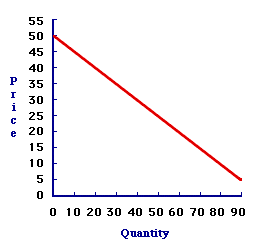

$1
$2
$3
$4

When quantity supplied is smaller than quantity demanded, you have a ____________.
shortage
surplus
deficit
equilibrium
What prevents firms from entering a monopoly?
Barriers to Entry
Technology
Price
Barriers to Travel
Which of the following industries is an example of a monopoly?
utilities/water
department stores
auto industry
commercial airlines
A market that has a few sellers of basically the same goods.
Perfect Competition
Pure Monopoly
Monopolistic Competition
Oligopoly

Using the pizza store graphic, what market structure best fits the pizza industry?
Monopoly
Oligopoly
Perfect competition
Monopolistic competition
In this market, the producer is the least responsive to buyers' needs and wants.
Perfect Competition
Pure Monopoly
Monopolistic Competition
Oligopoly
If a single firm raises its price it will not be able to sell any of its output.
Perfect Competition
Pure Monopoly
Monopolistic Competition
Oligopoly
When firms agree to charge the same or similar prices for a product, this is known as
price-fixing
independent behavior
natural monopoly
laissez-faire
Which type of market structures has many producers (companies) and sell similar but different products from each other? These companies have a little control over the price and there are relatively low barriers to entry.
perfect competition
monopolistic competition
oligopoly
monopoly
If a firm can change market prices by altering its output, then it
Has market power.
Faces a flat demand curve.
Is a price taker.
Engages in marginal cost pricing
ability of a company to control prices and total market output
market power
price discrimination
license
government monopoly
Market failure occurs whenever
free markets fail to distribute resources efficiently.
goods fail to arrive at a market in a timely fashion.
government builds infrastructure.
voluntary exchange in a market fails to result in a sale.

When companies that form on oligopoly cooperate together to set or fix prices at a given level, they are engaging in
Monopoly
Vertical Integration
Collusion

Graph shows which of the following?
(actually use this graph to answer the question)
a decrease in demand (shift) and a decrease in quantity supplied
a decrease in demand (shift) and a decrease in supply
a decrease in quantity demanded and a decrease in quantity supplied
a decrease in quantity demanded and a decrease in supply (shift)

Which of the following is NOT a determinant of the supply of peanut butter?
The price of peanuts
The wages of peanut butter factory workers
The income of peanut butter consumers
Existing peanut butter making technology

Which of the following will cause an increase in demand for snowboards?
More costly production methods
A decrease in the price of lift tickets at resorts in Colorado
A decrease in consumer income
A decrease in the population

What does a “surplus” (extra amount) of goods in a market imply?
Prices are too high
Prices are too low
Supply is too low
Demand is too high

Americans revive their love of SUV’s and the newly remodeled, but still “gas guzzling” Hummer. What happens to the market for gasoline?
Demand for gasoline will decrease
Demand for gasoline will increase
Demand for gasoline will stay the same

In an attempt to increase the production of oil and gasoline, Congress and the President have given the okay to drill in the Alaskan Arctic Preserve. What happens to the market for gasoline?
Supply for gasoline will decrease
Supply for gasoline will increase
Supply for gasoline will stay the same

Which of the following defines "Complementary Goods?"
Goods that can be used to replace the purchase of similar goods when prices rise
Goods that are commonly used with other goods
Goods that are independent of other markets
If only the price for a good or service changes, does the demand curve shift? Why or why not?
Yes, Price shifts the demand curve to the right because less people are being goods
Yes, Price shifts the demand curve to the left because more people are buying goods
No, Because price does not shift the curve. Price stays on the line
No, because price does not impact the points on the curve
Yes and No. The price shifts the curve sometimes, but not always
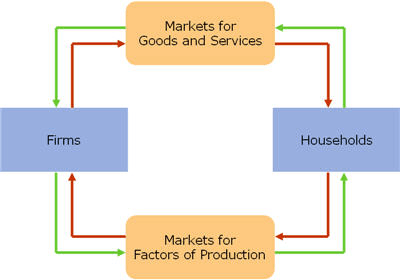
What is being represented by the "red flow line"
The flow of money
The flow of goods and services
Taxes
Productive resources
Scarcity is a problem:
that only poor people face.
because human wants are limited while resources are unlimited.
because human wants are unlimited while resources are limited.
only in third world countries.
Labour, land and capital are called:
goods and services.
entrepreneurship.
outputs.
factors of production.
The three basic categories of resources are land, labour and:
money.
time.
energy.
capital.
The central question in economics is how to:
deal with the problem of scarcity.
change government economic policy.
change people’s wants to match their needs.
manage money and become wealthy.
The most fundamental concepts underlying the discipline of economics are:
scarcity and making an efficient choice.
supply and demand.
money, stocks and bonds.
inflation and unemployment.
Which of the following is a microeconomics topic?
The unemployment rate.
The inflation rate.
The economy’s growth rate.
The price of apples.
Forecasts of a recession next year.
What is macroeconomics about?
It is about economic growth
It is about inflation
It is about unemployment
All above
Production possibilities frontier analysis allows us to identify:
minimum possible combinations of goods and services.
ways to eliminate scarcity.
total benefits of production.
inefficient production.
The production possibilities frontier shows that:
scarcity can be eliminated.
all output combinations are possible
an economy that is operating efficiently can have more of one good without giving up some of another good.
some of one good must be given up to get more of another good in an economy that is operating efficiently.

Which of the following moves from one point to another in Exhibit 2.7 would represent an increase in economic efficiency?
Z to W.
W to Y.
Z to X.
X to W.
Opportunity cost can be defined as:
The amount of money you paid for something
The HIGHEST valued alternative that you give up for a good (the next best thing)
The cost of giving up everything to obtain a good
The LOWEST valued alternative that you give up for a good (the bad decisions)
Economic decision to use one more additional unit of a resource
Thinking at the Margin
Incentives Matter
Trade Makes People Better Off
Future Consequences Count

I only have an hour of free time today. If I study, I can't see my friends.
Costs versus Benefits
Thinking at the margin
Incentives Matter
Future Consequences Count


Should I spend thousands of dollars on college? Would it be worth it?
Markets Coordinate Trade
Costs vs Benefits
Trade Makes People Better Off
Thinking at the Margin

Amateur investors banded together this week to squeeze Wall Street hedge funds by sending GameStop’s stock prices to dizzying heights.
Costs vs Benefits
Trade Makes People Better Off
Future Consequences Count
Markets Coordinate Trade


A lot of mothers cannot afford to stay home with their children because they have to work to help pay for costs of living, the choice they make to go to work forces them to give up time and nurturing of their children.
Thinking at the Margin
Costs vs Benefits
Scarcity Forces Tradeoffs
Future Consequences Count
Amber was shopping at the mall. She had $80 to spend. She found three items she liked: $75 for a pair of shoes, $70 for a jacket, and $62 for a dress. After shopping for a couple hours, she decided to borrow a pair of shoes from her cousin and to buy the jacket for $70. What was her opportunity cost?
Shoes
Jacket
Dress
Purse
Tom was shopping for a car. He has looked at a Ford, Honda, Toyota, and Dodge. After a lot of debate, he narrowed it down to either the Ford or the Honda. He selected the Ford, because he liked the interior a little better. What was his opportunity cost?
Ford
Honda
Toyota
Dodge
The seatbelt law has helped protect drivers and passengers, but now there has been increase in pedestrian and cycle deaths. Why? Well maybe drivers feel more secure and therefore drive more aggressively.
Thinking at the Margin
Costs vs Benefits
Scarcity Forces Tradeoffs
Future Consequences Count
The satisfaction gained from using one more unit of a good or service is called
marginal utility
marginal cost
opportunity cost
opportunity benefit
Brandon is hungry, so he orders a pizza. When he eats the first slice of pizza, he feels fuller and happier. By the time he eats the last slice, he feels sick and bloated. What economic law is being demonstrated?
Law of Diminishing Marginal Utility
Law of Cosines
Rule of Law
Law of Magna Carta

Which of the Factors of Production is being used to make the pencil?
(a)
Why do many economists believe private ownership leads to more productive businesses than public ownership?
People tend to take better care of goods they own
People have more government protections as a private business than within the public sector
Infrastructure can only be developed by private businesses
Private businesses have more human capital
Upton Sinclair's novel The Jungle revealed worker abuses and unsanitary practices and helped lead to the creation of the Food and Drug Administration. The government's creation of the FDA demonstrates the importance of _______ in a mixed-market economy
Regulations
Taxes
Laissez-Faire economics
Reaganomics

What is one advantage of a Command Economy?
Individual freedom for everyone
Health and public services are available to everyone at little or no cost.
The government rarely interferes.
Able to adjust to change gradually

What is a Command Economy?
CAPITALISTIC economy in which there is free competition and prices are determined by interaction of supply and demand
An economic system COMBINING private and public enterprise.
When production, investment, price, and income are determined centrally by a GOVERNMENT.
A system that relies on customs, history, and time-honored beliefs.

What is one disadvantage of a Command Economy?
Requires large bureaucracy, which consumes resources
Lower standard of living
Does not produce enough public goods
Workers and businesses face uncertainty as a result of competition and change.
The limited amount of resources available
Resource
Competition
Scarcity
Cost
The benefit you give up by choosing to do one thing instead of another.
Scarcity
Consumer
Market
Opportunity Cost

What is standard of living?
is a measure of the minimum amount of money thought to be adequate for life
A measure of how well off the people are in a country
A lack of money and basic necessities needed for life
Which of the following is NOT one of the three fundamental economic questions?
For whom are goods and services produced?
What goods and services will be produced?
How will we decide who is a citizen?
How will goods and services produced?
Traditional economies rely heavily on __________ to meet the needs of citizens.
farming and agriculture
farming and manufacturing
manufacturing and agriculture
agriculture and services
The Soviet Union and North Korea are best described as...
Command Economies
Market Economies
Mixed Economies
Traditional Economies
The United States is best described as having what type of economy?
A Mixed Economy
A Command Economy
An Agrarian Economy
A Traditional Economy
Around 42% of Saudi Arabia's Gross Domestic Product each year comes from petroleum (oil). Saudi Arabia is an example of a(n) ______ economy.
traditional
specialized
independent
Juche
Individuals and businesses pay ___ to the government to pay for public goods and services.
interest
deposits
taxes
income
Which of the following best describes a goal of government in a mixed economy?
Laissez-Faire; the gov't stays out of the economy as much as possible
Outlawing unacceptable practices such as slavery
Micro-managing every economic decision in the country
Fixing prices to ensure the market never grows too strong.
What is opportunity cost?
the value of the next best option that is not selected when a choice is made.
there is not enough of it.
things people make to earn money.
actions people do to earn money.
Michael has been invited by a friend to go fishing on Friday. His parents are going to a concert. Michael chooses to go fishing with his friend. What is his opportunity cost?
fishing with a friend
going to a concert
Andrea has planned a trip to the beach for her family on Labor Day. Her daughter has been invited to the mountains by a friend. Her daughter decides to go to the beach. What is her opportunity cost?
a trip to the beach
a trip to the mountains
Jason has been asked by his son to go ride 4-wheelers this weekend. His boss has asked him to work overtime and get paid double. Jason chooses to go ride 4-wheelers with his son. What is his opportunity cost?
ride 4-wheelers with his son
work overtime for his boss

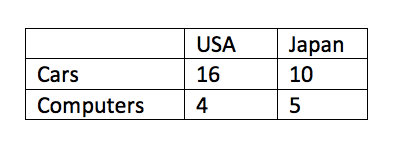


Voluntary Exchange

The barter system is the exchange of goods and cash.
True
False
An advantage of Barter is
you can use money
more goods can be acquired
it is flexible in trading goods or services
it is a quick process of trade
The exchange of goods and services without the use of money ______.
service
consumer
producer
barter
Trade is the exchange of goods and __________.
business
services
Which of these is an exchange of a service?
fixing your computer
an iPhone
Which of these is an example of a good?
babysitting
an iPad
Before money was invented people had to _____.
Barter
Buy
According to the Legal definiton,money is------
what money does
anything generally accepted as a medium of exchange.
measure of value
None of these
Which among the following is a primary function of money?
Store of value
Transfer of value
Medium of exchange
Liquidity
Scarcity is a problem:
that only poor people face.
because human wants are limited while resources are unlimited.
because human wants are unlimited while resources are limited.
only in third world countries.
Labour, land and capital are called:
goods and services.
entrepreneurship.
outputs.
factors of production.
The three basic categories of resources are land, labour and:
money.
time.
energy.
capital.
The central question in economics is how to:
deal with the problem of scarcity.
change government economic policy.
change people’s wants to match their needs.
manage money and become wealthy.
The most fundamental concepts underlying the discipline of economics are:
scarcity and making an efficient choice.
supply and demand.
money, stocks and bonds.
inflation and unemployment.
Which of the following is a microeconomics topic?
The unemployment rate.
The inflation rate.
The economy’s growth rate.
The price of apples.
Forecasts of a recession next year.
What is macroeconomics about?
It is about economic growth
It is about inflation
It is about unemployment
All above
Production possibilities frontier analysis allows us to identify:
minimum possible combinations of goods and services.
ways to eliminate scarcity.
total benefits of production.
inefficient production.
The production possibilities frontier shows that:
scarcity can be eliminated.
all output combinations are possible
an economy that is operating efficiently can have more of one good without giving up some of another good.
some of one good must be given up to get more of another good in an economy that is operating efficiently.
Which of the following moves from one point to another in Exhibit 2.7 would represent an increase in economic efficiency?
Z to W.
W to Y.
Z to X.
X to W.
Opportunity cost can be defined as:
The amount of money you paid for something
The HIGHEST valued alternative that you give up for a good (the next best thing)
The cost of giving up everything to obtain a good
The LOWEST valued alternative that you give up for a good (the bad decisions)
Economic decision to use one more additional unit of a resource
Thinking at the Margin
Incentives Matter
Trade Makes People Better Off
Future Consequences Count
I only have an hour of free time today. If I study, I can't see my friends.
Costs versus Benefits
Thinking at the margin
Incentives Matter
Future Consequences Count
Should I spend thousands of dollars on college? Would it be worth it?
Markets Coordinate Trade
Costs vs Benefits
Trade Makes People Better Off
Thinking at the Margin
Amateur investors banded together this week to squeeze Wall Street hedge funds by sending GameStop’s stock prices to dizzying heights.
Costs vs Benefits
Trade Makes People Better Off
Future Consequences Count
Markets Coordinate Trade
A lot of mothers cannot afford to stay home with their children because they have to work to help pay for costs of living, the choice they make to go to work forces them to give up time and nurturing of their children.
Thinking at the Margin
Costs vs Benefits
Scarcity Forces Tradeoffs
Future Consequences Count
Amber was shopping at the mall. She had $80 to spend. She found three items she liked: $75 for a pair of shoes, $70 for a jacket, and $62 for a dress. After shopping for a couple hours, she decided to borrow a pair of shoes from her cousin and to buy the jacket for $70. What was her opportunity cost?
Shoes
Jacket
Dress
Purse
Tom was shopping for a car. He has looked at a Ford, Honda, Toyota, and Dodge. After a lot of debate, he narrowed it down to either the Ford or the Honda. He selected the Ford, because he liked the interior a little better. What was his opportunity cost?
Ford
Honda
Toyota
Dodge
The seatbelt law has helped protect drivers and passengers, but now there has been increase in pedestrian and cycle deaths. Why? Well maybe drivers feel more secure and therefore drive more aggressively.
Thinking at the Margin
Costs vs Benefits
Scarcity Forces Tradeoffs
Future Consequences Count
The satisfaction gained from using one more unit of a good or service is called
marginal utility
marginal cost
opportunity cost
opportunity benefit
Brandon is hungry, so he orders a pizza. When he eats the first slice of pizza, he feels fuller and happier. By the time he eats the last slice, he feels sick and bloated. What economic law is being demonstrated?
Law of Diminishing Marginal Utility
Law of Cosines
Rule of Law
Law of Magna Carta
Which of the Factors of Production is being used to make the pencil?
(a)
Why do many economists believe private ownership leads to more productive businesses than public ownership?
People tend to take better care of goods they own
People have more government protections as a private business than within the public sector
Infrastructure can only be developed by private businesses
Private businesses have more human capital
Upton Sinclair's novel The Jungle revealed worker abuses and unsanitary practices and helped lead to the creation of the Food and Drug Administration. The government's creation of the FDA demonstrates the importance of _______ in a mixed-market economy
Regulations
Taxes
Laissez-Faire economics
Reaganomics

