
Font size
 Worksheets
MCAS Biology Practice
Total questions: 53
Worksheet time: 53mins

Evidence of Evolution: Images of the embryo and adult stages of three different organisms are shown.
Which of the following is the best conclusion that can be drawn from this evidence?
Having similar embryos indicates that these organisms eat the same types of food.
Having similar embryos indicates that these organisms live in a similar environment.
Having similar embryos indicates that these organisms share a recent common ancestor.
Having similar embryos indicates that a certain protein controls how many legs the adult organisms will have.
Protein Synthesis/Mutations: A small number of people have an inherited mutation that decreases the likelihood of heart disease. The mutation causes the amino acid cysteine to be replaced by arginine.
Which of the following is most likely responsible for the mutation?
a large protein with a longer polypeptide chain
the duplication of a chromosome in the genome
the crossing over of a chromosome in the genome
a substitution of one nucleotide in the DNA sequence

Evidence/Model: Scientists discovered a 375-million-year-old fossil in Canada. The diagram below shows the top and side views of the fossil.
Which observation would best support the hypothesis that this organism was a transitional form between amphibians and fish?
The fossil has a long body, which both modern amphibians and modern fish have
The fossil is larger than most modern amphibians, but smaller than most ancient fish.
The fossil has some body structures that are similar to amphibians and some body structures that are similar to fish
The fossil was discovered near a lake, which shows that the organism needed water to reproduce, as do amphibians and fish.
Which of the following best decribes a result of mitosis?
organisms whose genetic diversity increases over time.
daughter cells that are genetically identical to the parent cell.
gametes with combinations of alleles absent in the parent cell.
chromosomes that carry different genetic instructions to each cell.

NATURAL SELECTION/GRAPH: The distribution of shell heights in a population of snails changed over time, as shown.
Which of the following best explains what happened to the genetic diversity of this snail population in regard to shell height?
Genetic diversity decreased because of selection pressure.
Genetic diversity increased because of changes in food sources
Genetic diversity stayed the same because of equal birth and death rates.
Genetic diversity increased because of the introduction of a new behavior
PROTEIN SYNTHESIS: A section of DNA is shown.
3'- TCG ATA TCC -5'
Which sequence best shows the result of transcription for the section of DNA?
AGC TAT AGG
UCG AUA UCC
TCG ATA TCC
AGC UAU AGG
ENERGY: Herbicides are chemicals that kill plants by interrupting important biological processess. Different herbicides affect different plant processes. The herbicide atrazine prevents the chemical reactions that use energy from sunlight.
A plant is sprayed with atrazine. Exposure to atrazine causes an immediate decrease in the production of two substances in the plant. Select the two substances.
DNA
carbon dioxide
glucose
phospholipids
oxygen
CYCLES: Which of the following occurs during decomposition?
Carbon is dissolved in water to form a solution.
Carbon is stored in animals as complex carbon compounds.
Carbon compounds are absorbed by plant roots from the soil.
Carbon compounds are broken down into simpler substances.

ECOLOGY/GRAPH: The graph shows the changes in the population size of a mammal species introduced onto an isolated island in 1957.
Which of the following conclusions is best supported by the data?
Every year, more individuals were born than died.
A predator of this mammal was removed from the island in 1990.
The population decreases were the result of low immigration rates .
In the 1980's, the mammal's population size stayed around its carrying capacity.
EVOLUTION/GENETICS: Some population of Atlantic tomcod fish have an allele that makes the fish resistant to toxic pullutants called PCBs. Tomcod populations in several rivers were analyzed for the presence of this allele. Each river had varying levels of PCB pollution.
Which of the following results would best support the conclusion that natural selection is influencing the presence of this allele in the tomcod populations?
All of the tomcod in each of the rivers have this allele.
The percentage of tomcod with this allele remains the same from year to year in each river.
The rivers with high PCB levels have larger percentages of tomcod with this allele than the rivers without PCBs.
Eggs from tomcod without this allele can hatch in rivers with or without PCBs, and eggs from tomcod with this allele can only hatch in rivers without PCBs.

ECOSYSTEM/GRAPH:
The energy pyramid shows the amount of available energy at each trophic level of an ecosystem.
Which statement best explains the trophic levels in the energy pyramid?
The trophic levels show how energy flows from level 4 to level 1.
Only about 10% of the energy available at one trophic level is transferred to the next trophic level.
At each trophic level, the energy available is directly proportional to the size of the organisms in that trophic level.
At each trophic level, 10% of the energy is converted into matter and 90% of the energy is tranferred up to the next level.

PROTEIN SYNTHESIS:
Based on the model, which of the following leads to the production of lactase?
ATP is used to form lactase from glucose.
Lactase is directly replicated from DNA using ATP.
DNA is transcribed to form mRNA, and then mRNA is translated
DNA is translated to form a dairy sugar, and then mRNA is transcribed.
EVIDENCE OF EVOLUTION: Fossilized remains of prehistoric mastodons show anatomical similarities to modern-day elephants. These similarities provided the first evidence that mastodons were related to modern-day elephants.
Which of the following is the best additional evidence that mastodons were related to elephants?
Mastodons walked on four legs like modern-day elephants
Mastodons ate a diet similar to that of moderns-day elephants
Mastodon fossils were found in the same area where modern-day elephants live
Mastodon tissues contained protein sequences similar to those of modern-day elephants

ROTEIN SYNTHESIS: The simplified diagram shows how the protein mucin is produced by lung cells.
Select two statements that best describe the relationship between the DNA and the protein mucin.
The DNA is built from the mRNA of mucin.
The DNA folds at certain locations to shape mucin.
Sugars in the DNA can change the structure of mucin.
The DNA codes for the amino acid sequence that forms mucin.
Mutations to the DNA can change the structure and function of mucin.
ANATOMY: Select TWO body systems that are most directly responsible for delivering oxygen to an animals's cells.
Circulatory System
Digestive system
Excretory System
Nervous System
Respiratory System
GENETICS: Which of the following cellular structures store the instructions that determine the color of a cat's fur?
Flagella
Vacuoles
Chloroplasts
Chromosomes
GENETICS: A scientist is studying mutations in bacteria. Which of the following describes something the scientist could do to determine whether a mutation in a bacterial cell causes changes to a trait in the bacterial cell?
make changes to the cell's genes and then look for changes in the proteins created
make changes to the nutrients available to the cell and then look for changes in the nucleus
make changes to the cell's color using dye and then observe whether the cell changes shape
make changes to the air temperature surrounding the cell and then observe whether the cell changes size

GENETICS/MODEL: The diagram below represents the chromosome pairs present in the body cells of a fruit fly.
Fruit flies reproduce sexually. Exactly how many chromosomes does a fruit fly offspring normally inherit from each parent?
1 Chromosome
2 chromosome
4 chromosome
8 chromosome
ECOLOGY: Polar bears live in the Northern Hemisphere and need a large amount of Arctic ice to hunt. Which of the following is most likely to occur if the amount of Arctic ice in polar regions decreases significantly over a short period of time?
Polar bears will migrate south.
Polar bears will become extinct.
Polar bears will develop a larger body size.
Polar bears will adapt to water environments .
ECOLOGY: Hawks and owls are both birds of prey and often live in the same areas. Which of the following factors most likely limits competition for prey between hawks and owls living in the same area?
Hawks and Owls have different predators.
Hawks have speckled eggs and owls have white eggs.
Hawks and owls are camouflaged by different feather colors.
Hawks are active during the day and owls are active during the night.
EVOLUTION: Millions of years ago, a small population of birds lived on the Hawaiian islands. Over time, this population evolved into more than 54 seperate species, each with different colors, beak shapes, and food sources.
Which of the following best explains why the original population of birds evolved into so many different species?
Many of the birds were killed each time a volcano erupted on the Hawaiian Islands.
The Hawaiian Islands had few predator species to decrease the lifespan of the birds.
The bird population moved into and adapted to many different environments on the Hawiian Islands.
The climate of the Hawiian islands rarely changed, which helped the bird population to increase in size.
GENETICS: Strawberry plants can reproduce both sexually and asexually. Strawberry farmers use both kinds of reproduction, depending on the desired outcome.
In which of the following situations would a farmer most likely want the strawberry plants to repreduce sexually.
when developing new varieties of fruit
when making identical copies of a plant
when producing fruit that is all the same size
when growing many new plants from cuttings
ANATOMY/MODEL: Which of the following diagrams best represents the levels of organization of multicellular organisms?


ENERGY: Which part of the plant is responsible for producing sugars?
Chloroplast
Mitochondria
Nucleus
Lysosomes

Which of the following can be concluded about the internal cellular contents of this prokaryote?
Two populations of fish live in separate water drainage systems. Which of the following questions would be most useful to ask to help determine whether these two populations are the same species?
Are the food sources the same for the two populations?
Do the two populations' habitats have the same water pH?
Can individuals from the two populations successfully interbreed?
Which of the following conclusions is the best support for why certain types of monkeys have similar looking external appearances and bone structure?
They all eat the same types of food
They all descend (come) from a common ancestor
They all were the first mammals to evolve from reptiles
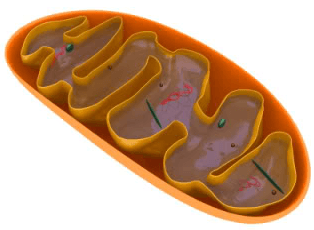
What are tiny organelles that break down glucose and use the energy to make ATP?

When 2 plants were crossed, the seeds produced did NOT sprout or grow. Which of the following conclusions best describes this information?
The two groups are the same species because the plants have similar shapes
The two groups are different species because they have differently sized stems
The two groups are different species because the seeds produced cannot sprout or grow
Which of the following describes how a large mouse population with high genetic diversity will most likely be affected by a sudden, significant environmental change?
All of the individuals within the population will reproduce at a higher rate, leading to a decrease in genetic diversity
New traits will arise as a result of new selective pressures in the environment, leading to an increase in genetic diversity.
Only those individuals best adapted to the new environment will survive and reproduce, leading to a decrease in genetic diversity.
Which of the following observations most strongly supports evolutionary links between fossil organisms and modern organisms?
The fossil organisms and modern organisms have identical body sizes.
The fossil organisms and modern organisms have homologous body structures.
The fossil organisms are hundreds of thousands of years old, and modern organisms have been around for hundreds of years.

The image shows
Vestigial structures
Homologous structures
Fossils

What type of evidence is shown in the image above?
Fossils
Vestigial structures
DNA
The "best" form of evidence for evolutionary relationships is
similarities in DNA or proteins
Fossils
Homologous Structures
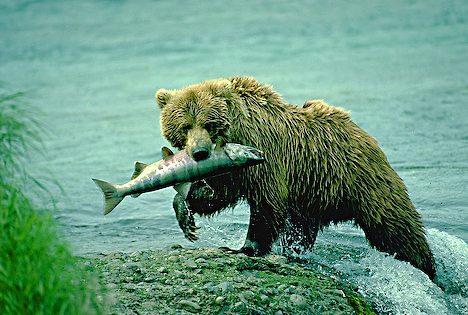
A grizzly bear survives because he is well-adapted to his environment. When he reproduces he passes on those traits to his offspring. This process is called
Natural Selection
Selective Breeding
Random mutations
Variations in a species
The differences among individuals of the same species, like different bird beaks, are called
genes.
variations.
traits.
Cell organelle that stores materials such as water, salts, proteins, and carbohydrates
Centriole
Vacuole
Ribosome
Lysosome
Organelle found in cells of plants and some other organisms that captures the energy from sunlight and converts it into chemical energy
Chloroplast
Mitochondria
Cell Wall
Lipid Bilayer

A partial food web is shown. Select TWO changes that would most likely lead to a decrease in the size of the sea otter population in the area.
A law is passed that results in less fishing in the area.
Warmer ocean temperatures cause more algae to grow in the area.
Chemical runoff from a factory kills many crabs and small fish in the area.
An invasive species of sea star that preys on sea urchins moves into the area.
A small number of people have an inherited mutation that decreases the likelihood of heart disease. The mutation causes the amino acid cysteine to be replaced by arginine. Which of the following is MOST LIKELY responsible for this mutation?
a large protein with a longer polypeptide chain
the duplication of a chromosome in the genome
the crossing over of a chromosome in the genome
a substitution of one nucleotide in the DNA sequence

The graph shows the effect of temperature on the rate of carbon dioxide (CO2) production in plant cells as a result of cellular respiration. Based on the graph, select the response that correctly completes each statement:
"When temperature INCREASES, the rate at which glucose is used by cells is expected to?"
Decrease
Increase
Stay the same

Which of the following best describes a result of mitosis?
organisms whose genetic diversity increases over time
daughter cells that are genetically identical to the parent cell
gametes with combinations of alleles absent in the parent cell
chromosomes that carry different genetic instructions to each cell

The distribution of shell heights in a population of snails changed over time, as shown. Which of the following BEST explains what happened to the genetic diversity of this snail population in regard to shell height?
Genetic diversity decreased because of selection pressure.
Genetic diversity increased because of changes in food sources.
Genetic diversity stayed the same because of equal birth and death rates.
Genetic diversity increased because of the introduction of a new behavior.
Genetic engineering is a process used to introduce a new trait into an individual organism or into a population of organisms.
For a genetically engineered trait to be inherited by offspring, the genetically engineered DNA must be present in the parents’
blood cells
gametes
saliva
skin cells

The diagram shows part of the carbon cycle.
Which of the processes shown in the diagram is responsible for cycling carbon from the atmosphere to the biosphere?
combustion
decomposition
photosynthesis
respiration

The energy pyramid shows the amount of available energy at EACH trophic level of an ecosystem.
Which statement best explains the trophic levels in the energy pyramid?
The trophic levels show how energy flows from level 4 to level 1.
Only about 10% of the energy available at one trophic level is transferred to the next trophic level.
At each trophic level, the energy available is directly proportional to the size of the organisms in that trophic level.
At each trophic level, 10% of the energy is converted into matter and 90% of the energy is transferred up to the next level.
The energy pyramid shows the amount of available energy at EACH trophic level of an ecosystem.
Which group of organisms obtains energy for life processes by converting sunlight into chemical energy?
producers
primary consumers
secondary consumers
tertiary consumers

The enzyme lactase is needed for a person to be able to digest sugar in dairy products, such as cow’s milk. The model shows how the enzyme lactase is produced by a cell.
Which model correctly shows the two molecules involved in the formation of lactase?


Some bacteria produce cellulase, a substance that speeds up the breakdown of cellulose in plant cell walls. Cellulase is an example of which of the following?
a carbohydrate
an enzyme
a hormone
an organelle
In four o’clock plants, the allele for red flower color is incompletely dominant to the allele for white flower color. As a result, plants that are heterozygous for flower color have pink flowers. If two plants with pink flowers are crossed, what are the expected percentages of phenotypes in the offspring?
0% red, 100% pink, 0% white
25% red, 50% pink, 25% white
50% red, 0% pink, 50% white
50% red, 50% pink, 0% white
The oceans have become increasingly acidic in recent years as the water absorbs more and more carbon dioxide from the atmosphere. This increased acidity interferes with the ability of corals to maintain their skeletons. In addition, an increase in water temperatures worldwide is causing coral bleaching, another condition that threatens the health of coral reefs. Based on this information, which of the following would most improve the health of coral reefs?
reducing the use of fossil fuels
eliminating nuclear power plants
removing more natural gas embedded in rocks
replacing offshore oil drills with onshore oil drills
Remora fish can attach themselves to larger aquatic animals, such as whales. When the whales eat, the fish detach themselves and eat leftover scraps of food. These fish do not harm or help the whales. What is the ecological relationship between the remora fish and the whales?
commensalism
competition
parasitism
predation

