Wayground logo

Free Printable Worksheets

Font size

S
M
L
XL
Worksheets

Chemistry and biomolecules

Total questions: 73

Worksheet time: 46mins
Name
Class
Date
1.
Which biomolecule has sugars and starches?
a)
Lipids
b)
Proteins
c)
Carbohydrates
d)
Nucleic Acid
2.
Which biomolecule functions include enzymes­ which speeds the rate of chemical reactions, structural components in cells, mechanical functions in muscles and cytoskeleton, cell signaling, and immune response; provides structure and helps with chemical reactions 
a)
Protein
b)
Lipids
c)
Carbohydrate
d)
Nucleic Acid
3.
Which biomolecule is important source of energy for humans; glucose for human cells, tissues, and organs; provides fiber, sugar, and starches; provides structural support, cell wall, and cell membrane maker?
a)
Nucleic Acid
b)
Lipid
c)
Carbohydrate
d)
Protein
4.
Which biomolecule includes fats, such as triglycerides, oils, waxes, and steroids (cholesterol); insoluble in water; provides energy storage, insulation, part of cell membrane, and hormones 
a)
Nucleic Acid
b)
Lipids
c)
Carbohydrate
d)
Protein
5.
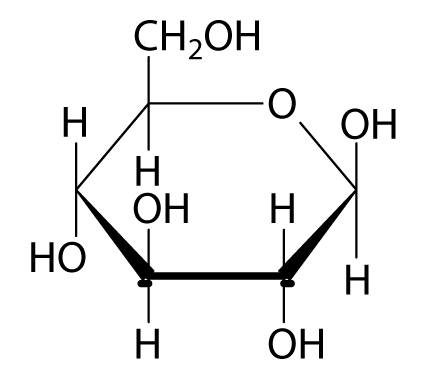
Identify the biomolecule
a)
Carbohydrate
b)
Lipid
c)
Protein
d)
Nucleic Acid
6.
What is the monomer for a protein?
a)
Monosaccharide
b)
Triglyceride
c)
Amino Acid
d)
Nucleotide
7.
Lipids are made up of which of the following?
a)
glycerol and fatty acids tails
b)
glycerol and monolipids
c)
fatty acids and phosolipids
d)
amino acids and nucleotides
8.

Subatomic particles with a negative charge

a)

Electrons

b)

Neutrons

c)

Protons

d)

Quarks

9.
Subatomic particles with a positive charge
a)
neutrons
b)
atomic mass
c)
protons
d)
isotopes
10.
Measure mainly of the nuclear particles: protons + neutrons
a)
Subatomic Particles
b)
Atomic Number
c)
Atomic Mass
d)
Gluons
11.
Subatomic particles that are neutral in charge
a)
Neutrons
b)
Protons
c)
Nucleus 
d)
Electrons
12.

Atoms of the same element with a different number of neutrons

a)

Ion

b)

alloy

c)

Isotope

d)

Quarks

13.
A charged atom
a)
Ion
b)
Isotope
c)
Electron Cloud
d)
Quark
14.
Where electrons are likely to be found as they travel around the nucleus
a)
Nucleus
b)
Electron Cloud
c)
Within a Proton
d)
Within a Neutron
15.
A tiny but very dense, positively charged portion of the atom that holds most of the atomic mass
a)
Electron Shells
b)
Orbitals
c)
Electron Cloud
d)
Nucleus
16.
Arrangement of elements organized by atomic number
a)
Electron Cloud 
b)
Periodic Table 
c)
Electron Configuration
d)
None of these
17.

Calculation used to find the number of neutrons in an atom

a)

Mass Number- Atomic Number

b)

Atomic Number - Mass Number

c)

Mass Number - Electrons

d)

protons = electrons = neutrons

18.
How many protons does an aluminium atom have? (Use the image to help you)
a)
27
b)
14
c)
40
d)
13
19.
How many neutrons does a sodium atom have? (Use the image to help you)
a)
23
b)
11
c)
12
d)
34
20.
Atoms of the same element must always have the same number of _________
a)
electrons
b)
neutrons
c)
isotopes
d)
protons
21.

The __________ of an atom is the sum of the protons and neutrons in the nucleus of that atom.

a)

mass number

b)

atomic number

c)

ionic charge

d)

isotope weight

22.

How many electrons does this oxygen atom have?

a)

16

b)

8

c)

24

d)

6

23.

How many electrons does the first shell hold?

a)

1

b)

2

c)

4

d)

8

24.

How many electrons can be in the 2nd energy level hold?

a)

1

b)

2

c)

4

d)

8

25.

How many Protons are in Magnesium?

a)

24.305

b)

24

c)

12

d)

6

26.
subatomic particles found on the outermost shell & responsible for the atom's reactivity
a)
neutrons
b)
valence electrons
c)
isotopes
d)
ions
27.
What is the electron configuration of sodium?
a)
2.8
b)
2.8.2
c)
2.8.1
d)
11
28.
What is the electron configuration of calcium?
a)
2.8.8.2
b)
2.8.10
c)
20
d)
2.18.2
29.
Which element has an electron configuration of 2.5?
a)
Oxygen
b)
Nitrogen
c)
Phosphorus
d)
Carbon
30.
Which element has an electron configuration of 2.8.8?
a)
Lead
b)
Flourine
c)
Neon
d)
Argon
31.
What is the electron configuration of Aluminium?
a)
2.8.3
b)
2.11
c)
13
d)
2.8.2
32.
What is the electron configuration of chlorine?
a)
17
b)
2.7
c)
2.8.7
d)
2.8.4
33.
Which element has the electron configuration of 2.7?
a)
Krypton
b)
Iodine
c)
Flourine
d)
Barium
34.

Who invented the Periodic Table?

a)

Mendeleev

b)

Bohr

c)

Lewis

d)

Democritus

35.

As you move left to right on a row or period what happens?

a)

Atomic number increases by 1

b)

Electrons decrease

c)

Number of shells decrease

d)

Nothing

36.

What happens to the number of shells as you move down a group?

a)

They decrease by 1

b)

They increase by 1

c)

Nothing

37.

Elements in the same group or column have the same ...

a)

# of valence electrons

b)

# of shells

c)

# of protons

d)

Mass Number

38.

Rows on the periodic table are called ___________.

a)

Periods

b)

Sentences

c)

Fences

39.

The columns in the periodic table are called ___________.

a)

Towers

b)

Herds

c)

Groups

40.

Elements in the same group have __________

a)

Similar Properties

b)

Same number of shells

c)

Similar Mass

41.

What do all elements in the same period have?

a)

same number of shells

b)

same number of electrons

c)

belong in the same family

42.
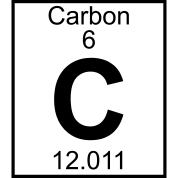
What does the 6 represent?
a)
atomic mass
b)
atomic number
c)
element name
d)
chemical symbol 
43.
Which of the following is the most metallic element in period 3?
a)
Boron (B)
b)
Sodium (Na)
c)
Argon (Ar)
d)
Silicon (Si)
44.
Which of these element is the least metallic?
a)
Potassium (K)
b)
Carbon (C)
c)
Sulfur (S)
d)
Neon (Ne)
45.
Pure forms of these elements are stored in oil so they won't react with oxygen and water in the air.
a)
Alkali Metals
b)
Alkaline-earth metals
c)
Halogens
d)
Noble Gases
46.
What group of elements don't have individual names?
a)
Alkaline-earth Metals
b)
Transition Metals
c)
Alkali Metals
d)
Halogens
47.
Most of the elements on the periodic table are classified as _____.
a)
Metals
b)
Nonmetals
c)
Metalloids
d)
Periods
48.
Pure water has a pH of 7. Pure water _______.
a)
is a base
b)
is a neutral substance
c)
could be either an acid or a base
d)
is an acid
49.
Many cleaning solutions are bases. Which of the following is a property of most bases?
a)
feels slippery
b)
white color
c)
can only be liquid
d)
tastes sour
50.
Human blood has a pH between 7.35 and 7.45. Which of the following best describes human blood?
a)
strongly acidic
b)
slightly acidic
c)
strongly basic
d)
slightly basic
51.
Which of the following statements is correct?
a)
Blue litmus paper turns red when placed in a base.
b)
Red litmus paper turns blue when placed in a base.
c)
Blue litmus paper stays blue when placed in an acid.
d)
Red litmus paper stays red when placed in a base.
52.
Turns litmus blue.
a)
Acids
b)
Bases
c)
Salts
d)
All
53.
Turns litmus red
a)
Acids
b)
Bases
c)
All
54.
Which has a pH above 7?
a)
Acid
b)
Base
55.
Which has a pH below 7?
a)
Acid
b)
Base
56.

If I add more chicken soup to this setup, what will happen to the pH?

a)

It will increase and get closer to 7

b)

It will decrease and get closer to 0

c)

It will stay the same and not change

57.

Milk is a very weak acid. What might its pH value be?

a)

6.5

b)

7.8

c)

4.2

d)

12.2

58.

When acids react with metals, they produce hydrogen gas and salt.

a)

True

b)

False

59.

Which of the following are properties of acids?

a)

They conduct electricity when dissolved in water

b)

They taste sour

c)

They react with metals to produce hydrogen gas

d)

All of the answer choices are correct

60.

Which of the following is an acid?

a)

vinegar

b)

bleach

c)

sugar in water

d)

starch in water

e)

toothpaste in water

61.

The pH value of an acid represents its __________ of positive ions in the solution

a)

amount

b)

concentration

c)

color

d)

charge

62.

Which of the following is a property of a base?

a)

bitter taste

b)

reacts with metals

c)

salty

d)

sour taste

63.

The strongest bases have pH values close to

a)

0

b)

14

c)

7

d)

5

64.

Which of the following is a base?

a)

baking soda in water

b)

orange juice

c)

vinegar

d)

lemonade

65.

Ocean water is only slightly basic. What might its pH value be?

a)

5

b)

8

c)

12

d)

2

66.

What are the products formed when a metal reacts with an acid?

a)

salt and water

b)

salt

c)

hydrogen gas

d)

salt and hydrogen gas

67.

What are the products formed when a metal oxide reacts with an acid?

a)

salt and water

b)

salt

c)

hydrogen gas

d)

salt and hydrogen gas

68.

What are the products formed when magnesium oxide + hydrochloric acid react?

a)

magnesium chloride and water

b)

magnesium chloride and hydrogen gas

c)

hydrochloric oxygen and water

d)

magnesium oxide and water

69.

What are the products formed when aluminium + hydrochloric acid react?

a)

magnesium chloride and water

b)

aluminium chloride and hydrogen gas

c)

aluminium chloride and water

d)

aluminium oxide and water

70.

What are the products formed when copper oxide + hydrochloric acid react?

a)

copper chloride and water

b)

copper chloride and hydrogen gas

c)

sodium ethanoate and water

d)

aluminium oxide and water

71.
A neutralisation reaction is a reaction between 
a)
Acid and a Base 
b)
Acid and water 
c)
Base and water 
d)
None of the above 
72.
An acid reacts with a metal carbonate to produce 
a)
Salt, water and hydrogen gas
b)
Salt, water and carbon dioxide
c)
Limewater
d)
Salt and water 
73.
What type of reaction is the following: 
HCl  + Zn --> ZnCl2 + H2
a)
Neutralisation
b)
Acid and a metal 
c)
Acid and a carbonate 
d)
Ionic