wayground logo

Free Printable Worksheets

Font size

S
M
L
XL
Worksheets

Data Comm (Chapter 2 - Fundamentals of Data Comm)

Total questions: 60

Worksheet time: 45mins

Name
Class
Date
1.
Is music playing from a record an analog or digital signal?
a)
Analog
b)
Digital
2.
Is a video game coded as analog or digital data?
a)
Analog
b)
Digital
3.
The string of 1s and 0s that control a computer is called _____ code.
a)
binary
b)
dichotomous
c)
Morse
d)
two-number
4.
Numbers in a digital code can have _____ values.
a)
any
b)
only high
c)
only low
d)
only set
5.
Numbers in an analog code can have _____ values.
a)
any
b)
only high
c)
only low
d)
only set
6.
Which type(s) of signal(s) can be easily corrected to remove noise?
a)
Analog
b)
Digital
c)
Both
d)
Neither
7.
Analog signals can be converted to digital through a process called _____.
a)
conversion
b)
processing
c)
sampling
d)
translation
8.
How do computer hard drives and USB drives store data?
a)
Binary code
b)
Pictures
c)
Symbols
d)
Words
9.
Which type(s) of signal(s) can be transmitted as radio waves?
a)
Analog
b)
Digital
c)
Both
d)
Neither
10.
Setting the color of each pixel on a computer screen requires a _____ signal.
a)
analog
b)
digital
c)
loud
d)
fast
11.

A __________ is a piece of information that is communicated through using the senses.

a)

wave

b)

signal

c)

circuit

d)

notification

12.

This is wireless method of sending information uses radio waves

a)

analog

b)

WiFi

c)

landline

d)

GPS

13.

The use of light and cables to transfer electric signals over long distances

a)

WiFi

b)

GPS

c)

fiber optics

d)

landline

14.

To translate information into the form of code

a)

transmit

b)

encode

c)

signal

d)

encrypt

15.

The passing on, or transfer, of information

a)

transmit

b)

encode

c)

signal

d)

encrypt

16.

Change continuously over time; represented by a continuous smooth curve; can be a range of values

a)

analog signals

b)

digital signals

c)

wireless signals

d)

electric signals

17.

Is discrete and not continuous; represented by two values - either on or off

a)

analog signals

b)

digital signals

c)

wireless signals

d)

electric signals

18.

A signal to or from a computer is encoded into _________________, such as the two values - on (1) or off (0).

a)

analog signal

b)

digital signal

c)

binary numbers

d)

electricity

19.

A single unit of information in quantitative or qualitative form

a)

signal

b)

encryption

c)

data

d)

wave

20.

the unwanted modification of a signal

a)

encryption

b)

noise

c)

analog

d)

modulation

21.

a signal whose frequency is modulated

a)

FM

b)

AM

c)

PM

d)

IM

22.

a signal whose amplitude is modulated

a)

FM

b)

AM

c)

PM

d)

IM

23.
What is the difference between analogue and digital data?
a)
Analogue is continuous data, whereas digital signals have two values, 0 and 1.
b)
Analogue has two values 0 and 1, whereas digital is continuous data.
24.

Analogue signals can vary in amplitude or frequency

a)

True

b)

False

25.

The height of a wave is called its frequency.

a)

True

b)

False

26.
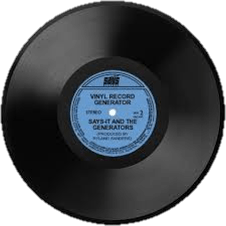
Is this an example of a digital or analogue format?
a)
Digital
b)
Analogue
27.
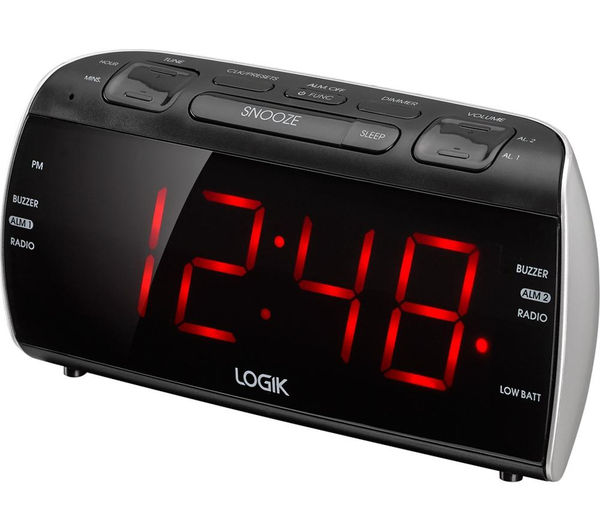
Is this an example of a digital or analogue format?
a)
Digital
b)
Analogue
28.

Needed so the computer can understand analogue sensor readings

a)

Digital to analogue converter (DAC)

b)

Analogue to digital converter (ADC)

c)

Sensor to digital conversion (SDC)

d)

Digital compression (DC)

29.

I am the height of the wave. What am I?

a)

Amplitude

b)

Frequency

c)

Phase shift

d)

PCM

30.

What is a method for turning analogue signals into digital?

a)

Defragging

b)

Pulse Code Modulation

c)

DAC

d)

Levelling

31.

What is a phase shift?

a)

Height of a wave

b)

Number of cycles per second

c)

Time delay of a signal

d)

Noise

32.

What is level shifting?

a)

Boosting a signal

b)

Changing signal voltage (up or down)

c)

Converting to analogue

d)

Converting to digital

33.

What is Manchester encoding?

a)

Digitisation of Oasis tracks

b)

A system of representing digital information by transitions

c)

Coding where 1 = on, 0 = off

d)

A filter pipeline

34.

What is the input to a DAC?

a)

Analogue signal

b)

Pulse code modulation

c)

Digital signal

d)

Sound

35.
Choose the best answer about character sets:
a)
All characters in character sets are stored in binary.
b)
Some characters in character sets are stored in binary.
c)
Only binary characters in character sets are stored in binary.
36.
The following is true about character sets:
a)
Each letter has a unique code
b)
Lower and upper case letters share the same codes
c)
ASCII is one of the latest character sets to be adopted
37.
The following is not true about the ASCII character set:
a)
example: Mount Everest
b)
Usually, is made up of 7 bits
c)
Is not enough to represent languages other than English
38.
Identify a true statement:
a)
Standard ASCII only uses the first 128 positions in the table.
b)
Standard ASCII only uses the first 255 positions in the table.
c)
ASCII has more letters than Unicode
39.
The main purpose of character sets is:
a)
To allow humans to express alphanumeric characters in a binary table
b)
To run the Internet
c)
To simplify computer programming
40.
The first 31 ASCII characters:
a)
Are rarely used by today's computers.
b)
Are the lowercase letters of the English alphabet.
c)
Are the uppercase letters of the English alphabet.
41.
Uppercase characters in ASCII:
a)
Appear before lowercase characters.
b)
Appear after lowercase characters.
c)
Don't get unique codes to store their position in binary.
42.
Unicode can represent:
a)
65,536 different characters
b)
255 characters
c)
127 characters
43.
Portions of the large Unicode set are divided into:
a)
Code pages.
b)
Subsets.
c)
Alphabets.
44.
ASCII uses one byte per character. Unicode uses how many bytes per character?
a)
2 bytes per character.
b)
3 bytes per character.
c)
4 bytes per character.
45.
How many bits are used in (standard) ASCII? (1-4)
a)
16
b)
1
c)
7
d)
8
46.
How many bytes are used in Unicode? (1-4)
a)
9
b)
16
c)
1
d)
2
47.
The ASCII code is represented by using 16 bits. (1-4)
a)
True
b)
False
48.
The (standard) ASCII code is capable of representing non-European languages. (3-4)
a)
True
b)
False
49.
Upper and lower case letters have a different ASCII code. (3-4)
a)
True
b)
False
50.
What is the maximum number of values that can be represented in 8 bits? (4-6)
a)
16
b)
256
c)
65,536
d)
128
51.
What is the maximum number of values that can be represented in 7 bits? (4-6)
a)
16
b)
256
c)
65,536
d)
128
52.

A character set is... (4-6)

a)

what language can be used in a computer system.

b)

the fonts that a computer has installed.

c)

a defined collection of characters recognised by a computer.

53.
ASCII can represent more characters than Unicode? (4-6)
a)
True
b)
False
54.
ASCII stands for... (6-7)
a)
American Standard Code for Information Interchange
b)
American Scientific Code for Information Interchanging
c)
Absolute Standard Codes for Instruction Interchange
55.

Extended ASCII uses how many bits?

a)

7

b)

8

c)

16

d)

32

56.

What is a benefit of extended ASCII?

a)

All major languages can be represented

b)

Many European languages can be represented as accents are included

c)

Nothing as it just uses more space to store each letter

57.

What does alphanumeric mean?

a)

Letters and numbers

b)

Uppercase and lowercase letters, digits and symbols

c)

Letters, digits, symbols and some special commands like space

58.

How are standard ASCII and Unicode related (select more than 1)?

a)

ASCII is a subset of Unicode

b)

The first 7 bits of Unicode are the same as standard ASCII

c)

Unicode is a subset of ASCII

d)

They aren't

59.

If the letter A is character code 65, what is H?

a)

72

b)

71

c)

8

d)

73

60.

A ______________________ _______________________ is a transmission which uses digital code (a 0 or 1) to write code on the signal.

a)

Digital Signal

b)

Web Address

c)

Broadcast Communication

d)

Transmission Medium