
 Worksheets
Year 5 - States of Matter Revision
Total questions: 78
Worksheet time: 57mins
___________ is anything that has mass and takes up space.
Molecules
Matter
Volume
________ is the amount of space an object takes up.
Mass
Matter
Volume
________ is the amount of matter inside an object.
Volume
Mass
Matter
In which state of matter are the molecules close together and vibrate slowly?
Liquid
Solid
Gas
Which state of matter has no definite shape and no definite volume?
Liquid
Solid
Gas
Which state of matter has a definite shape and a definite volume?
Solid
Liquid
Gas
Which state of matter does not have a definite shape but does have a definite volume?
Solid
Liquid
Gas
In which state of matter do the molecules move the fastest?
Solid
Liquid
Gas
Which states of matter take the shape of their container?
Liquids and gases
Solids and liquids
Gases and solids
Solids, liquids, and gases
When you add or remove heat to an object, you are adding or removing _________.
Mass
Energy
Volume
Matter
For a solid to change to a liquid, heat must be __________ .
Added
Removed
What is the process called when a gas turns into a liquid?
Condensation
Melting
Freezing
Evaporation
What is the process called when a solid changes to a liquid?
Freezing
Evaporation
Melting
Condensation
What is the process called when a liquid changes into a gas?
Freezing
Evaporation
Melting
Condensation
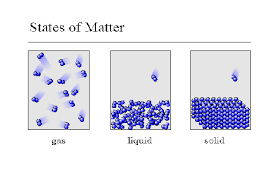
What is matter?
anything
something that has mass
anything that has mass and takes up space
what's the matter with you?
What are the characteristics of solid matter?
takes the shape of any container
molecules are packed closely together
objects have a definite shape
have a definite shape and molecules are packed closely together
Which describes liquid matter?
has a definite volume but no definite shape, takes the shape of every container
has a definite volume
it is wet
molecules are packed tightly together
Which description mostly explains a gas?
no specific shape
not a certain volume
it is all over
molecules move around freely, not tightly packed, no specific volume nor shape
What is an example of evaporation?
rain water accumulating in a rain barrel
a puddle going away
leaves turning green
a ball rolling downhill
Which is NOT an example of condensation?
dew collecting on the grass in the morning
clouds filling with water vapor
water forming on the side of the glass of ice water
an oasis drying up in the desert
In this state of matter, the molecules have enough energy to completely separate from each other.
gas
solid
liquid
What do you use to measure the mass of an object?


The astronaut floats in international space station. It proves that...
His weight is less in space
His mass is less in space
His weight does not change
His mass is more in space
weight is measured in...
pounds (lb)
grams (g)
newtons (N)
kilograms (kg)
What is weight?
the pulling force of gravity on an object
the time it takes to get on a ride
the amount of matter in an object
the size of an object
__________ is the amount of matter in an object. It does not change regardless of location
Weight
Mass
______________ is how heavy an object is. It is determined by the pull of gravity
Weight
Mass

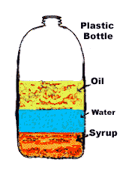


Why does the egg not sink or float?
it is more dense than the water
it is less dense than the water
it has the same density as the water
it is light


Fluids with very high viscosity flow very _______________________.
fast
not at all
slow
whenever it wants
Fluids with very low viscosity flow very _______________________.
fast
not at all
slow
whenever it wants
Low viscosity can be described as...
liquids that flow quickly
liquids that flow slowly
High viscosity can be described as...
a liquid that flows quickly
a liquid that flows slowly
Water is an example of a...
Low viscosity liquid
High viscosity liquid
Which viscosity can be described as "thick"?
Low viscosity
High viscosity
Which viscosity can be described as "thin"?
Low viscosity
High viscosity
High viscosity is when particles are closer together and the cohesive force is stronger.
True
False
I don't know
Low viscosity is when particles are farther apart and the cohesive force is stronger.
True
False
I don't know
The best example of high viscosity would be?
Honey
Soap
Marbles
Water
The best example of a substance with low viscosity is?
Honey
Soap
Marbles
Water
Toothpaste is very viscous.
True
False
toothpaste is a solid

What happens when you boil water?
The water evaporates and changes to a gas?
The water freezes and changes to a solid?
The water condenses and changes to a liquid?
The water does not change state?

What will happen to ice cubes if you put them in a sunny place?
The ice cubes will freeze and become a solid.
The ice cubes will melt and become a liquid.
The ice cubes will boil.
Nothing will happen.

How do you change a liquid water into solid water?
Melting
Boiling
Freezing
Condensing

What happens when water condenses?
It changes from a liquid to a gas.
It changes from a gas to a liquid.
It changes from a solid to a liquid.
It changes from a liquid to a solid.

