
Font size
 Worksheets
Volcano and Earthquake
Total questions: 40
Worksheet time: 22mins

What is the cause of an earthquake?
Induced Earthquakes. Induced quakes are caused by human activity, like tunnel construction, filling reservoirs and implementing geothermal or fracking projects.
Groundwater extraction – decrease in pore pressure.
Heavy rain.
as the plates move they put forces on themselves and each other.
A ___ is a mountain or hill with an opening.
Valley
Volcano
Sierra
Mountains
_____ is magma once it has been expelled from the interior of a terrestrial planet or a moon onto its surface.
Mantle
eruptive rocks
lava
Magma
________ is the sudden, rapid shaking or rolling of the earth.
Volcano
Volcanic Eruption
Earthquake
Earthquake drill
________ happen when rocks break or slip along fault lines in the Earth's crust, releasing energy that causes to move.
Earthquake drill
Volcano
Volcanic Eruption
Earthquake
______ is extremely hot liquid and semi-liquid rock located under Earth's surface.
Magma
Volcano
Lava
Earthquake
A ______ occurs when hot materials from the Earth's interior are thrown out of a volcano. Lava, rocks, dust, and gas compounds are some of these "ejecta".
Lava
Magma
Volcano
Volcanic Eruption
________ is the sudden, rapid shaking or rolling of the earth.
Volcano
Volcanic Eruption
Earthquake
Earthquake drill
________ happen when rocks break or slip along fault lines in the Earth's crust, releasing energy that causes to move.
Earthquake drill
Volcano
Volcanic Eruption
Earthquake

What is magma called when it reaches the surface of Earth?
Lava
viscosity
toxic gas
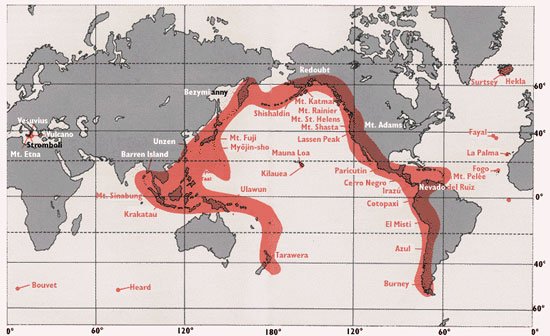
This is the name for the chain of volcanos around the edge of the Pacific Plate.
March Maddness
Earthquake Alley
Ring of Fire
Circle of Death
Where is the point on the Earth’s surface directly above the starting point of an earthquake?
Epicenter
Fault
Magma chamber
What is the measure of the amount of energy released in an earthquake?
Earthquake
Epicenter
Magnitude
I am molten rock beneath the Earth's surface and am very hot. What is my name?
Dust, ash, and rock
Vent
Lava
Magma

Can volcano eruptions be predict?
Yes
No
What is a tsunami?
A large storm with high wind.
A tropical tornado in the ocean.
A large, powerful ocean wave.
Any earthquake.
What natural event can cause a tsunami?
Earthquake
Volcanic eruption
Underwater landslide
All three of these can cause tsunamis!
How far can a tsunami travel?
Less than a mile
10 miles
50 miles
Over 1000 miles
TRUE or FALSE: Tsunamis move very slow.
True
False
Where do most of the Tsunamis in the world occur?
The Great Lakes
Atlantic Ocean
Pacific Ocean
Southern Ocean
Earthquakes are caused by _________________.
The movement of the tectonic plates
High winds
Chunks of lava from volcanoes
Dropping something really heavy
TRUE or FALSE: If you are in a boat on the open ocean, it will be easy to see a tsunami coming.
True
False
Tsunamis...
travel long distances and carry lots of energy.
travel short distances and carry little energy.
travel long distances and carry little energy.
travel short distances and carry lots of energy.
The location with the largest concentration of volcanoes in the world is called the...
Great Plate Boundary
Ring of Fire
Volcano Alley
Hot Spot
What kind of waves do earthquakes create?
Electromagnetic
Sound
Seismic
Light
An opening in the Earth's crust through which molten rock and hot gases escape
Earthquake
Volcano
Tsunami
Flood
Hot, melted rock inside Earth
Magma
Lava
Faults
Landslide
Magma/molten rock that reaches Earth's surface
Magma
Molten rock
Lava
Rocks
Sudden, strong movements of Earth's crust
Earthquakes
Continental Drift
Faults
Landslide
Magma can rise up through a central opening in a volcano. This opening is called a _________.
Whole
Trench
Vent
Fault
What word has the meaning "Great Harbour Wave"?
Hurricane
Typhoon
Wildfire
Tsunami

why do earthquakes happen?
release of energy causes the seismic waves
plates are having a war
plates move away from each other
do earthquakes move through earths core
yes
no
how do volcanos happen
magma works its way up to the surface
the sudden release of energy
plates moving
what type of crust covers the earth
pizza crust
pie crust
rocks metals and elements
do earthquake happen on earth
yes
no

