wayground logo

Free Printable Worksheets

Font size

S
M
L
XL
Worksheets

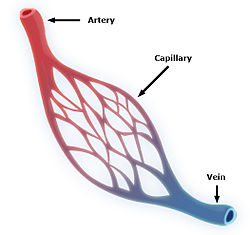
G7 Review - Biology

Total questions: 60

Worksheet time: 45mins
Name
Class
Date
1.
The main function of the red blood cells is to 
a)
allow gases to exchange
b)
fight infection
c)
give blood its color
d)
help clot blood
2.
Platelets 
a)
allow for gases to exchange
b)
give blood its color
c)
fight infection and disease
d)
help clot blood
3.
The plasma that contains blood cells is mainly made up of 
a)
cytoplasm
b)
nutrients
c)
waste
d)
water
4.
The heart is made up of _________ chambers
a)
one 
b)
two 
c)
three
d)
four
5.
Oxygen deprived blood enters the heart through the 
a)
right ventricle 
b)
left ventricle
c)
right atrium
d)
left atrium
6.
Oxygen rich blood leaves the heart through the
a)
right atrium
b)
left atrium 
c)
right ventricle
d)
right atrium
7.
Veins carry blood _________  the heart.
a)
back to 
b)
away
c)
parallel
8.
The smallest type of blood vessel is the:
a)
nerve
b)
vein
c)
capillary
d)
artery
9.
Veins have special ________________ to stop blood from flowing backward.
a)
gravity
b)
valves
c)
arteries
d)
ventricles
10.
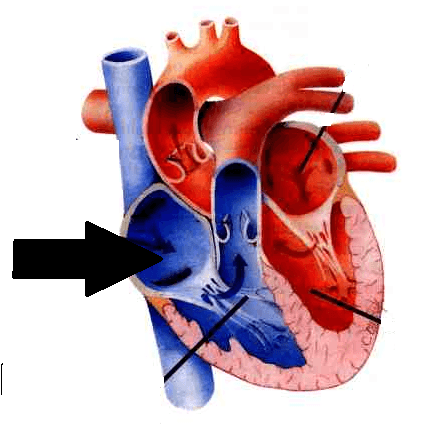
Identify
a)
Left atrium
b)
Right atrium
c)
Left ventricle
d)
Right ventricle
11.
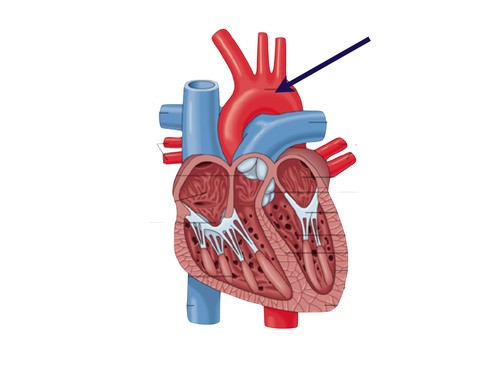
Identify
a)
Pulmonary veins
b)
Pulmonary artery
c)
Aorta
d)
Vena cava
12.
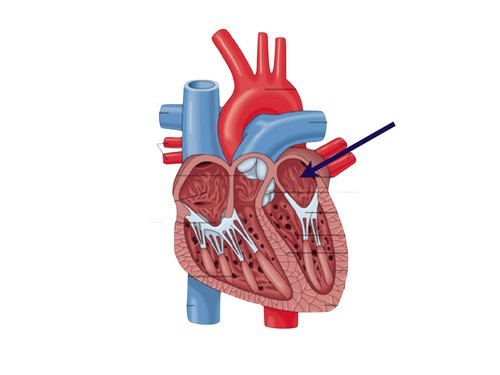
Identify
a)
Left atrium
b)
Right atrium
c)
Left ventricle
d)
Right ventricle
13.
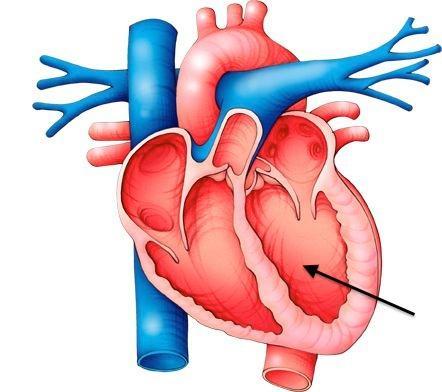
Identify
a)
Left atrium
b)
Right atrium
c)
Left ventricle
d)
Right ventricle
14.
What does Deoxygenated mean?
a)
Oxygen-rich
b)
Blood flow
c)
Oxygen-poor
d)
Water Flow
15.

Which type of blood vessel has thinner walls?

a)

artery

b)

vein

16.

What is plasma?

a)

only white blood cells

b)

only red blood cells

c)

fluid part of blood

d)

hemoglobin

17.

What are the most common blood cells?

a)

red blood cells

b)

white blood cells

c)

platelets

d)

plasma

18.

What attaches to oxygen as you breathe and carries oxygen on red blood cells?

a)

plasma

b)

hemoglobin

c)

platelets

d)

bone marrow

19.

What part of the blood destroys dead and damaged cells?

a)

White blood cells

b)

red blood cells

c)

platelets

d)

pathogens

20.

What picture is associated with the word "cardio-"?

a)
b)
c)
21.
The most muscular chamber of the heart is the 
a)
left ventricle
b)
left atrium
c)
right atrium
d)
right ventricle
22.

The female reproductive cell is called:

a)

Ovum

b)

Ovary

c)

Sperm

d)

Cervix

23.

Which of these organs are part of the female reproductive organs. Select 3 for points

a)

Falopian tubes

b)

Ovaries

c)

Prostate

d)

Uterus

24.

The male reproductive cell is called...

a)

vas deferens

b)

seminal vesicle

c)

ovum

d)

sperm

25.

Which of the following characteristics appear in girls during puberty?

a)

The voice deepens and armpit hair begins to grow

b)

Hair starts to grow under the arms and on the face.

c)

Armpit hair begins to grow and menstruation starts

26.

Which part of the male reproductive system produces sperm?

a)

The Scrotum

b)

The prostate

c)

The testicles

d)

The penis

27.

LETTER e: (Hint: there are 2)

a)

Uterus

b)

Vulva

c)

Ovaries

d)

Eggs

28.

LETTER g: (hint: birth canal)

a)

Vulva

b)

Vagina

c)

Ovaries

d)

Uterus

29.

LETTER f:

a)

Ovaries

b)

Uterus

c)

Vulva

d)

Vagina

30.

LETTER b: (Hint: produce sperm)

a)

Urethra

b)

Testicles

c)

Scrotum

d)

Penis

31.

LETTER c:

a)

Urethra

b)

Testicles

c)

Penis

d)

Scrotum

32.

LETTER a: (hint: tube inside)

a)

Urethra

b)

Testicles

c)

Scrotum

d)

Penis

33.
How many days does it normally take for a menstrual cycle to take place?
a)
25 days
b)
28 days
c)
35 days
d)
38 days
34.
How long does the female approximately carry a child in the womb for?
a)
12 months
b)
9 years
c)
9 Months
d)
I don't know?
35.

Where does fertilization occur?

a)

The womb

b)

The fallopian tube

c)

The ovary

d)

The vaginal

36.
From months 3-9 a developing baby is known as a(n) _________________.
a)
embryo
b)
fetus
c)
infant
37.

What normally happens on day 14 of the menstrual cycle?

a)

Period (menstruation)

b)

Egg released (ovulation)

c)

Egg dies if not fertilised

d)

Lining of the womb starts to thicken

38.

Which parts of the female reproductive system must the sperm swim through to find an egg?

a)

Cervix, uterus and oviduct

b)

Uterus, oviduct and ovary

c)

Cervix, uterus and scrotum

d)

Cervix, glands and oviduct

39.

Which two of the following actions could be potentially harmful to an unborn baby?

a)

Eating a healthy, balanced diet during pregnancy

b)

Smoking during pregancy

c)

Drinking excessive alcohol during pregnancy

d)

Exercising carefully during pregnancy

40.

What is the purpose of the placenta? (select two answers)

a)

To remove waste products from the baby's blood

b)

To provide oxygen and nutrients to a growing baby

c)

To provide nutrients to a mother during pregnancy

d)

To remove waste products from the mother's blood

41.

When an ovum is first fertilized it is known as

a)

a nucleus

b)

an embryo

c)

a zygote

d)

a fetus

42.
When the blastocyst attaches to the lining of the uterus, this is known as
a)
fertilization
b)
ovulation
c)
implantation
d)
mitosis
43.

State the no of chromosomes in a human zygote.

a)

12

b)

23

c)

46

d)

92

44.

What chromosomes make a girl?

a)

XY

b)

XX

c)

XZ

d)

YZ

45.
What is a gene?
a)
A bundle (like a hot dog bun) that the DNA is packed into
b)
something inside the nucleus
c)
a piece of DNA
d)
all of your DNA
46.
Which sentence is FALSE?
a)
Humans have 23 pairs of DNA.
b)
Humans have 46 total chromosomes.
c)
Genes are made of chromosomes.
d)
Every human's DNA is at least 99% similar.
47.

If tall (T) is dominant to short (t), what is the phenotype of plant that is (tt)?

a)

Tall

b)

Short

48.

Ova (eggs) can have

a)

Only X chromosome

b)

Only Y chromosome

c)

Either X or Y chromosome

d)

Only XX chromosomes

49.

What is the percentage of a woman having a male child?

a)

25%

b)

50%

c)

75%

d)

100%

50.
Where is all the genetic information in a cell?
a)
Nucleus
b)
Nucleotides
c)
Chromosomes
d)
Cytoplasm
51.
The genotype is the ______________.
a)
physical appearance
b)
Genetic makeup
c)
Alleles gained from one parent
52.
The phenotype is the _______________.
a)
physical appearance of an organism
b)
Genetic makeup 
c)
Alleles acquired from a specific parent.
53.
The passing of characters from parents to offspring is called?
a)
Monohybrid cross
b)
Heredity
c)
True breeding
d)
Genetics
54.
Two brown eyed parents (Bb) have a baby. What is the chance the baby is blue eyed?
a)
0 %
b)
25%
c)
50%
d)
75%
55.

_________ is when the two alleles of a gene are different. Rr

a)

Heterozygous

b)

Genotype

c)

Phenotype

d)

Homozygous

56.

__________ is when the two alleles of a gene are the same. RR and rr

a)

Heterozygous

b)

Genotype

c)

Phenotype

d)

Homozygous

57.
What is a gene?
a)
A bundle (like a hot dog bun) that the DNA is packed into
b)
something inside the nucleus
c)
a piece of DNA
d)
all of your DNA
58.
A single piece of coiled DNA found in the cells; contains genes that encode traits.
a)
gene
b)
chromosome
c)
trait
d)
DNA
59.
What is the relationship between DNA and chromosomes?
a)
Chromosomes are made of DNA
b)
DNA is made of chromosomes
c)
DNA and chromosomes are the same thing.
d)
All of the above are correct
60.

What is the probability of a child having blue eyes (bb) if both parents are heterozygous (Bb)?

a)

100%

b)

50%

c)

0%

d)

75%

e)

25%