
 Worksheets
7.12 Theories on Origin of Life
Total questions: 20
Worksheet time: 10mins
One of the accepted scientific theories describing the origin of life on Earth is known as chemical evolution. According to this theory, which of the following events would need to occur first for life to evolve?
onset of photosynthesis
origin of genetic material
Synthesis of organic molecules
formation of the plasma membrane
The Miller-Urey experiment of 1953 was designed to test the hypothesis that lightning supplied the energy needed to turn atmospheric gases into organic molecules such as amino acids. Which of the following describes why the Miller-Urey theory is widely accepted today?
Amino acids spontaneously form from molecules in the atmosphere today.
Organic molecules are present today in extremely high concentrations.
The process of synthesizing organic molecules from a mixture of gases has been successfully modeled in the laboratory.
No other alternative hypotheses have been introduced.
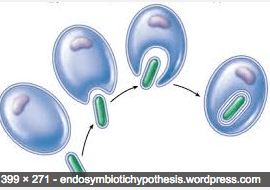
"Life formation did not take place on earth. It took place somewhere else in the space or on any other planet and carried to the earth.". This statement belongs to:
Theory of biochemical evolution
Extraterrestrial origin
RNA world
Spontaneous origin
"Life could have arisen through a series of organic chemical reactions that produced ever more complex
biochemical structures. They proposed that common gases in the early Earth atmosphere combined to form simple organic chemicals, and that these in turn combined to form more complex molecules. Then, the complex molecules became separated from the surrounding medium, and acquired some of the characters of living organisms. They became able to absorb nutrients, to grow, to divide (reproduce), and so on.". This statement belongs to:
Theory of biochemical evolution
Community clay
RNA world
Spontaneous origin
"Life on Earth began with simple RNA molecule that could copy itself without help from any other molecule.". This statement belongs to:
Theory of biochemical evolution
Chilly start
Electric spark
RNA world
"Ice might have covered the oceans 3 billion years ago, as the sun was three times less luminous than it now. This layer of ice, possibly hundreds of feet thick, might have protected fragile, organic compounds in the water below from ultraviolet light and destruction from cosmic
impacts". This statement belongs to:
Theory of biochemical evolution
Chilly start
Deep sea vents
RNA world
"This theory suggests that life arose deep in the
ocean with hydrogen rich molecules. Their rocky nooks could then have concentrated these molecules together and provided mineral catalysts for critical reactions.
Alkaline fluids from the Earth’s crust flow up towards the more acidic ocean water, creating natural proton concentration differences remarkably similar to those powering all living cells.". This statement belongs to:
Theory of biochemical evolution
Community clay
Deep sea vents
RNA world
"The first molecule of life, hydrocarbon, might have
met on some surfaces that might not only have concentrated these organic compounds together but also helped organize them into patterns much like our genes". This statement belongs to:
Theory of biochemical evolution
Community clay
Chilly start
RNA world
"First form of life came into existence following one spark or on one particular spark day. The other version argues that life came into existence, or rather emerged, following prolonged sparking rather one specific spark. Electric emissions can generate amino acids and
sugars from an atmosphere loaded with water, methane, ammonia and hydrogen". This statement belongs to:
Deep sea vents
Community clay
Chilly start
Electric spark
According to most of the theories the first molecule to give origin of life was:
DNA
RNA
"Without molecules the origin of life was totally possible": According most of the life origin theories this statement is
True
False
What did the Miller Urey experiment prove?
Provided the first evidence that inorganic molecules like DNA or RNA needed for life could be formed from organic components like oxygen or hydrogen
Provided the first evidence that organic molecules like oxygen or hydrogen needed for life could be formed from inorganic components like DNA or RNA
Provided the first evidence that light was needed for life to be formed
Provided the first evidence that dust is needed for life to be formed
What is the postulate of the panspermia theory?
The transfer or living beings from the earth to other planets
The oceans contained large quantities of complex organic substances that served as building blocks for the first living beings
The living organisms would have arrived in meteorites or comets from the space to the earth
The life forms arise spontaneously from inanimate or inert matter.
What is the spontaneous generation?
The life forms arise after creating organic matter
The life forms arise spontaneously from inanimate or inert matter
The life forms arise spontaneously from microorganism
The life forms arise after multiple chemical reactions
What is the Big bang theory?
States that life emerged from microorganisms evolving from organic matter
States that all of the current and past matter in the Universe came into existence by evolution
States that all of the current and past matter in the Universe came into existence at the same time after a big explosion
States that life emerged from spontaneous generation
What is Abiogenesis?
Life from Life
Non-Life from Life
Life from Non-Life
Life

