
NEW
Font size
 Worksheets
Photosynthesis in higher plants
Total questions: 55
Worksheet time: 27mins
Photosynthesis is –
A physical process
A chemical process
A physio-chemical process
An energy wasting process
Photosynthesis is important because –
It is an important source of all foods on earth
It is responsible for the release of O2
It is responsible for the release of O2 in the environment in night
a and b
Moll’s half leaf experiment proves that –
Light is essential for photosynthesis
CO2 is essential for photosynthesis
O2 releases during photosynthesis
Chlorophyll is essential for photosynthesis
Who proved that vegetation purifies the air impured by burning of candle –
Von Mayr
De Saussure
Sachs
Joseph Priestley
Who discovered the role of light and green parts of the plants in purifying the noxious air –
Von Mayr
De saussure
Sachs
Jan Ingenhousz
Who found that in green parts of plant glucose is made and glucose is stored as starch –
Sachs
Arnon
Arnold
Englemann
Who used prism, white light, green alga, Cladophora and aerobic bacteria and plotted the action spectra for photosynthesis
Sachs
Arnon
Arnold
Englemann
Who proved that O2 comes from water, not from CO2 in photosynthesis? It was based on the experiment of photosynthesis in purple and green bacteria.
Van Neil
Englemann
Arnold
Arnon
The expression “We are creatures of chloroplasts” means that –
All life possesses chloroplast
All life depends ultimately on photosynthesis
Chloroplasts are models of all cell organelles
a and c
The main photosynthetic pigments in plants are –
Chl a and Chl c
Chl a and Chl b
Chl x and Chl y
Retinal pigments and accessory pigments
The main purpose of photosynthesis is to –
Consume CO2
Produce ATP
Convert light energy into chemical energy
Produce starch
Name the pigment which is converted into vitamin A in animals & humans.
Alpha- carotene
Beta -carotene
Gamma -carotene
Chlorophyll a
Mark out the incorrect statement.
PS II is found in both grana and stroma lamellae
PS II is involved in photolysis of water
PS I participates in both cyclic as well as non-cyclic flow of electrons.
The reaction centre in PS II is P680
An external source of electrons is not required in
Cyclic photophosphorylation
Non-cyclic photophosphorylation
Z-scheme of flow of electrons
All of these
Action spectrum of photosynthetic pigments was studied by Englemann on _______ in the presence of _______ bacteria.
Spirogyra, Anaerobic
Cladophora, aerobic
Chlorella, Aerobic
Scenedesmus, Anaerobic
Anoxygenic and oxygenic photosynthesis are respectively shown by
green algae and red algae
Red algae and monocots
Pigmented sulphur bacteria &cyanobacteria
BGA and higher plants
Select incorrect statement.
Each photosystem has all the pigments except one molecule of chlorophyll a
Action spectra is greater in blue and red light.
Chlorophyll a and b are chief pigments associated with photosynthesis
PS II is involved in evolution of O2.
Primary electron acceptor in cyclic photophosphorylation is
(a) (b) (c) (d)
Phaeophytin
Fe-S
PC
Cyt-b6-f complex
Stroma lamella membrane lacks
PS I only
PS II only
PS I & ETS
PS II & NADP reductase
For the release of oxygen, it has cross how many membranes of chloroplast
1
2
3
4
Minimum photosynthesis takes place in
Green light
Red light
Blue light
White light
Photosynthesis and respiration have which of the following in common?
In eukaryotes, both processes occur in specialised organelles
ATP synthesis in both processes relies on chemiosmotic mechanism
Both use electron transport
All of the above
Which of the following statements is false?
Usually chloroplasts align themselves along the walls of mesophyll cells, so that they get optimum quantity of incident light
Within chloroplast there is a membranous system consisting of grana, stromal lamellae and stroma
There is division of labour within chloroplast
In grana CO2 is fixed
The most crucial step of the calvin cycle is
Decarboxylation
Carboxylation
Reduction
Regeneration
Reaction centre of PSI is _____________ and Reaction centre of PSII is _____________ –
P680, P700
P700, P680
P800, P600
P700, P900
Kranz type of leaf anatomy is observed in
C3 plants
C4 plants
C3 and C4 plants
Hydrophytic plants
Where is the possible site for cyclic photophosphorylation?
In PSII
In Stroma
In granal thylakoids / lamellae
In stromal lamellae
Where is the possible site for cyclic photophosphorylation?
In PSII
In Stroma
In granal thylakoids / lamellae
In stromal lamellae
Stromal lamellae lack –
PSII
PSI
NADP reductase
a and c
Photophosphorylation in a chloroplast is most similar to which of the following mitochondrial reactions?
Oxidative phosphorylation
Substrate level phosphorylation
Hydrolysis
None
Which statement about photosynthesis is false?
In green plants PSI and PSII are required for the synthesis of NADPH + H+
Photosynthesis is a redox process; H2O is oxidised, CO2 is reduced
Photosynthesis is a physio-chemical process
None
Biosynthetic phase of photosynthesis needs –
ATP, NADPH2, CO2 and H2O
Only CO2
Only ATP + NADPH2
Only O2
Immediately after light becomes unavailable biosynthetic processes –
Stop immediately
Remain continued for ever
Stop and then starts
Continue for some time and then stops
The enzyme ATPase couples the synthesis of ATP to –
The diffusion of protons
The reduction of NADP+
The excitation of Chl.
Carbon dioxide fixation
The enzyme rubisco is found in –
Chloroplast
mitochondria
Cytoplasm
Nucleus
During carbon dioxide fixation / Calvin Cycle, CO2 combines with –
NADPH2
Water
Ribulose biphosphate
3PGAld
The energy to hydrolyse water comes from –
Oxidised chlorophyll
Reduced Chl
The proton gradient
ATP
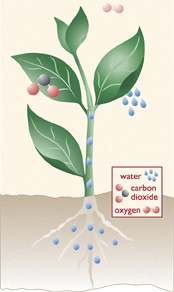
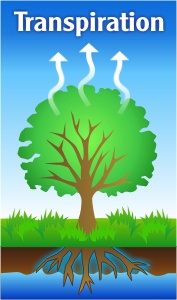
Where is xylem found in the plant?
leave -> roots -> stem
roots -> stem -> leaves
root hairs -> leaves -> veins
stem -> roots
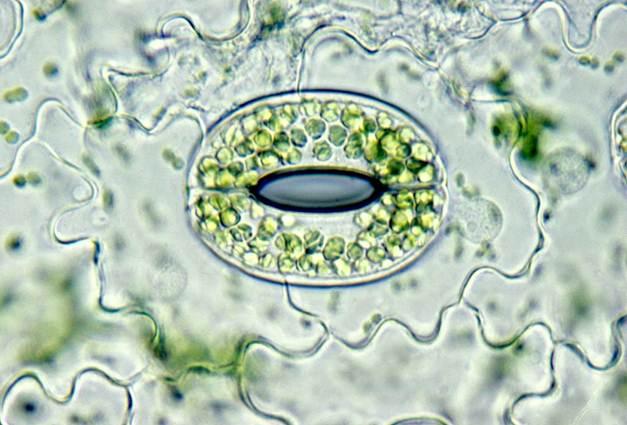
What do the guard cells do?
Control active transport
Control nutrients moving into the cell
Controls the rate of transpiration (loss of water through the leaf)
What does phloem transport?
Water
Minerals
Fruit
Sugar
What is the main factor that influences the rate of sugar transport?
movement of water
Rate of photosynthesis
capillary action
uprooting plants
Where does sugar transport begin?
Roots
Leaves
Root hairs
Vascular bundles
The rate of translocation in the phloem was observed to decrease steadily after a plant was placed in an environment without oxygen for several minutes. Why did this happen?
The cells in the plants stop respiring.
The xylem no longer takes in water for the plant.
Active transport of mineral salts can no longer occur.
The plant can no longer synthesize sugars to provide energy.

