wayground logo

Free Printable Worksheets

Font size

S
M
L
XL
Worksheets

Unit 1: The Cell Review

Total questions: 50

Worksheet time: 43mins
Name
Class
Date
1.

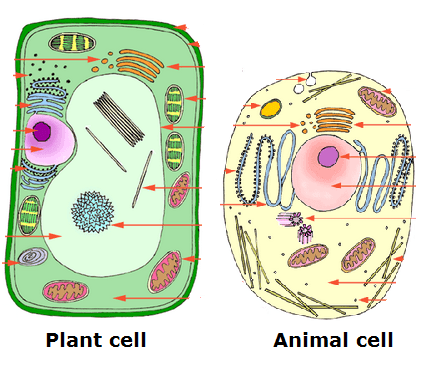
What distinguishes a plant cell from an animal cell? (How do you tell them apart) Hint: There's 3 ways (Check all 3)

a)

Central Vacuole

b)

Mitochondria

c)

Cell Wall

d)

Ribosomes

e)

Chloroplasts

2.
Which of the following statements is not part of the cell theory?
a)
Cells are the basic unit of structure and function in all living things.
b)
All cells are produced from other cells.
c)
Only animal cells are composed of cells.
d)
All living things are composed of cells.
3.
The ___ is the basic unit of sturucture and function of organisms
a)
atom
b)
cell
c)
matter
d)
all other answers are correct
4.
Which major macromolecule is being represented in this image? 
a)
carbohydrate
b)
lipid
c)
protein
d)
nucleic acid
5.
Which of the following contains the genetic code for protein synthesis?
a)
carbohydrate
b)
lipid
c)
protein
d)
nucleic acid
6.
Which of the following decreases the activation energy necessary to initiate the chemical change within the body?
a)
nucleotides
b)
enzymes
c)
amino acids
d)
fatty acids
7.
What are the building blocks of proteins?
a)
amino acid
b)
fatty acid
c)
nucleotide
d)
lipid
8.
What are the single sugars that are the building blocks of carbohydrates?
a)
monosaccharides
b)
disaccharides
c)
polysaccharides
d)
amino acid
9.
DNA and RNA are examples of 
a)
Carbohydrates
b)
Lipids
c)
Proteins
d)
Nucleic Acids
10.
Nucleotides are monomers of
a)
Carbohydrates
b)
Lipids
c)
Proteins
d)
Nucleic Acids
11.
Waxes, oils and fats are examples of
a)
Carbohydrates
b)
Lipids
c)
Proteins
d)
Nucleic Acids
12.
Which of the following organic compounds is the main source of energy for living things?
a)
carbohydrates
b)
lipids
c)
nucleic acids
d)
proteins
13.
Which macromolecule stores energy, insulates us, and makes up the cell membrane?
a)
lipids
b)
proteins
c)
carbohydrates
d)
nucleic acids
14.
What are the monomers of DNA?
a)
glycerols
b)
amino acids
c)
fatty acids
d)
nucleotides
15.
Lipids can be digested into what smaller subunits?
a)
nucleic acids
b)
amino acids
c)
fatty acids
d)
glucose
16.

Enzymes belong to which class of macromolecules?

a)

lipids

b)

carbohydrates

c)

proteins

d)

nucleic acids

17.

Sugar belongs to which class of macromolecules?

a)

proteins

b)

lipids

c)

nucleic acids

d)

carbohydrates

18.
What is the purpose  of an enzyme?
a)
give permission for the reaction
b)
raise activation energy
c)
speed up reactions
d)
control how many reactions occur
19.
Enzymes are capable of increasing the rate of a chemical reaction within a living cell.  Enzymes accomplish this through which of the following means?
a)
reducing the number of products   
b)
reducing the activation energy
c)
increasing the temperature of the cell
d)
increasing the concentration of reactants 
20.
Any substance that is acted upon by an enzyme is called a(n)?
a)
Coenzyme
b)
Substrate
c)
Vitamin
d)
Polypeptide
21.

In a chemical reaction, ________ are what you have at the end

a)

Products

b)

Molecules

c)

Reactants

d)

Substances

22.
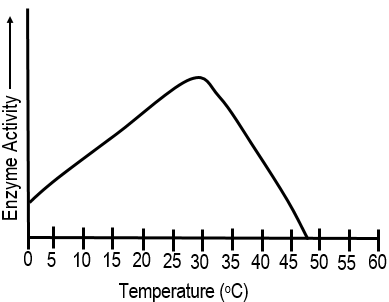
Based on the graph, what is the optimal temperature for this enzyme? 
a)
15oC
b)
40oC
c)
30oC
d)
35oC
23.
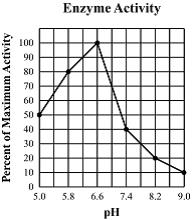
Which of the following conclusions can be drawn from this graph?
a)
The optimum pH of the enzyme is 6.6.
b)
The optimum pH of the enzyme is 5.8
c)
The enzyme’s activity increases as pH increases 5.0 to 9.0
d)
The enzyme’s activity is greater around pH of 8.0 .
24.
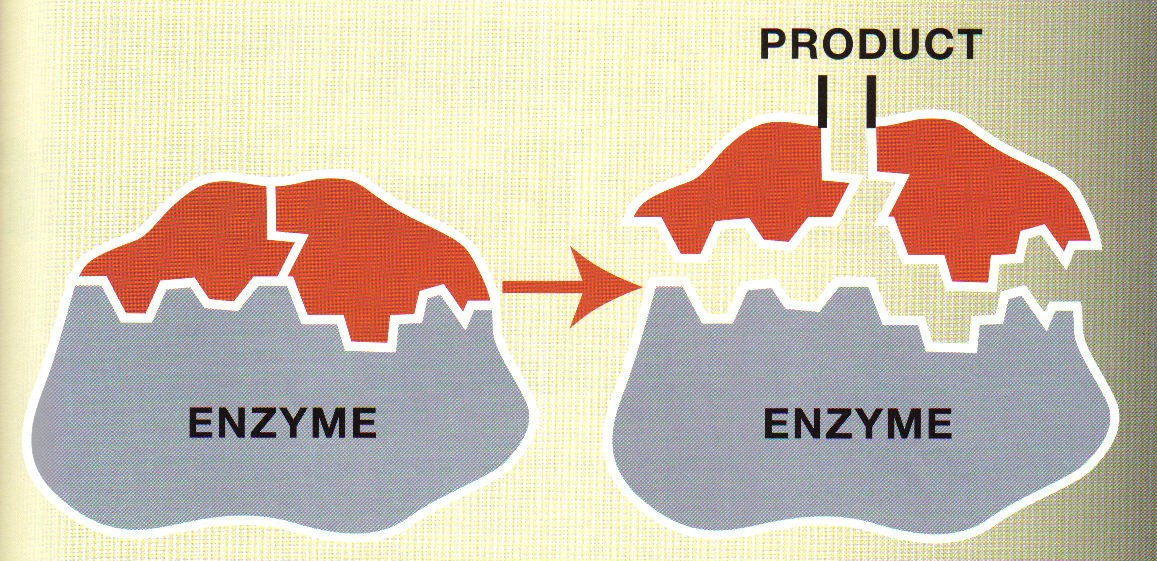
The area that the substrate fits into on the enzyme is called the:
a)
Active Site
b)
Allosteric Site
c)
DiSulphide Bridge
d)
β-Pleated Sheet
25.
Has membrane bound organelles
a)
Prokaryote
b)
Eukaryote
c)
both
26.
One example of a prokaryote is a...
a)
fungus
b)
bacteria
c)
animal
d)
plant
27.
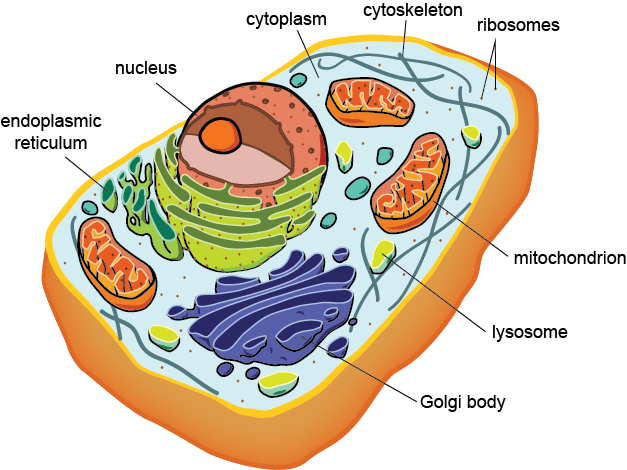
Which type of cell?
a)
Prokaryote
b)
Eukaryote
28.
Which type of cell?
a)
Prokaryote
b)
Eukaryote
29.
Where is the DNA found in a eukaryotic cell? 
a)
floating around in the cytoplasm 
b)
in the nucleus 
30.
Which has a chloroplast?
a)
Prokaryote
b)
Plant Cell
c)
Animal Cell
31.

Has cell membrane

a)

Prokaryote

b)

Eukaryote

c)

both

32.
Has cytoplasm
a)
Prokaryote
b)
Eukaryote
c)
both
33.
Has nucleus
a)
Prokaryote
b)
Eukaryote
c)
both
34.
An animal cell has the following except a/an...
a)
Centriole
b)
Lysosome
c)
Cell Wall
d)
Endoplasmic reticulum
35.
Which organelle belongs in plant cells only?
a)
Cell Membrane
b)
Mitochondrion
c)
Chloroplast
d)
Nucleus
36.
What structures distinguish a plant cell from an animal cell?
a)
Plant cells have cell walls and ribosomes.
b)
Plant cells have cell walls and chloroplasts.
c)
Plant cells have chloroplasts and ribosomes.
d)
Plant cells have chloroplasts and mitochondria.
37.

Only plant cells have a cell wall.

a)

True

b)

False

38.
I am the outer most layer of an animal cell. What am I?
a)
cell wall
b)
nucleus
c)
cell membrane 
d)
cell skin
39.
A rigid layer that lies outside the cell's  membrane is...
a)
Cytoskeleton
b)
Cilia
c)
Cell Wall
d)
Flagella
40.
What organelle is called the "powerhouse" of a cell?

a)
Endoplasmic Reticulum
b)
Nucleus
c)
Mitochondria
d)
Nucleolus
41.
I am only found in a plant cell. What am I?
a)
cell wall
b)
mitochondria
c)
cytoplasm
d)
chloroplast
42.
Consists of a jellylike substance that contains many organelles.
a)
ribosomes
b)
cytoplasm
c)
chloroplasts
d)
cell wall
43.
Which organelle uses energy from sunlight to make sugar?
a)
mitochondria
b)
nucleus
c)
chloroplasts
d)
vacuoles
44.
Controls what enters/leaves a cell
a)
cell membrane
b)
Nuclear membrane
c)
cell wall
d)
cytoplasm
45.
Controls the cell and contains DNA
a)
Nucleus
b)
Mitochondria
c)
Chloroplast
d)
Cell Wall
46.
Stores food and water for the cell.
a)
Cytoplasm
b)
Cell Wall
c)
Vacuole
d)
Nucleus
47.

This organelle receives proteins from the ER and cytoplasm and then tags then and distribute them where they need to go in or out of the cell.

a)

Vesicle

b)

Rough ER

c)

Golgi Apparatus

d)

Mitochondria

e)

Endoplasmic Reticulum

48.

This organelle is a factory in which proteins are mass produced. It's covered in ribosomes.

a)

Vesicle

b)

Rough ER

c)

Golgi Apparatus

d)

Smooth ER

e)

Golgi Apparatus

49.

This organelle has one job, to make proteins.

a)

Ribosome

b)

Cell Membrane

c)

Vacuole

d)

Cell Wall

e)

Smooth ER

50.

This organelle is a factory in which lipids are mass produced. It is not covered in ribosomes.

a)

Ribosome

b)

Golgi Apparatus

c)

Vesicle

d)

Smooth ER

e)

Rough ER