Wayground logo

Free Printable Worksheets

Font size

S
M
L
XL
Worksheets

Rutherford's & Bohr's Experiment

Total questions: 55

Worksheet time: 36mins

Name
Class
Date
1.
What is the tiny, massive central part of the atom?
a)
Neutron
b)
Electron
c)
Proton
d)
Nucleus
2.
How many electrons does potassium K contain? 
a)
19
b)
39
c)
20
d)
40
3.
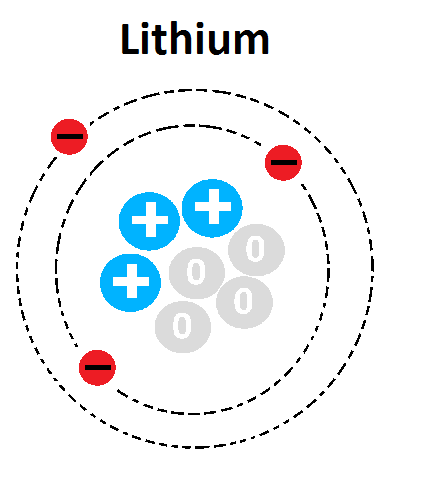
What is the mass number of this atom?
a)
1
b)
3
c)
4
d)
7
4.
Carbon-12 has 6 protons and 6 neutrons. How many electrons will orbit the nucleus?
a)
12
b)
6
c)
3
d)
18
5.
How many valence electrons?
a)
2
b)
3
c)
5
d)
10
6.
How many electrons does potassium K contain? 
a)
19
b)
39
c)
20
d)
40
7.

Which are the sub atomic particles?

a)

Proton

b)

Neutron

c)

Ice-cream

d)

Electron

8.

what was the observation of Rutherfords Gold Foil Model?

a)

Most of the alpha particles when through the Gold foil

b)

Some was deflected by small Angles

c)

Some particles ran away from the Gold foil

d)

Some particles rebounded 180degree

9.

What is the electronic configuration of helium?

a)

1,2

b)

2

c)

2,1,5

d)

2,8,8

10.

what is nucleiods?

a)

Total number of Protons and Neutrons

b)

Total number of Electron and Neutron

c)

Total number of Neutrons

d)

Total number of Electron and Protons

11.

What is valence electrons?

a)

The electron present in the innermost shell

b)

The electron present in the 3rd or the 4rd shell

c)

The electron present in the outermost shell

12.

what are isotopes?

ELEMENTS having the

a)

same atomic no ,but different mass no

b)

same mass no, different valency

c)

same mass no and atomic no

13.

What are the maximum number of electron in m shell?

a)

8

b)

12

c)

7

d)

4

14.

The energy level of k shell

a)

1

b)

55

c)

3

d)

24

15.
Choose the particle that has no charge.
a)
nucleus
b)
neutron
c)
proton
d)
electron
16.

The------ particle determines the identity of what element you have'

a)

electron

b)

proton

c)

neutron

d)

valence shell

17.
Which particles make up the nucleus of an atom?
a)
protons and neutrons
b)
electrons and protons
c)
electrons, protons, and neutrons
d)
electrons and neutrons
18.
What is the atomic number of the atom pictured? 
a)
11
b)
12
c)
22
d)
23
19.
What is the atomic mass of the atom pictured? 
a)
11
b)
12
c)
22
d)
23
20.
Oxygen’s atomic number is 8. This means that an oxygen atom must have
a)
8 electrons
b)
8 protons
c)
8 neutrons
d)
a mass number of 8
21.
 What is the mass number of this element?
a)
5
b)
27
c)
32
d)
59
22.

What are valence electrons?

a)

electrons in the first orbital always.

b)

nucleus

c)

the outermost shell

d)

the number of electrons present in the outermost orbital

23.

WhIch sub atomic particle vary between isotopes of an element?

a)

protons, electrons, and atomic mass

b)

protons, electrons, and atomic number

c)

neutrons and electrons

d)

neutrons only

24.
How many neutrons in C-14?
a)
6
b)
7
c)
14
d)
8
25.
What particle was used in the gold foil experiment?
a)
Beta Particle
b)
Alpha particle
c)
Gamma ray 
26.
Most of the alpha particles went straight through the gold foil.  This suggested that....
a)
There is no interference between alpha and gold.
b)
Most of the atom is made up of empty space.
c)
The alpha particles were very tiny.
d)
None of the above
27.
Some of the alpha particles fired at the gold foil were deflected at angles.  This was due to...
a)
reflection of the alpha source when it it the fluorescent screen.
b)
The alpha particles hitting the gold nucleus.
c)
Repulsion forces between the positively charged nucleus and the positively charged alpha particles. 
d)
A mis-firing of the alpha source
28.
All atoms consist of mostly empty space.
a)
True
b)
False
29.
Almost all of the mass of an atom is found in what part?
a)
The electron cloud
b)
The nucleus
c)
The protons
d)
The charge
30.
Rutherford’s gold foil scattering experiment indicated that 
a)
the nucleus of an atom occupies most of an atom’s volume
b)
positive charges are dispersed throughout the atom.
c)
positive charges are concentrated in a very small core at the atom’s center
d)
protons and neutrons are located in the nucleus.
31.

Subatomic particles with a negative charge

a)

Electrons

b)

Neutrons

c)

Protons

d)

Quarks

32.
Subatomic particles that are neutral in charge
a)
Neutrons
b)
Protons
c)
Nucleus 
d)
Electrons
33.
Atoms of the same element with a different number of neutrons
a)
Ion
b)
Gluons
c)
Isotope
d)
Quarks
34.

How many protons and electrons does this element have?

a)

35

b)

18

c)

17

d)

52

35.

What is the atomic number?

a)

35

b)

18

c)

17

d)

52

36.

How many neutrons does calcium have?

a)

20

b)

40

c)

60

d)

0

37.

What is the atomic mass of Arsenic?

a)

33

b)

107

c)

75

38.

What is the atomic mass of Neon?

a)

10

b)

20

c)

30

39.

How many neutrons does Chlorine have?

a)

18

b)

17

c)

35

d)

52

40.

Rutherford was a

a)

British scottishmen

b)

British governner

c)

retired british men

d)

British physicist

41.

When was Rutherford awarded the noble prize for his work in chemistry?

a)

1911

b)

1909

c)

1910

d)

1908

42.

Rutherford bombarded a very thin gold foil of thickness..

a)

0.00004cm

b)

0.00004mm

c)

0.00004m

d)

0.0004m

43.

Alpha particles are obtained from the disintegration of

a)

Protium

b)

a-particles

c)

Polonium

d)

Pizza

44.

The ____ balances the electrostatic force of attraction between the _____ and the ______

a)

electrostatic force,electrons,protons

b)

centripetal force,electrons,nuclus

c)

centripetal force, electrons, neutrons

d)

electrostatic force, protons, neutrons

45.

_______ suggests that electron being charged particle will emit energy continuosly while revolving around the nucleus

a)

Classical chemistry

b)

Classical physics

c)

Rutherford

d)

centripetal force

46.

One in a ____ was deflected in an angle larger than 90degree

a)

thousand

b)

million

c)

billion

d)

trillion

47.
What are electrons?
a)
Massive, positively charged particles
b)
Tiny, negatively charged particles
c)
Clouds of dust in the nucleus
d)
Neutral particles around the nucleus
48.
Whose model is most similar to the solar system?
a)
Bohr
b)
Thomson
c)
Rutherford
d)
Dalton
49.
What identifies the element?
a)
Protons
b)
Neutrons
c)
valence electrons
d)
Nucleus
50.
Which following atom has the biggest mass?
a)
Hydrogen
b)
Helium
c)
Boron
d)
Argon
51.
How many electrons can the first energy level hold?
a)
1
b)
2
c)
8
d)
0
52.
When an element loses an electron, it becomes?
a)
positive
b)
negative
c)
neutral
d)
a new element
53.
When an atom gains an electron, it becomes-
a)
negative
b)
postive
c)
neutral
d)
a new element
54.

name the 3 subatomic particles

a)

proton

b)

nucleus

c)

neutron

d)

electron

55.

what is the difference between a duet and an octet

a)

none of the below

b)

a duet is doesnt have any valence electrons and an octet has 4

c)

a duet has 2 valence electrons and a octet has 8