
 Worksheets
CSkills
Total questions: 100
Worksheet time: 44mins
True or False: Communication is more than just talking face to face?
True
False
What is Body Language?
Postures, gestures, and facial expressions.
The exchange of information through the use of words.
Your words say one thing but your body language say another.
Speak from your point of view.
Good listening skills include what?
Smiling and waving at people
Yelling loud at people
Writing in slang.
None the above.
Hearing, thinking about and responding to another person’s message is
“I” Message
Active Listening
Body Language
Mixed Messages
Three Styles of Communication
Aggressive, Active Listening, communication
Passive, “I” Messages, Assertive
Aggressive, passive, and assertive
None of the above
When a person states his/her position in a firm but positive manner is
Aggressive
Assertive
Passive
None of the above
The exchange of information through the use of words or actions is
Active listening
Body language
Communication
Aggressive
A situation in which your words say one thing but your body language says another is
An “I” Message
A mixed message
Body Language
Active listening
A person that is overly forceful, pushy, hostile or otherwise attacking in approach is known as
Asserive
Active listener
Aggressive
Passive
Which communication style is the most effective?
Aggressive
Passive
Assertive
Which of the following is considered a speaking skill?
Make clear, simple statements
Paying attention
Rereading your words before you send a message
Which of the following is considered a listening skill?
Thinking before you speak
Writing clear, simple statements
Paying attention

Two types of communication are:
Verbs and Nouns
Verbal and information
Verbal and non-verbal
Happy and sad

An example of verbal communication is:
Phone conversation
Posture
Eye contact
Writing an email
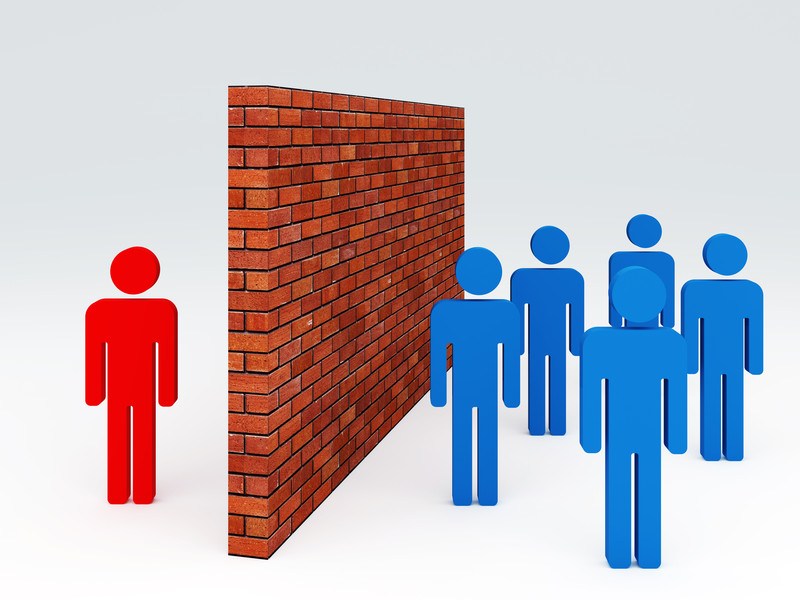
Which of the following is a barrier to communication?
Message is not clear
Not listening
Lack of language skills
All of the above

Which is NOT important in effective communication?
Wearing a red tie
Making eye contact
Using appropriate body language
Using the appropriate tone

A good, clear speaker…
Understands what he/she wants to say
Considers the audience and the setting
Checks to assure understanding, and listens to responses
All of the above

We communicate by:
Speech (Telephone call, conversations, etc)
Visuals (Body language, facial expressions)
Writing (Letter, emails, newsletters, etc)
All of the above

Includes gestures, facial expressions, and body positions
Feedback
Verbal Communication
Dance
Non-Verbal Communication

The use of sounds and words to express yourself
Non-Verbal Communication
Customer Service
Interpretive Dance
Verbal Communication
Which of the following is a positive body languages to use when speaking?
Fold your arms or cross your legs
Stand behind a lecture and keep your body hidden
Keep your arms open and use gestures
Do not make eye contact
Which of following is a negative body language to use when speaking?
Fold your arms or cross your legs
Stand behind a lecture and keep your body hidden
Keep your arms open and use gestures
Do not make eye contact
Which of these is a communication skill?
Talking at the same time as someone else
Listening to what people say
Putting your fingers in your nose
What body language shows you are listening?
Turning away from speaker
Nodding and making eye contact
Looking out the window
Communication effectiveness can be enhance by:
Practicing on communication style until you can use it with skills
Always using the same communication style as the one used by the person with whom you are interacting
Cultivating flexibility in responding to others
How many ways are there to communicate?
1
2
3
4
What is verbal communication?
Talking to someone
Whens someone is talking and someone else is listening
When more than one person is talking
Use verbal noises to show you are listening
What is communication without words?
Sign language
Non-verbal communication
Gestures
Telepathy
Is text messaging an acceptable form of communication?
Yes, by using emoji's
Yes, it should be a preferred choice when making arrangement
Yes, in certain circumstances
How can a person correctly communicate?
Speaking
Texting
Phone
All of the above
How can people use verbal communication?
Face-to-Face contact
Face-to-Face, Telephone, Skype
The use of word but not sounds
Waving is what type of communication?
Gestures
Body Language
Sign Language
Body Position
How many type of communication are there?
2
4
6
8
Facial expression are a part of what?
Gestures
Sign Language
Body Language
When you are talking directly to a person and you can see them, this is called what?
Verbal contact
Talking
Interaction
Face-to-Face communication
The transmission of messages or signals through unspoken gestures such as eye contact, facial expressions, etc.
verbal communication
sender
nonverbal communication
A two-way process in which information is revealed or exchanged with another person or group.
receiver
active listening
communication
A form of verbal communication that includes writing and reading.
written communication
nonverbal communication
sender
Specific items that can distort, destroy, or prevent communication.
active listening
communication
communication barriers
The individual who initiates or delivers a message.
sender
receiver
clarification
A form of verbal communication that includes speaking and listening.
oral communication
written communication
communication barriers
The listener, reader, or observer; the individual to whom a message is directed toward.
verbal communication
receiver
sender
When the message is transmitted through spoken words.
active listening
verbal communication
nonverbal communication
A form of workplace communication can be
the use of emails
the use of text messages
verbal
all of the above
When communicating with others at work, you should
not pay attention to the speaker's body language or gestures
try and do most of the talking
pay attention to the speaker's language and gestures
none of the above
A key component to effective communication in the workplace is
being loud
talking a lot
being an active listener
all of the above
Good communication leads to conflicts, low morale, frustration, misunderstandings, and productivity problems.
True
False
A common mistake people make when someone else is talking is they tend to only be thinking about what they want to say when it’s their turn to talk again and are not listening.
True
False
For effective communication to occur, you can’t be afraid to admit you didn’t understand someone.
True
False
Good communication at work means saying everything on your mind and doing most of the talking.
True
False
Emotions such as anger, fear, or resentment can easily distort or destroy a message.
True
False
What is nonverbal communication?
Using facial expressions, gestures, etc.
Using your words
Talking face-to-face
Being silent
The barriers to communication are misunderstandings, language/culture, and ______.
texting
active listening
poor listening skills
clear communication
People with vision impairments use sign language to communicate.
True
False
Body language includes which of the following?
Posture
Facial expressions
Gestures
All of these
____ occurs when a listener lets a speaker know that he or she is trying to understand the message being delivered.
Criticism
Interjection
Communication
Feedback

How do we give instructions during programming?
Coding
Algorithm
All of the above
None of the above
How do we teach an AI device?
Give it data
Provide it with examples
All of the above
None of the above

What is data?
Raw facts that may not make sense
Information
Data helps us to browse
None of the above
How does an AI device learn and think?
It hacks our computer
It accepts data and trains itself, then creates a model
It hacks our brain
None of the above

What is information?
Information is processed data
Information is data
Information is something
I do not know

What is VR?
Virtual Response
Virtual Reality
Very Random
Virtually reliable

What is AR?
Augmented Reality
Argumentative Reality
Augmented Response
All of the above

How does AR work?
It takes a real world and adds computer simulation
It simulates a virtual world
It creates a virtual world that is harmful
None of the above

Why do we need AI?
To help in treatment of diseases
To make our lives much easier
To help in fighting crime
All of the above
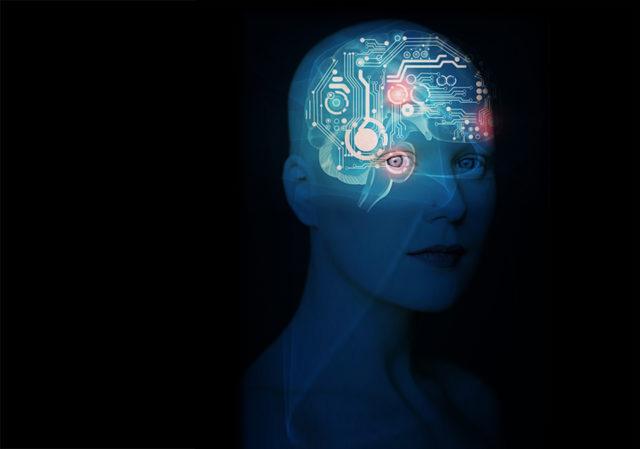
The term A.I is short for?
Anatomy Insector
Astrology Iselin
Anh Intelligence
Artificial Intelligence
Antificial Intelligence
Which one of these is not an area of AI?
computer vision/image recognition
voice recognition
web design
robotics
The ability of a computer to understand
images and videos
computer vision
robotics
Natural Language Processing
The ability of a computer to interact and
understand different human languages
computer vision
robotics
Natural Language Processing
Color recognition:………………
computer vision
robotics
Natural Language Processing
Translation:………………
computer vision
robotics
Natural Language Processing
Human face recognition:………………
computer vision
robotics
Natural Language Processing
Voice to text:………………
computer vision
robotics
Natural Language Processing
I can do only one task, but I do it perfectly.
Narrow AI
General AI
Super AI
I can solve complex problems that the human
cannot solve
Narrow AI
General AI
Super AI
I can learn and understand like humans
Narrow AI
General AI
Super AI
Why do machines demonstrate artificial intelligence?
Because machines are not really intelligent compare to humans.
Because machines are capable of doing tasks for humans by programming them with a specific information.
Because machines are useful and relevant in our daily lives.
Because machines give you artificial information which are important.
How does artificial intelligence become useful to society?
It becomes helpful in completing tasks quickly and efficiently thus producing more products
It becomes helpful in completing tasks quickly thus makes people lazy
It becomes helpful in making task easier and less efficient resulting to the boost of economy.
It helps us to complete our task.
In what way can artificial intelligence become harmful?
Excessive use of AI makes people lazy since they rely too much on it.
By using AI as a weapon in wars, many innocent lives will be affected.
AI replaces the human force resulting to less job opportunities to human workers.
AI programmed devices are harmful through the radiation it produces.
The following statements describe Artificial Intelligence EXCEPT
AI is very useful in the present generation increasing its productivity.
Al is a threat if mismanaged or used for bad intentions.
AI replaces humans as it is more efficient than humans.
All of the above
How does Weak AI differs from Strong AI?
Weak AI contains basic information like programmed response while Strong AI contains high cognitive information like the ability to reason.
Weak AI is a developing type of intelligence while the Strong AI is already established.
Strong AI is better than weak AI because it is an improved version.
Strong AI is widely used compare to Weak AI.
Which of the following statements best describes the difference between robots and humans?
Robots move differently and made up of metal.
Robots do not have feelings and emotions as compared to humans.
Robots are too smart as compared to humans.
Robots are more effective than humans.
It is a device module, or system used in electronic gadgets and materials to detect events and changes.
Electrons
Motor
Sensor
detector
It is an artificial chatting robot or chat box that responds to your questions.
SimiSimi
SimSimi
SimSimmi
SimmSimi
Which of the following statements illustrate the good effects of artificial Intelligence.
I. Uplifts economic status due to old invented AI machines
II. Enables easy and fast negotiations
III. Helps the society in seeking solutions
IV. Creates problems due to misuse of technology
I,II
II,III
III,IV
I, III
Artificial intelligence is all about robots.
True
False
Maybe
Some humans can do more "operations" in a given amount of time than a modern computer.
True
False

This is a computer vision application
NLP application
Analytical application
which one is Computer vision based application
Apple Siri
Text To Speech
Google lens

The technology used here is
Machine Learning
Deep Learning
Predictive Analysis

What is the name of this humanoid?
Sheelu
Sophka
Sophia

How this can help Agriculture
Plant disease prediction
Plant watering
Plant cutting
All of the above
Most smartphones have voice input (_______________) function that allows users to use voice typing with speech recognition program.
text-to-speech
speech-to-speech
text-to-text
speech-to-text
In the operation of computer, we need to tell a computer how to solve a problem by designing the detailed steps in an _________.
calculation
counting
algorithm
mathematics
Which of the following is not a stage in the AI Project Cycle ?
Problem Scoping
Data Acquisition
Data Exploration
Prototyping
This language is easy to learn and is one of the most popular language of AI today :
C++
Python
Ruby
Java
Which one of the following is an application of AI ?
Remote Controlled Drone
Self Driving Car
Self Driving Kiosk
Self Watering Plant System
What does NLP stand for in AI ?
Neutral Learning Projection
Neuro-Linguistic Programming
Natural Language Processing
Neural Logic Presentation

