
 Worksheets
World History Review Grade 7 Master
Total questions: 156
Worksheet time: 2hrs 48mins


A form of government in which citizens choose their leaders by voting
Democracy
Monarchy
Republic
Dictatorship
How was the Roman Republic different from the Roman Empire?
The Republic was very large; the Empire was fairly small.
The Republic was ruled by elected representatives; the Empire was not.
The Republic had no army; the Empire had a massive army.
The Republic
Rome's government began as a _______ and changed to an ___________.
democracy, republic
republic, empire
empire, republic
tyranny, empire


A council whose members were the heads of wealthy, landowning families.
Representatives
Consul
Gladiator
Senate


Roman general who became the republic's dictator in 45 B.C.
Julius Caesar
Nero
Caligula
Constantine
Who was the first emperor of the Roman Empire?
Mark Anthony
Julius Caesar
Augustus (Octavian)
None of the above


Which of the following controlled the caravan routes between cities?
The Bedouin tribes
The Persians
THe Byznztines
The Romans
Which of the following controlled the caravan routes between cities?
The Bedouin tribes
The Persians
THe Byznztines
The Romans
The flight of Muslims to Medina in the 620s AD is also known as the
Umayyad
Crusades
Arabian Nights
Hijra
Which of these is Not a pillar of Islam?
Belief in Allah
Gain wealth through kind deeds
Give to the poor
Pilgrimage to Mecca
Who were the first rulers after the death of Mohammed?
The Hims
The Persians
The Caliphs
The Byzantine
What are the basic beliefs of the Islam faith?
Four Noble Truths
Eightfold path
Five Pillars
Three Wise Sayings
Islam requires Muslims to make at least one pilgrimage to
Mount Hija
Mecca
Medina
Baghdad
What is the holy book of Islam called?
Torah
Qur'an
Bible
Hashina
Where did Islam begin?
Arabian Peninsula
China
Iran
East Africa
What is the name of the place where Muslims worship?
Altar
Church
Mosque
Synagogue
What are the three monotheistic religions
Judaism, Christianity, Vatican
Christianity, Islam, Judaism
Islam, Confucius, Holiness
Islam, Italianism, Istanbul
What is the name of the people who follow Islam?
Arabs
Islams
Muslims
Iranians
What is cultural diffusion?
when cultures dissolve after they fight each other
when goods or ideas spread from another culture
when cultures buy things at markets
when cultures have difficulty with each other
What are known as the "ships of the desert"?
Arabs
Camels
Muslims
Caliphs
What does the word Shinto mean?
Beauty
Divine Wind
Way of the Spirits
Way of the Warrior
What describes the geography of Japan?
Most of Japan is mountainous and There is very little farmland in Japan.
Japan is in a tropical region.
Japan is made up of three Islands.
Japan is in the southern hemisphere.
What was one difference between the early Japanese and early Chinese governments?
The Japanese allowed women as government officials, the Chinese did not.
The Chinese used exams to choose their government officials, the Japanese did not.
The Japanese paid their government officials very well, the Chinese did not.
The Chinese always allowed foreigners to be government official, the Japanese did not.
What was the primary source of medieval Japan’s wealth?
The hard labor of farmers.
The hard labor of traders.
The hard labor of the military.
The hard labor of manufacturers.
What was the leader of a large piece of land in medieval Japanese called?
The emperor
The vassal
Lord, Daimyo
The Samurai
Which list is in the order of most power to least power?
Shogun, Daimyo, Samurai, Peasant
Samurai, Shogun, Daimyo, Peasant
Samurai, Shogun, Peasant, Daimyo
Shogun, Samurai, Daimyo, Peasant


What does "bushido" mean?
the way of the warrior
made of many bushes
the way of Buddha
go through the bushes quickly
A type of Buddhism developed in Japan that emphasizes meditation and thoughtful tasks as the way to peace is called
Ren Buddhism
Ten Buddhism
Ven Buddhism
Zen Buddhism
In exchange for fighting, Samurai were rewarded with?
Horses
Land and riches
Servants
No taxes
Tokugawa decided that Japan should be isolated to preserve traditional Japanese values. How many years did this isolation last?
10 Years
100 Years
20 Years
200 Years
Which religion did Tokugawa think was dangerous?
Zen Buddhism
Shintoism
Christianity
Confucianism
Which qualities were prized by the samurai?
Education
Loyalty
Honor
Duty
Early travelers describe Ghana as a land of...
gold
taxes
oases
wonder
In which language were most of the earliest books written in West Africa?
Latin
Arabic
Mande
Egyptian
Islam was first brought to West Africa by
slave raiders
armed nomads
caravan traders
religious refugees
Which of the following is NOT a kingdom of W. Africa?
Songhai
Cairo
Mali
Ghana
“The women [of the Massufa tribe] are shown more respect than the men. The state of affairs amongst these people is indeed extraordinary…no one claims descent from his father, but on the contrary from his mother’s brother.”
The quote above explains a _________________ lineage.
Catholic
Matrilineal
Muslim
Patrilineal
Mansa Musa was the most successful ruler of Mali. He became a Muslim and...
Forced his subjects to convert to Islam
Preached religious tolerance and acceptance
Rewrote the justice system using the Bible
Was assassinated
West Africa saw an increase in trade due in part to the use of ___________.
Camels
Larger ships
Heavier use of slaves
Newer medicine
Ghana was founded on the “V” of which two rivers?
Nile and Senegal
Niger and Nile
Niger and Mali
Senegal and Niger
All three of the major sub-Saharan empires used slaves to grow their kingdoms. Where did these slaves come from?
They were captives from villages the empires overpowered.
They were bought at auction from European sellers.
They were from the lowest caste in the social structure.
They were criminals paying off their debts to society.
The Ghana Empire accumulated wealth through the trade of which three commodities? Select all that apply.
Gold
Coffee
Salt
Ivory
Fur
Which of the following African societies was the most heavily Christian?
Songhai
Swahili
Aksum
Zimbabwe
A group of people descended from the same ancestor is a
generation
clan
community
team
What was the culture and language of East Africa?
Songhai
Islam
Christianity
Swahili
African storytellers are called
griots
priests
shaman
author
What changed the nature of slavery in Africa?
a drought
raids of neighboring villages
famine
the arrival of the Europeans
What type of culture traces its descent through its mothers?
matrilineal
patrilinial
omnilineal
terelineal

This event led to the start of the Middle Ages
Roman Empire being split in two
Russian Revoltuion
The Fall of Rome
Neolithic Revolution

Which religion dominated Western Europe in the Middle Ages?
Islam
Catholicism
Eastern Orthodox
Paganism

What is feudalism?
Rich landowners provide military protection for the peasants that worked their land.
Peasants have the ability to choose their leader.
The king and queen are sovereign from the Church and grant rights to all citizens.
High taxes and representation for all in the legislative branch of government.


Who had the most power in Medieval Europe?
Kings
Serfs
Nobles
Popes
Which feudal class did the majority of the population belong to?
Monarchs
Lords
Knights
Peasants
what happened following the death of Charlemagne?
nothing
divided into 5 kingdoms
the emergence of the Holy Roman Empire
divided into 3 kingdoms and opened to invasion

the group of religious officials specially prepared and authorized to lead religious services
serfs
barons
lords
clergy
Community life in western Europe during the Middle Ages centered around...
the theater
the church
the school
the town hall
Which statement best explains how West Africa contributed to global trade during the Middle Ages?
West Africa was the largest consumer of luxury goods produced in China and the Middle East.
West African merchants provided important connections between European and Asian empires.
West African gold was minted into coins that were used by traders throughout the Eastern Hemisphere.
West Africa supplied the slaves who produced many of the goods that fueled the expansion of the global economy.
How was Islam introduced to East Africa?
by Arab merchants traveling by sea
by Bedouin Arabs migrating along the coast
by armies of the Caliphate seeking new conquests
by North African merchants traveling by camel caravan
Which statement explains why the feudal system developed?
There was frequent warfare between lords and vassals.
Technology and scientific knowledge ceased to advance.
There was no centralized power during the early Middle Ages.
Charlemagne united several smaller kingdoms into an empire.
About what proportion of Europe’s 14th-century population died as a result of outbreaks of the bubonic plague?
one-half
one-third
one-tenth
one-fourth
Which change in the economy of Europe was a result of outbreaks of the bubonic plague?
an overall decrease in prices
an increase in trade throughout the continent
a dramatic decrease in the cost and availability of land
a sharp increase in the demand for and cost of laborers
As the Pope was the head of the Catholic Church, what term was the action that could happen as a member of the Church was 'kicked-out?'
Expelled
Executioned
Excons
Excommunicated
Which of the following was NOT an effect of the Crusades?
Christianity spreads, bitter tensions between Jews, Byz., and Christians grows
Kings gain power over popes and nobles
The Pope is the emperor of Europe
Trade networks grow

What event is seen in this image?
The Death of the Tudors
The end of the Line
The Black Death/ Plague
The Great Muppet Caper
What was the large South American Empire that rose to power in the 1400's
Roman
Inca
Persian
Maya
The Inca empire started in the 1100's with a small group of people living in this city:
Coca
Guano
Andes
Cuzco
Because of the limited amount of fertile land that could be used for farming, the Inca used a system call:ed
cultivating
cropping
slash and burn
terrace farming
To fertilize the land and improve crop production in the coastal areas, the Inca used bird droppings also known as:
guano
pellets
silt
manure
The Inca used this animal to help with trade because of their ability to carry heavy loads over the mountainous roadways:
donkeys
elephants
camels
llamas
Which was not a way that the llama benefited the Inca:
food source
wool for cloth
pulling plows
pack animals for trade
The first emperor to expand the Inca empire aggressively was:
Atahuallpa
Cuzco
Sinchi Roca
Pachacuti
This city also known as "City in the Clouds" is proof of the power and architectural ability of the ancient Inca:
Machu Picchu
Quechua
Cuzco
Apurimac
Which two things led to the decline of Machu Picchu and the weakening of the Inca Empire:
war with Aztecs and starvation
Polio and earthquakes
small pox and civil war
flooding and volcanoes
The Spanish Conquistador best known for his expeditions that led to the fall of the Inca Empire was:
Francisco Pizarro
Hernan Cortes
Hernando de Soto
Francisco Vazquez
Why were the Maya unique compared to other ancient American civilizations?
there were a large number of nature gods
only one with a recorded history
kings and priests
religion was based on the calendar and rituals happened a certain days according to the calendar
Why were priests important to Mayan civilization?
social status
they were the ones responsible for all the rituals that kept the gods happy
to honor and get closer to the gods
to record history
Why was the Mayan calendar important to them?
Farming was based on the calendar and planting could only happen on certain days
religion was based on the calendar and rituals happened a certain days according to the calendar
Calendars play an important role in our daily work to help us stay on task
By counting days and the passage of the moon, they could predict changes in the weather
Why were human sacrifices necessary in Mayan religion?
to establish, maintain, or restore a right relationship of a human being
they would be punished by the gods if they didn’t sacrifice human
because blood was extremely important to keep the gods alive
to bring good fortune
Which of the following countries did the Mayan NOT inhabit?
Mexico
Belize
Panama
Honduras
Which of the following best describe the structure of government of the Mayan people?
One emperor who ruled all the Mayan people.
Individual rulers for each city-state.
Governors and presidents, like the United States.
There was not structure. It was pure chaos.
Developed the first writing system
Olmec
Maya
Inca
Aztec
Which of these were NOT used in Olmec Art?
Jade
Clay
Diamonds
basalt

What does the structure at Tikal show about Mayan society?
The Mayans were strong warriors.
The Mayans were good at cooking
The Mayans were good at building.
The Mayans were good at farming.

What does the "macuahuitl" tell us about Mayan society?
Mayans were good at building.
Mayans were good at cooking
Mayans were good at farming.
Mayans were capable of defending themselves from their enemies.

What is Meso-America?
region from Northern Mexico to Central America where Native american societies grew.
Region from North America to South America.
Region from South America to Antarctica.
Region from Europe to Africa.
The Aztecs created their capital city in...
Andes Mountains
Altiplano
Lake Texcoco
Lake Titicaca
The Aztecs and Inca believed in many Gods, therefore we can say they were...
Monotheistic
Polytheistic
Tritheistic
quadtheistic
Which is an Aztec God...
Huitzilopotchli
Inti
Thor
Hercules
What was the name of the capital of the Aztecs?
Tenochtitlan
Cuzco
Madrid
Rome
What year did Christopher Columbus sail the ocean blue?
1488
1506
1521
1492
The word, "renaissance" means what?
(a)

Which two classical civilizations did the Renaissance view as worthy of study? (SELECT TWO ANSWERS)
Egypt
Mesopotamia
Greece
Sumaria
Rome
Why were the Medicis important to the Renaissance?
The commissioned many expeditions.
They started a university in Florence.
They believed in the teachings of Luther.
They were patrons of the arts.
Renaissance Europeans turned towards non-religious interests/topics. This is known as:
Nationalism
Secularism
Humanism
Realism
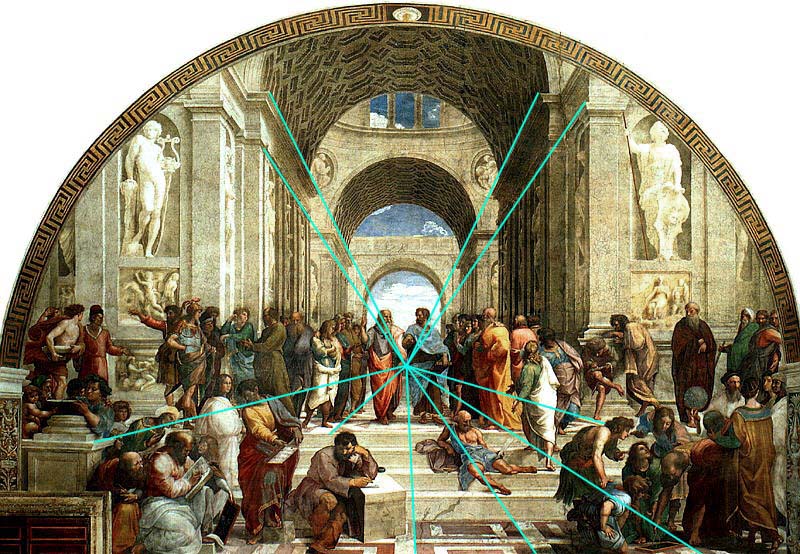

Which of these famous structures did Michelangelo paint?
the Louvre
the Coliseum
the Sistine Chapel
the Eiffel Tower
Which of these men of the Renaissance was known equally for his art as well as inventions?
Rueben
Leonardo da Vinci
Michelangelo
Aristotle

What did an indulgence grant a person?
a pardon for sin
money for food
an interview with a priest
a guarantee into heaven
What was the church's response to Luther's ideas?
Luther was excommunicated.
Luther was sainted.
Luther was stripped of his ministerial vestments.
Luther was put to death.
People who wanted the Catholic Church reformed (changed) were called?
Lutherans
Calvinists
protesters
Protestants

How were the Protestant Reformation and the European Renaissance similar?
discouraged the growth of strong monarchs
were led by the military
encouraged people to question tradition
supported the return of the Roman Empire


He was a polish mathematician and astronomer who was first to determine that the sun was the center of the solar system.
Galilieo
Humes
Copernicus
Descartes

A German mathematician who was known for his laws of planetary motion in elliptical orbits around the sun.
Leviticus
Kepler
Columbus
Newton

Who was the English scientist who discovered the laws of gravitation?
Galileo
Newton
Kepler
Copernicus

How did scientists begin challenging authority during the Scientific Revolution?
By careful observation of nature and willingness to question old beliefs
By reading classic literature
By collecting samples of plant life
By forming new government ideas

Who proposed a mathematical system using REASON and LOGIC to find new truths through this type of scientific method.
Bacon
Newton
Boyle
Descartes

The Italian physicist and astronomer who proved that objects of different weights, if dropped from the same height, fell at the same rate of speed.
He is also considered founder of modern science due to his contributions to research methodology.
Galileo
Newton
Hooke
Descartes

