
Font size
 Worksheets
BIO 131-SCIENTIFIC METHOD (HW 1)
Total questions: 28
Worksheet time: 7hrs 0mins
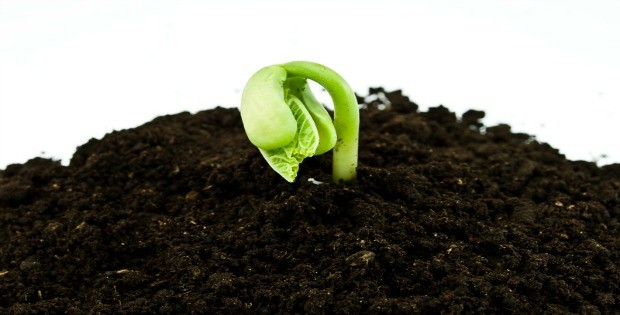
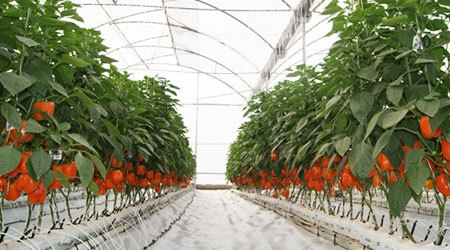
Bob read about growing plants in water. He wanted to know how plants could grow without soil.
coming up with a question
test the hypothesis with an experiment
form a hypothesis
draw conclusions
The information you collect while doing your experiment is called
conclusions
data
hypotheses
procedures
Which are part of the scientific method?
Identify the Problem
Perform an Experiment
Form a Hypothesis
Critique the work of other scientists
Communicate the Results
What is an independent variable?
What a scientist changes in an experiment to test their hypothesis
What scientist measure to see if it responded to a change
What happens when you do an experiment
What you keep the same throughout all experimental groups

At what temperature did bread mold the slowest?
20
40
60
80
The variable that is being measured or observed is called the _______________. Hint: this is the variable that is the result or effect
independent variable
dependent variable
control variable
What is a constant/control in an experiment?
Things that do not change in a experiment. It's the variable that stays the same. You can have many variables stay the same.
It's the variables that the scientist changes in the experiment
It's the variables that are being measured in an experiment
As temperature increases, the time for the bread to mold
Increases
Decreases

"Is Bounty paper towel more absorbent than sparkle paper towel?


One grape is placed in tap water and another grape is placed in salt water. The change in their mass is measured after a day. What is the dependent variable?
salt water
mass of grapes
type of water
type of grapes

A stapler is used to staple 100 papers, it jams 5 times during the trial. A different brand of stapler performs the same test; it jams 22 times. What things should be kept constant in this experiment? Select all that apply.
brand of stapler
person using the staplers
type of paper being stapled
brand of staples

For the science fair, Tina asks the question “Does caffeine increase the heart rate of an earthworm?” In Test 1, she measures the heart rate by looking at the earthworm under a microscopes, the earthworm has a heart rate of 50 bpm (beats per minute). In Test 2, she places a few drops of caffeine on the earthworm’s skin and measures the rate again. In this test, the heart rate is 68 bpm. What is the manipulated (independent) variable in this experiment?
caffeine
heart rate (bpm)
earthworm
microscope
For the science fair, Tina asks the question “Does caffeine increase the heart rate of an earthworm?” In Test 1, she measures the heart rate by looking at the earthworm under a microscopes, the earthworm has a heart rate of 50 bpm (beats per minute). In Test 2, she places a few drops of caffeine on the earthworm’s skin and measures the rate again. In this test, the heart rate is 68 bpm. What is the responding (dependent) variable in this experiment?
caffeine
heart rate (bpm)
earthworm
microscope
For the science fair, Tina asks the question “Does caffeine increase the heart rate of an earthworm?” In Test 1, she measures the heart rate by looking at the earthworm under a microscopes, the earthworm has a heart rate of 50 bpm (beats per minute). In Test 2, she places a few drops of caffeine on the earthworm’s skin and measures the rate again. In this test, the heart rate is 68 bpm. In this experiment, what is the "experimental group"?
Earthworm in Test 1
Earthworm in Test 2
Which of the following statements should Marley use to support her scientific explanation?
In my observation, I noticed that the bone was hollow. I remember learning in college that birds have hollow bones, and considering the age of the bone I believe that the fossil belong to a flying dinosaur.
Based on my knowledge and experience at the Natural History museum and the age of this bone, I would argue that it belonged to a flying dinosaur.
After reviewing our results, comparing it to the research that has been conducted by other scientists, the evidence supports the possibility that the bone belonged to a flying dinosaur.
I have shared my thoughts with other scientists, and they seem to agree with my explanation.
Scientists are able to explain why the plates move on Earth's surface using seafloor spreading as evidence. Which statement below explains why this is an accepted theory?
Several geologists have been able to predict that our continents will move back together in 100 years.
It states the exact movement and rate at which the plates move around on Earth.
It states the relationship between the seafloor and the continents.
It explains why certain areas on Earth's surface experience earthquakes and volcanoes.
Astyanax mexicanus, a type of freshwater fish found in caves and other underground habitats across Mexico and the southern part of the United States. Both the surface and cavefish belong to the same species, but unlike the surface fish, the cavefish has no eyes.
How can the survival of the cavefish population be explained?
. The surface was too bright and predators were catching them, so they adapted to be transparent in color.
. Cavefish were too far away from sunlight, causing problems in their development and changing their appearance.
Cavefish population has survived in caves without eyes because it is an adaptation to the environment.
A cavefish produced offspring after having lost its eyes in an injury and changed the population overtime.
Select ALL that both theories and laws have in common.
based on empirical evidence
supported by a large amount of data
revised or updated with new evidence
happens under very specific conditions in nature
A theory can be supported by enough empirical evidence to become a law.
True...with enough new empirical evidence by scientists.
False...it can never be a law.
Which is an example of an observation?
the dog is hungry
the cat is black and white
the turtle is lost

