
 Worksheets
Elements, metals, non-metals,
Total questions: 167
Worksheet time: 2hrs 49mins
The correct pair of best conductors of heat are
Alluminium and Silver
Copper and Silver
Silver and Zinc
Zinc and Magnesium
Lead and Mercury are
Best conductors of heat
Bad conductors of heat
Poor conductors of heat
Bad conductors of electricity
Elements do not react with oxygen even at high temperature are
Gold and Silver
Magnesium and Alluminium
Sodium and Potassium
Copper and Zinc
Zn, Fe, Al and Mg. When we arrange these elements in the ascending order of their
reactivity series we get
Mg < Al < Zn < Fe
Al < Mg < Fe < Zn
Zn < Al < Mg < Fe
Fe < Zn < Al < Mg
Hydrogen gas is not liberated when a metal reacts with HNO3. This is because
HNO3 is a
Weak oxidizing agent
Strong oxidizing agent
Weak reducing agent
Strong reducing agent
Alloys are the
Heterogenous mixture of metals and non-metals
Heterogenous mixture of two or more metals
Homogenous mixture of metals and non-metals
Homogenous mixture of two or more non-metals
Identify the correct group of soft metals from the following
Sodium, Alluminium and Copper
Sodium, Potassium and Lithium
Copper, Manganese and Magnesium
Zinc, Barium and Lithium
Observe the given information with respect to some elements and choose the correct name of the elements
Elements A B C D
Electrons K 2 2 2 2
L 8 8 6 8
M 1 8 0 4
N 0 1 0 0
A is Silicon, B is Sodium, C is Potassium
and D is Oxygen
A is Potassium, B is Oxygen, C is Sodium
and D is Silicon
A is Oxygen, B is Silicon, C is Potassium and
D is Sodium
A is Sodium, B is Potassium, C is Oxygen and D is Silicon
NaCl and CuSO4 compounds have high melting and boiling points. This is because
These are easily soluble in water and makes aqueous solutions
A considerable amount of energy is required to break the strong inter-ionic bond
They form positive and negative ions by the process of ionization
Their ions move freely and conduct electricity
The strong force of attraction between the positive and negative ions of ionic
compounds shows their
Hardness
Solubility
Conduction of electricity
Conduction of heat

Non-metals come in only a few colours and are mostly silver-grey.
True
False

At room temperature, a non-metal, such as oxygen (O), can be invisible.
True
False
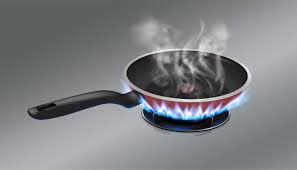
The handle in this picture is covered in a ___.
metal
non-metal
Non-metals are ___ conductors of heat.
Good
Poor / Bad
If iron nails are added to zinc sulphate solution ,the possible observation can be
No reaction takes place
A silvery white coating appears on iron nails
A black coating appears on iron nails
A pale green colour of solution is seen
option 1

Name the metal which is in liquid state.
Iron
Mercury
Zinc
Aluminium
Metals are sonorous in nature. What is sonorous?
Making into powder
Drawn into wires
Make sound on beating
None of these

A type of rock that contains minerals and metals
ore
metal
malleable
gem
Able to be drawn into wire is
malleable
insulator
lustre
ductile
Able to be beaten or hammered into shapes
lustre
malleable
brittle
insulator
The correct pair of best conductors of heat are
Alluminium and Silver
Copper and Silver
Silver and Zinc
Zinc and Magnesium
Lead and Mercury are
Best conductors of heat
Bad conductors of heat
Poor conductors of heat
Bad conductors of electricity
Elements do not react with oxygen even at high temperature are
Gold and Silver
Magnesium and Alluminium
Sodium and Potassium
Copper and Zinc
Zn, Fe, Al and Mg. When we arrange these elements in the ascending order of their
reactivity series we get
Mg < Al < Zn < Fe
Al < Mg < Fe < Zn
Zn < Al < Mg < Fe
Fe < Zn < Al < Mg
Hydrogen gas is not liberated when a metal reacts with HNO3. This is because
HNO3 is a
Weak oxidizing agent
Strong oxidizing agent
Weak reducing agent
Strong reducing agent
Alloys are the
Heterogenous mixture of metals and non-metals
Heterogenous mixture of two or more metals
Homogenous mixture of metals and non-metals
Homogenous mixture of two or more non-metals
Identify the correct group of soft metals from the following
Sodium, Alluminium and Copper
Sodium, Potassium and Lithium
Copper, Manganese and Magnesium
Zinc, Barium and Lithium
NaCl and CuSO4 compounds have high melting and boiling points. This is because
These are easily soluble in water and makes aqueous solutions
A considerable amount of energy is required to break the strong inter-ionic bond
They form positive and negative ions by the process of ionization
Their ions move freely and conduct electricity
The strong force of attraction between the positive and negative ions of ionic
compounds shows their
Hardness
Solubility
Conduction of electricity
Conduction of heat
Non-metals come in only a few colours and are mostly silver-grey.
True
False
The handle in this picture is covered in a ___.
metal
non-metal
If iron nails are added to zinc sulphate solution ,the possible observation can be
No reaction takes place
A silvery white coating appears on iron nails
A black coating appears on iron nails
A pale green colour of solution is seen
option 1
Name the metal which is in liquid state.
Iron
Mercury
Zinc
Aluminium
Metals are sonorous in nature. What is sonorous?
Making into powder
Drawn into wires
Make sound on beating
None of these
A type of rock that contains minerals and metals
ore
metal
malleable
gem
Able to be beaten or hammered into shapes
lustre
malleable
brittle
insulator


Metals are found
on the left side of the Periodic Table
on the right side of the Periodic Table
along the staircase (zig-zag line) on the Periodic Table

By looking at the element illustrated here, how might you classify it by appearance?
Metal
Non-Metal
Metalloid
Which of the following is the only metal that exist as a liquid at room temperature?
Gold (Au)
Mercury (Hg)
Titanium (Ti)

This picture illustrates copper's
brittleness
malleability
ductility
Metals create _________ ions, because they give away (lose) electrons.
positive
negative
neutral
The metal which can be cut with knife.
Iron
Silver
Sodium
Magnisium
Most metals are solid at room temperature
False
True
Which metal is the poor conductor of heat.
Silver
Potassium
Mercury
Iron
Reaction between X and Y forms compound Z. X loses electron and Y gains electron. Which of the following properties is not shown by Z?
Has high melting point
Has low melting point
Conducts electricity in molten state
Occurs as solid
Which one of the following metals do not react with cold as well as hot water?
Na
Ca
Mg
Fe
Which of the following oxide(s) of iron would be obtained on prolonged reaction of iron with steam?
FeO
Fe2O3
Fe3O4
Fe2O3 and Fe3O4
Which one of the following four metals would be displaced from the solution of its salts by other three metals ?
Mg
Ag
Zn
Cu
What is just so typical of NON-metals?
They don't know what colours go well together.
Malleable.
Form acidic oxides.
Good conductors of electricity.
High melting points.
Who created the periodic table?
Dimitri Mendeleev
Neils Bohr
Thomas Jefferson
Bill Nye the Science Guy
Columns go up and (a) .
Rows go left and (a) .
Rows are the same as _______.
columns
rows
periods
groups
All of the elements in a period have the same number of _____.
orbitals
valence electrons
The first row has _ orbitals.
1
2
3
4
The second row has _ orbitals.
1
2
3
4
The third row has _ orbitals
1
2
3
4
Columns are the same as _______.
columns
rows
periods
groups
The elements in the same group have the same number of ________.
orbitals
valence electrons
Elements in group 1 have _ valence electron(s).
1
2
3
4
Elements in group 2 have _ valence electron(s).
1
2
3
4

Which of the following is an alkali metal?
Ti
K
O
He
Which of the following is an alkaline earth metal?
Ti
Mg
O
He
Which of the following is a metalloid?
Ti
Mg
O
As
Which of the following is a non-metal?
Ti
Mg
O
As
Which of the following is a halogen?
Ti
Mg
F
As
Which of the following is a noble gas?
He
Mg
F
As
Element R reacts with chlorine to form a coloured ionic compound with the formula RCl3. RCl3 acts as a catalyst in some reactions. Which statement about element R is correct?
It conducts electricity only when molten.
It is a transition element.
It has a low melting point.
It has a low density.

The positions of four elements are shown in the outline of the Periodic Table.
Which element has a high melting point and forms coloured compounds?
A
B
C
D
Metal X reacts rapidly with steam but only very slowly with cold water.
What is X?
copper
iron
magnesium
sodium
The noble gases make up Group VIII of the Periodic Table.
Which statement is correct?
Argon exists as non-bonded atoms.
Krypton is very poisonous.
Neon burns in pure oxygen with a red flame.
The chemical formula of helium is He2.

Part of the Periodic Table is shown.
The letters are not the symbols of the elements.
Which element is a non-metal?
A
B
C
D
Element X is a very soft solid.
It reacts violently with water.
A purple flame is seen as it reacts with water.
What is X?
iodine
potassium
sodium
zinc
Iron occurs in the ground as iron oxide.
Gold occurs in the ground as the element.
Which statement explains this observation?
Gold is more reactive than iron.
Gold oxide is more reactive than iron oxide.
Iron is more reactive than gold.
Iron oxide is more reactive than gold oxide.

Which row describes the reactivity and the electronic structure of a noble gas?
A
B
C
D

Two non-metallic elements, X and Y, are in the same group of the Periodic Table.
X is higher in the group than Y.
Which row shows the group number that includes elements X and Y and which element is lighter
in colour?
A
B
C
D

Which row describes a Group I element?
A
B
C
D
Which statement about elements in the Periodic Table is not correct?
The elements in Group I are hard metals.
The elements in Group I react with water to give hydrogen.
The elements in Group VII exist as diatomic molecules.
The elements in Group VII are non-metals.
Which statement describes noble gases?
They all have eight electrons in their outer shell.
They are monatomic gases.
They form ions with full outer shells of electrons.
They react with oxygen to form unreactive compounds.
Which statement about the Periodic Table is correct?
Elements change from metals to non-metals across a period.
Elements in Group II are non-metals.
Elements in the same period have similar chemical properties.
Lithium, sodium and potassium are soft metals in the same period.

Rubidium is a very reactive Group I metal.
It is kept in a sealed box surrounded by a gas.
chlorine
neon
oxygen
water vapour

Which row describes the physical state of the Group VII elements at room temperature?
A
B
C
D
Name for NaH
sodium hydrogen
potassium hydride
sodium hydride
potassium hydrogen
Formula for barium sulfide
B2S3
BaS
Ba2S
BaS2
Name for Hg2S
mercury (IV) sulfide
mercury (III) sulfide
mercury (II) sulfide
mercury (I) sulfide
Formula for lead (II) chloride
PbCl2
Pb2Cl
Pb2Cl3
Pb3Cl2
Name for PBr2
phosphorus bromide
phosphorus dibromide
phosphorus dibromine
phosphorus bromine
Formula for Disilicon Heptasulfide
SiS6
SiS7
Si2S6
Si2S7
Name for LiOH
lithium hydrogen oxide
lithium hydroxide
lithium (II) hydroxide
lithium (I) hydroxide
Formula for iron (II) carbonate
FeCO3
Fe2CO3
FeCO2
Fe2CO2
Name for SrBr2
strontium bromine
strontium bromide
strontium dibromide
strontium dibromine
Formula for Cobalt (II) bromide
CoBr
Co2Br2
Co2Br
CoBr2
Name for CO
carbon monoxide
carbon oxide
monocarbon oxide
carbide monoxide
Name for BaO
Barium oxide
Barium monoxide
Monobarium oxide
Monobarium monoxide
Name the ionic compound, LiCl
lithium chlorine
lithium chloride
lithium chlorate
lithium monochloride
Name the ionic compound, CaCO3
calcium carbide
calcium carbon trioxide
calcium carbon oxide
calcium carbonate
What is the correct formula of phosphorus trichloride?
P2Cl3
P3Cl3
PCl3
PCl5
What is the correct molecular formula for barium hydroxide?
Ba(OH)2
Ba2OH
BaOH
Ba2OH
Cs2S
MgF2

Iron oxides, such as rust, form when iron metal reacts with oxygen in the air. What are the chemical symbols for the two elements found in iron oxide?
Fe and O
I and O
Ir and O
Pb and O

When cations and anions join, they form what kind of chemical bond?
ionic
Metalic
Covalent

Which of the following sets of elements will MOST LIKELY form an ionic bond?
He, O
Na, F
Na, K
Cl, F

What is the correct name for the compound with the chemical formula NH₄NO₃ ?
nitro-hydrogen nitrate
ammonia mononitrite
hydro-nitrogen oxide
ammonium nitrate

Which compound is MOST LIKELY formed using covalent bonds?
K2O
CaBr₂
SiO₂
KBr

Which pair of elements would MOST LIKELY bond to form a covalently bonded compound?
Na and F
P and O
Ba and Cl
Mg and S

What is the name of the following compound MgI₂?
Magnesium iodine
iodide (II) magnesium
di-iodide magnesium
Magnesium Iodide

What is the correct name for the compound NaNO₃?
sodium nitride
sodium nitrogen trioxide
sodium nitrate
sodium nitrogen oxide

What is the correct name for CO₂?
carbon monoxide
carbon dioxide
monocarbon monoxide
carbon oxide
Which of the following sets of elements will MOST LIKELY form an ionic bond?
He, F
Na, Cl
Na, K
Cl, He


