
 Worksheets
Rosedale state school biology gene
Total questions: 56
Worksheet time: 37mins
What purpose do telomeres serve (select all that apply)?
they protect the coding regions of chromosomes
they code for proteins
they help cancer progress
they help maintain genome stability
Which one has introns?
Prokaryote
Eukaryote
Where is DNA made into RNA?
Cytoplasm
Nucleus
Ribosome
Cell Membrane
Gene expression is the ability for a gene to be:
in the genome.
transcribed.
non-coding.
a dominant allele.
Which RNA type is the result of transcription?
tRNA
Non-coding RNA
rRNA
mRNA

What is Transcription?
The making DNA segment.from mRNA.
The making of an RNA strand into a protein.
The making of an mRNA strand from the DNA template.
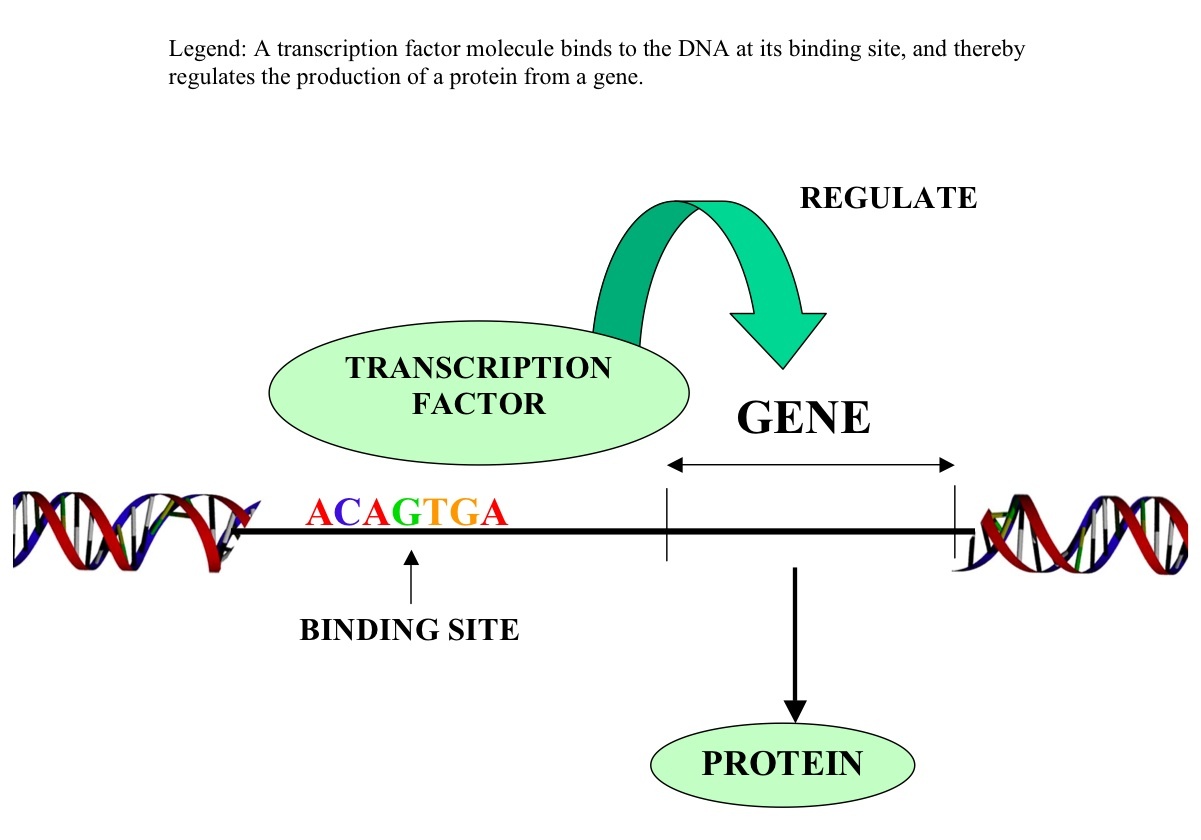
In order for a gene to be expressed, ___ must bind to the gene's ___, a specific sequence of nucleotides at one end of the gene, thus initiating transcription.
DNA polymerase, promotor
DNA polymerase, operator
RNA polymerase, promotor
RNA polymerase, operator
RNA processing in eukaryote includes:
mRNA 5′- and 3′-end processing
mRNA can always perform its function
mRNA 5′- and 3′-end processing, intron splicing
intron splicing
What does the word “inherit” mean?
The passage of the hereditary material DNA to offspring.
To pass a characteristic through the transmission of hereditary material, known as DNA.
To receive a characteristic through the transfusion of hereditary material, known as DNA.
To receive a characteristic through the trans fission of hereditary material, known as DNA.
RNA is transcribed ...
in a 5' to 3' direction
in a 3' to 5' direction
off both sides of the DNA
using DNA pol
Processing the pre-mRNA involves ...
removing the
exons
removing the introns
adding a 3' cap
adding a 5' tail
Monozygotic twins can look different to one another because:
they have different genetic material from the mother but the same genetic material from the father.
they have different genetic material from the father but the same genetic material from the mother.
the environment is determinative of phenotype.
a mutation has occurred in one twin during embryonic development.
A traumatic event experienced by an organism can affect the health of its children and grandchildren. This can happen through inherited:
epigenetic tags.
polypetide chains.
transcription factors.
DNA nucleotide patterns.
The SRY gene codes for a transcription factor which:
begins the process that turns a female foetus into a male foetus.
ensures that development begins as a female foetus.
ensures that development begins as a male foetus.
begins the process that turns a male foetus into a female foetus.
What controls the organs and tissues that develop in various parts of the embryo?
mRNA
Hox Genes
Histones
DNA Polymerse

The question below refers to the image
The correct sequence of lettered parts in the missing half of this molecule is:
TAGACT
AGTCTA
TCAGAT
GACTGC

Describe how the Hox gene can be used to explain why insects and humans have a common ancestor.

What mutation has occurred here?
T-G-A-C-C-A
T-G-A-G-C-A
Substitution
Deletion
Insertion
Frameshift

ATT-TGA-GCC- Original
ATT-GAG-CC - Mutated
The example above is an example of a
Insertion- Frameshift
Deletion- Substitution
Deletion -Frameshift
All of the above

Original DNA: CAT GAT CCA
New DNA: CAT TGA TCC A
What mutation occurred?
deletion
substitution
tranverse
insertion
Which mutation would be more harmful for an organism?
Point mutation (substitution)
Frameshift (insertion/Deletion)

The process of spermatogenesis occurs in the
testes
ovaries
fallopian tubes
vas deferens
Meiosis is the type of cell division involved in
Gametogenesis
Oogenesis
Spermatogenesis
All of the above
The process of spermatogenesis results in
one egg cell and three polar bodies
4 sperm cells
one sperm cell and three polar bodies
4 egg cells
All forms of gametogenesis result in the production of cells with what characteristic chromosome number?
diploid
haploid
triploid
tetraploid

The process of oogenesis occurs in the
testes
ovaries
fallopian tubes
vas deferens
If chromosomes fail to separate properly during either anaphase I or II, a chromosomal error occurs known as
disjunction
crossing over
non-disjunction
synapsis
A mutation involving an extra copy of a chromosome
monosomy
disomy
trisomy
triploid

The failure of homologous chromosomes to separate during meiosis
aneuploidy
monosomy
nondisjunction
trisomy
Addition or deletion of single number of chromosome refers to ____________
Aneuploidy
Euploidy
Autopolyploidy
Allopolyploidy
•gene mutation in a body cell
•Not passed down to future generations (children not affected)
lethal
somatic
gene
germ
Which of the following is not true about ploidy?
It can be induced by certain chemicals
Tetraploid is the name given to having 4 chromosome sets
It is caused by failure of chromosomes to separate during cell division
It is common in animals
Ploidy is the number of complete sets of chromosomes in a cell, and hence the number of possible alleles for autosomal
True
Flase
Which is the best definition of polygenic inheritance?
many allele options
when one trait completely dominates a recessive trait
when many genes work together to determine the outcome of a trait
sections of DNA code that determine a certain trait
Is the phenotype of a polygenic trait easy to predict?
No, because there are so many possible combinations.
Yes, that is why we use punnett squares
Yes, because there are many options
____________ inheritance creates the many variations we see in hair and skin color.
incomplete
multiple alleles
codominance
polygenic
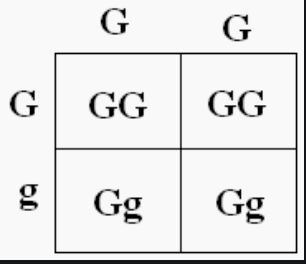
How chance the offspring born from this cross will have a homozygous dominant genotype?
25%
50%
75%
100%

What is the probability that the offspring will have blue eyes?
25%
50%
75%
100%

A woman with Type O blood and a man who is Type AB are expecting a child. What are the possible blood types of the child?
A
AB
B
O

Identify which type of sex-linked example this image represents.
X-linked dominant
X-linked recessive
Y-linked
sex-limited
Identify an example of sex-limited inheritance
Blood types
Haemophilia A
Male pattern baldness
Red-green colour blindness

Which genotype represents a male with hemophilia?
What type of inheritance is seen as two dominant traits but the third option is a blend between the two dominant traits.
red and yellow make orange
complete dominance
incomplete dominance
codominance

A calico cat shows both the traits for orange fur and black fur. What kind of allele expression is this?
Incomplete Dominance
Codominance
Independent assortment
Recessive inheritance

A roan cow shows co-dominance in fur color (red and white). What is the phenotype ratio expected if a roan cow and a roan steer mate together?
4/4 Red and White
2/4 Red, 2/4 White
2/4 Red, 2/4 Roan, 0/4 White
1/4 Red, 2/4 Roan, 1/4 White

The Punnett square above illustrates a dihybrid cross for cats. The traits are long tail (s), short tail (S), brown hair (B), and white hair (b). What are the genotypes of the parents that produces the probabilities shown in the Punnett square above?
A. Ssbb x ssBb
B. Ssbb x SSBB
C. SsBb x SsBb
D. SSBb x SsBb

Three or more alternative forms of a gene that can occupy the same locus.
multiple alleles
codominant
polygenic
incomplete dominance

