
 Worksheets
Unit 7.1.2 Review
Total questions: 33
Worksheet time: 27mins
What is the driving force of currents in the oceans and atmosphere?
Equal heating of the Earth by the Sun
Solar radiation heating only the oceans
Solar radiation heating only the land services
Unequal heating of the Earth by the Sun
Heat flow in the oceans and the atmosphere is...
cool sinks, warm rises
cool rises, warm sinks
cool rises, warm rises
cool sinks, warm sinks
Ocean currents are created by...
dense cold water sinking
dense cold water rising
less dense water sinking
less dense warm water rising and more dense cold water sinking
When air is heated it becomes
more dense
less dense
heavier
moist
Air sinking toward the Earth's surface causes a...
low pressure system
high pressure system
Air rising above the Earth's surface causes a...
low pressure system
high pressure system
Wind flows from...
high pressure to low pressure
low pressure to high pressure
_______ are lines connecting points of equal atmospheric pressure
millibars
contour lines
isobars
barometers
High pressure systems bring with it...
warm, moist air
bad weather
cold, moist air
good weather
When two air masses collide but neither is strong enough to push the other out of the way, a ______ front forms.
cold
warm
stationary
occluded
In what areas of the world do hurricanes form?
warm ocean waters
polar ocean waters
on lakes and rivers
over the central plains of the US
What is NOT critical for the formation of a hurricane?
low air pressure
warm temperatures
tropical winds
high air pressure

Clear, dry, cool and sunny



Which is the correct symbol for a cold front?
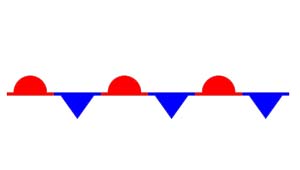



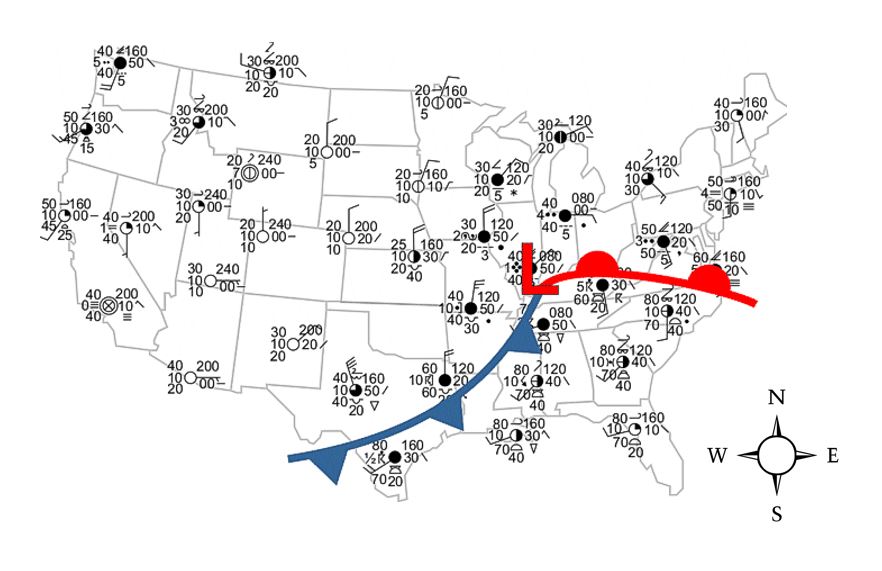
What direction is the warm front moving on the map?
North
South
East
West


Which area of the country will experience the warmest temperatures today?
Maine
South Florida
Texas
Arizona

What is the weather like in Los Angeles?
fair and dry
Sunny
rainy and storms
Cold

On the weather map, which area just had a cold front move through?
Little Rock
Chicago
New York
Miami

According to the weather map, which city is experiencing many days of rain?
Little Rock
New York
Seattle
Orlando
A hurricane is a large, rotating storm system that forms over water, bringing high winds, rough seas, and heavy rain. Hurricanes occur where
ocean water is the warmest, near the equator in the late summer.
ocean water is the coolest, near the pole in the late winter.
the ocean has extremely high tides.
the ocean has extremely low tides.
The center of the hurricane is called the __________.
bullseye
point
nose
eye
Why does a hurricane slow down when it hits land?
The wind stops it
It stops raining
It loses its energy source
The air is different
The name of the system that causes the winds to spin in a hurricane
The Coriolis Effect
The Corleone Affect
The Circular Wind Phenomenon
The East-West Effect
Convection currents occur when ______________________ energy transfers between a fluid.
potential
kinetic
thermal/heat
electric
What is an example of convection currents
Feeling the heat from a bonfire with your friends
Touching a hot curling iron
The movement of air in a circular motion in the atmosphere

