wayground logo

Free Printable Worksheets

Font size

S
M
L
XL
Worksheets

AICE Marine Flash Review 1.1

Total questions: 75

Worksheet time: 50mins

Name
Class
Date
1.

The electrons that are involved in chemical bonding are known as ...

a)

valence electrons

b)

ionic electrons

c)

covalent electrons

d)

metallic electrons

2.

When an atom gains electrons, it becomes a

a)

positive ion

b)

negative ion

c)

neutral ion

d)

neutral atom

3.
How are ionic bonds formed?
a)

Transfering (gaining or losing) electrons

b)

Sharing electrons

c)

Sharing protons

d)

Transfering (gaining or losing) protons

4.

Water is a(n)

a)

compound

b)

element

c)

mixture

d)

solution

5.

Which of the following is a correct description for particles of a solid?

a)

closely arranged and in fixed positions (no motion)

b)

closely arranged and vibrate in fixed positions

c)

closely arranged and can move around

d)

far apart, and move freely

6.

The process by which a gas changes to liquid

a)

Evaporation

b)

Condensation

c)

Deposition

d)

Freezing

7.
Which of the following statements about the particle of a gas is true?
a)
Gases can be compressed because their particles are smaller than those of liquids or solids.
b)
Gases can be compressed because there is plenty of space between their particles.
c)
Gases can be compressed because they have low boiling points.
d)
Gases can be compressed because their particles are more elastic than those of liquids or solids.
8.
Which of the following statements about the kinetic particle theory is not true?
a)
The particles of a gas move faster than those of a liquid.
b)
The particles of a solid have more kinetic energy than those of a gas.
c)
The particles that make up matter are always moving.
d)
The forces of attraction between the particles of a solid are very strong.
9.
The fact that ice floats on liquid water is due to the fact that water's solid is ___________ than it's liquid form
a)
less polar
b)
more polar
c)
less dense
d)
more dense
10.
Which statement explains why water molecules stick together?
a)
both sides are negative
b)

one side has a partial positive charge and the other side has a partial negative charge

c)

one side has a partial negative charge and the other side has a neutral charge

d)
both sides are positive
11.

Why is water so good at dissolving so many substances?

a)

it is polar

b)

it is less dense as a solid

c)

it has a high specific heat capacity

d)

it is hydrophilic

12.

How many protons does an atom of sodium have?

a)

11

b)

22.99

c)

1

d)

33.99

13.
What does the nucleus consist of?
a)
Protons + Electrons
b)
Neutrons + Electrons
c)
Atoms
d)
Protons + Neutrons
14.

How many electrons does a neutral nitrogen atom has?

a)

7

b)

8

c)

14

d)

14.01

15.

Which of the labeled structures is an electron?

a)

a

b)

b

c)

c

16.

How many protons does fluorine have?

a)

19

b)

1

c)

9

d)

10

17.

Using the diagram as a reference, how many valence electrons does sodium have?

a)

1

b)

3

c)

8

d)

2

18.

Using the diagram as a reference, how many electrons does chlorine needs to complete its outermost (valence) shell?

a)

2

b)

7

c)

4

d)

1

19.
Attractions between the negative Oxygen atom of one water molecule and the positive Hydrogen atom of another water molecule are called
a)
Covalent bonds
b)
Ionic bonds
c)
Polar bonds
d)
Hydrogen bonds
20.
Why does ice float?
a)
As water freezes, it expands and its density decreases.
b)
As water freezes, it takes up more hydrogen from the atmosphere, causing it to have a greater buoyancy.
c)
As water freezes, air becomes trapped between the hydrogen bonds of water molecules.
d)
As water freezes, it takes up more oxygen from the atmosphere, causing it to have a greater buoyancy.
21.
Which end of the water molecule has a slightly positive charge?
a)
the oxygen end
b)
the hydrogen end
c)
both ends are slightly positive
d)
neither end is positive
22.
Which of the following is LEAST likely to dissolve in water?
a)
nonpolar fats and oils
b)
polar sugar molecules
c)
salt made of a positive sodium ion and a negative chloride ion
d)
all of the substances will dissolve easily in water
23.
Large bodies of water, such as lakes and oceans, do not quickly fluctuate in temperature. What is the reason for this phenomenon?
a)
Water is an acid.
b)
Water is a versatile solvent.
c)
Water has a high heat capacity.
d)
 Water acts as a buffer.
24.
 Small insects can walk across the surface of calm water. Their feet push the surface of the water down slightly, somewhat like a person walking across a trampoline, but they do not break the surface. What is the best explanation for why this happens?
a)
The insects are light enough so that they do not break the hydrogen bonds holding the water molecules together
b)
The insects actually use their wings to hover slightly above the water's surface and they only skim it with their feet
c)
The insects' feet are non-polar, so they are repelled by the polar water molecules and are pushed away from the water's surface
d)
The insects are small enough to see the individual water molecules, so they are able to step carefully from one molecule to the next
25.
When a molecule has an opposite electrical charge on each end, it is known as what?
a)
cohesion
b)
polar molecule
c)
hydrogen bond
d)
solution
26.

Bonds that hold a water molecule together are called ____________.

a)

Covalent Bonds

b)

Ionic Bonds

c)

Hydrogen Bonds

d)

Water Bonds

27.

Bonds between multiple water molecules are called ____________.

a)

Hydrogen Bonds

b)

Covalent Bonds

c)

Ionic Bonds

d)

Water Bonds

28.

There are partial charges within a water molecule which cause water to have special properties. This makes water a ________ molecule.

a)

Polar

b)

Nonpolar

c)

Hydrophobic

d)

Ionic

29.
Water is polar because...
a)
The unequal sharing of electrons gives the water molecule a slight negative charge near its oxygen atom and a slight positive charge near its hydrogen atoms.
b)
The molecule has two poles, at which the it is colder than other regions of the molecule.
c)
The unequal sharing of electrons gives the water molecule a slight negative charge near its hydrogen atoms and a slight positive charge near its oxygen atom.
d)
The water molecule is neutral.
30.
What property of water helps to moderate earth's temperature?
a)
adhesion
b)
chohesion
c)

High specific heat capacity

d)
Latent heat of vaporization
31.
What property of water allows it to be such a versatile solvent that it is often called the "universal solvent?"
a)
Purity
b)

Polarity

c)
High heat capacity
d)
Expansion upon freezing
32.
Large bodies of water, such as lakes and oceans, do not quickly fluctuate in temperature. What is the reason for this phenomenon?
a)
Water is an acid.
b)
Water is a versatile solvent.
c)
Water has a high heat capacity.
d)
 Water acts as a buffer.
33.

 Henry and Janay have been studying the unique properties of water in their Marine Science class. Henry decides they will go fishing during winter. He is sure they will catch fish. Janay believes it is not possible because all the fish die once the lake freezes. 

Who is correct and why?  

a)

Janay is correct because the lake freezes completely causing the fish to die.

b)

Henry is correct because water floats when frozen, creating an ice layer at the tip of the lake that insulates the liquid with the fish below.

c)

Henry is incorrect because fish cannot survive in extreme environments.

d)

Henry and Janay are both incorrect because fish do not live in lakes that freeze.

34.

What kind of molecule is water?

a)

Ionic

b)

Polar Covalent

c)

Nonpolar Covalent

d)

Metallic

35.

Which part of a water molecule has a Positive Charge?

a)

The Hydrogen

b)

The Oxygen

c)

The Top

d)

The Bottom

36.

Which of the following water CANNOT dissolve?

a)

ionic substances

b)

non polar substances

37.

Which of the following can water NOT dissolve?

a)

Ionic Compounds

b)

Polar Compounds

c)

Nonpolar Compounds

38.

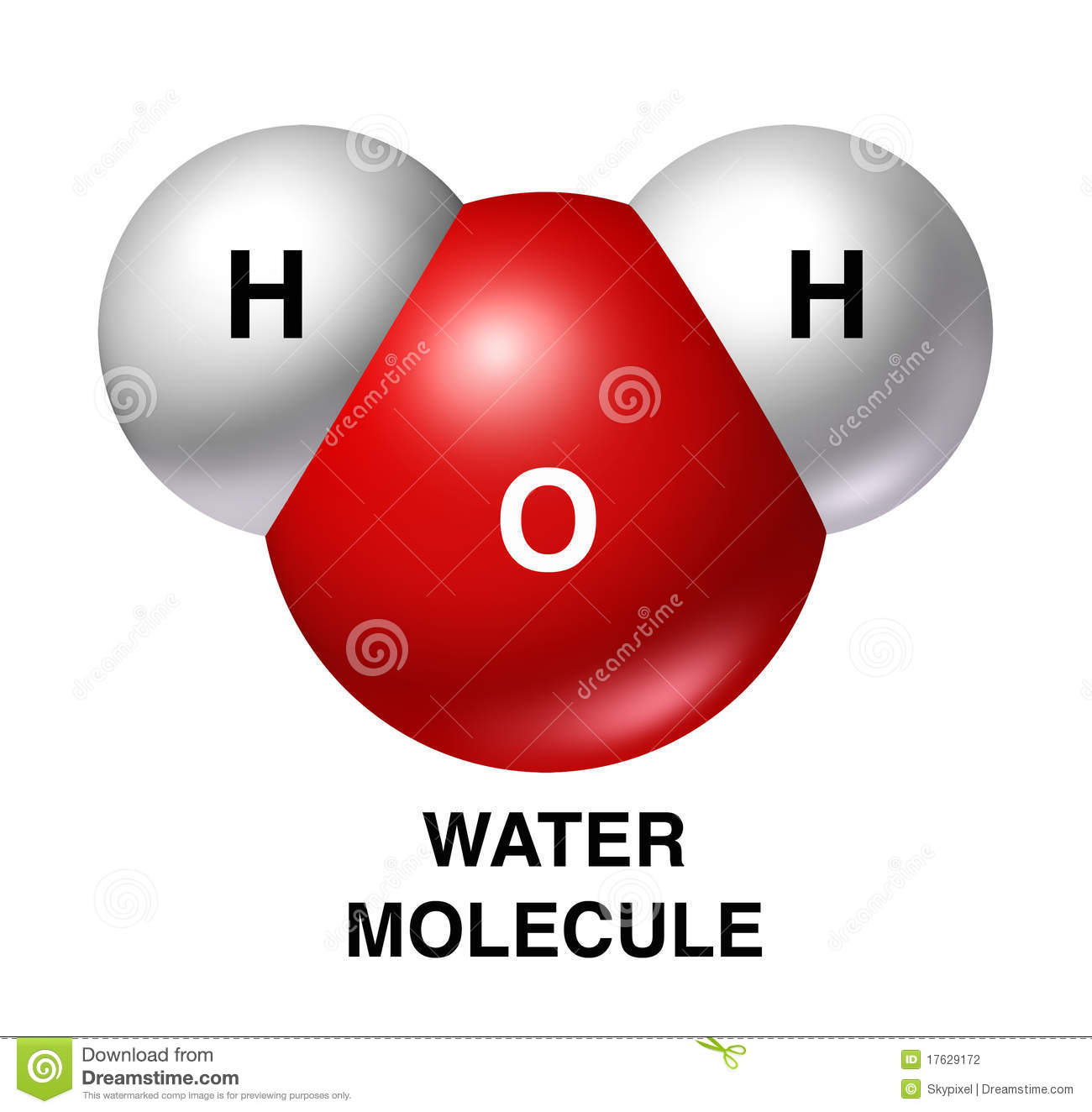
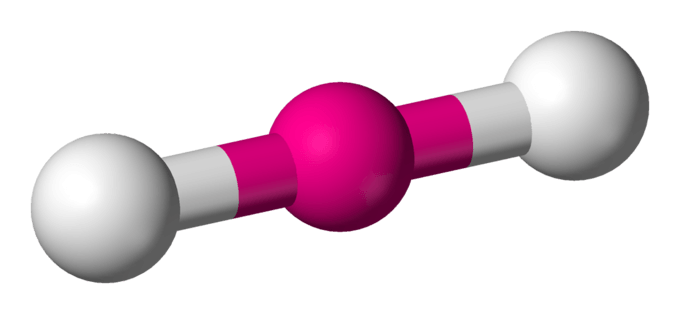
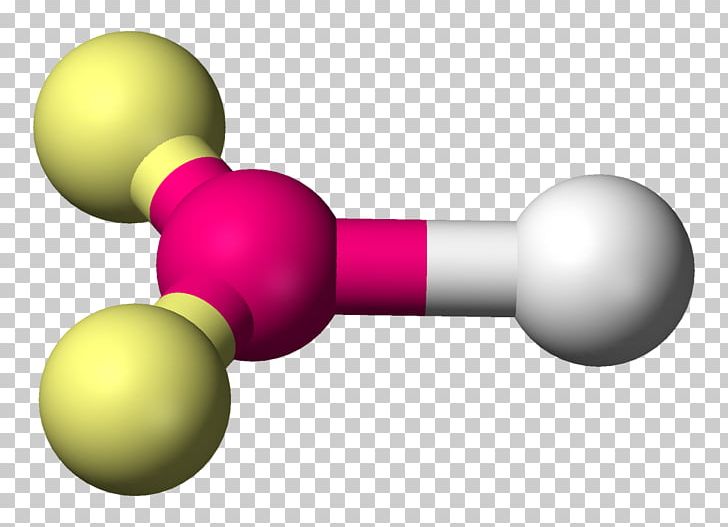
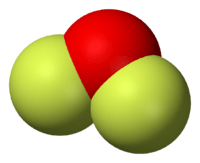
Which of the following is the correct molecular structure for water, H2O?
a)
b)
c)
d)
39.

What sort of bonding do we see between water molecules?

(a)  

40.

What bonding do we see within a water molecule (between the oxygen and hydrogen)

(a)  

41.

Where is the slightly negative charge on water molecule?

a)

Hydrogen

b)

Oxygen

c)

There is no negative charge

42.
An inflated balloon is placed in a refrigerator. Which statement describes the movement of the gas particles in the balloon?
a)
The particles move more slowly and become closer together.
b)
The particles move more slowly and become further apart.
c)
The particles move faster and become closer together.
d)
The particles move faster and become further apart. 
43.
What happens when water evaporates?
a)
Particles of the water vapour lose energy to their surroundings.
b)

Particles of the water vapour are spaced farther apart.

c)
The speed of the particles of the water increases.
d)
The temperature of the remaining water rises.
44.

This diagram represents particles in a ______________ state.

a)

Solid

b)

Liquid

c)

Gas

45.

The diagrams show the arrangement of particles in three different physical states of substance X. Which statement about the physical states of substance X is correct?

a)

Particles in state 1 vibrate around fixed positions.

b)

State 1 changes to state 2 by diffusion.

c)

State 2 changes directly to state 3 by condensation.

d)

The substance in stage 3 has a fixed volume.

46.

Which statement about the molecules in the gas carbon dioxide is correct?

a)

The molecules are close together.

b)

The molecules are diatomic.

c)

The molecules move randomly.

d)

The molecules all move with the same speed.

47.

What is a valence electron?

a)

an electron that is found in the outermost shell of an atom.

b)

an electron found in the innermost shell of an atom.

c)

an electron found in the middle shell.

48.

What is the number of valence electrons for Neon and the other Noble Gases?

a)

5

b)

6

c)

7

d)

8

49.

A covalent bond forms when atoms ___________ electrons.

a)

gain

b)

share

c)

increase

d)

transfer

50.

Ionic bonding is between a

a)

nonmetal and nonmetal

b)

metal and nonmetal

c)

metal and metal

d)

Depends on the situation

51.
Chemical bonds form when atoms
a)
combined nuclei
b)
give up neutrons
c)
gain protons
d)
share or transfer electrons
52.
Between  nonmetals
a)
Ionic Bonds
b)
Covalent Bonds
c)
Both bonds
d)
Neither bond
53.

Glucose - what type of bonds?

a)
Ionic Bond
b)
Covalent Bond
c)

Lattice bonds

d)

Metallic bonds

54.

CO2 - what type of bonds?

a)
Ionic Bond
b)

Covalent Bonds

c)

Lattice bonds

d)

Metallic bonds

55.

Calcium chloride- CaCl2 - what type of bonds?

a)
Ionic Bond
b)
Covalent Bond
c)
Both bonds
d)
Neither bond
56.
This picture shows a...
a)
Ionic Bond
b)
Covalent Bond
c)
Both bonds
d)
Neither bond
57.
This picture shows a...
a)
Ionic Bond
b)
Covalent Bond
c)
Both bonds
d)
Neither bond
58.
Which particle has a positive charge?
a)
electron
b)
orbital
c)
proton
d)
neutron
59.
Which particles make up the nucleus of an atom?
a)
protons and neutrons
b)
electrons and protons
c)
electrons, protons, and neutrons
d)
electrons and neutrons
60.
Which of the following is a substance that can not be broken down into a simpler substance?
a)
Isotope
b)
Element
c)
Compound
d)
Atomic Number
61.

In a neutral atom, what is the number of protons equal to?

a)
The number of electrons.
b)
The number of neutrons.
c)
The number of molecules.
d)
The number of nuclei.
62.
What number indicates an electron?
a)
1
b)
2
c)
3
d)
4
63.
What number indicates the nucleus?
a)
1
b)
2
c)
3
d)
4
64.

Atomic number equals ______________ and _______________

a)

Neutrons

b)

Protons

c)

Electrons

d)

Elements

65.
The bond between N & H.   Ionic or covalent?
a)
Ionic
b)
Covalent
66.
The bond between Na & F.   Ionic or covalent?
a)
Ionic
b)
Covalent
67.
What happens when the sodium atom loses an electron?
a)
It become negatively charged 
b)
It become positively charged
c)
none
68.
Which of the following has a full valence shell?
a)
Oxygen
b)
Neon
c)
Barium
d)
Carbon
69.
Atoms gain or lose electrons to become stable by satisfying this rule.
a)
Lewis Structure rule
b)
Periodic Law
c)
octet rule
d)
Ionic Law
70.
How many more valence electrons does Oxygen need to be stable?
a)
6
b)
2
c)
4
d)
It's already stable with 8
71.

Ionic bonds form by __________.

a)

sharing electrons

b)

attraction between opposite charges

c)

delocalized electrons

d)

electron spins

72.

Is KCl an ionic or covalent bond?

a)

ionic

b)

covalent

73.
What elements generally make an ionic bond?
a)
metal and nonmetal
b)
2 or more nonmetals
c)
metal
d)
none of the above
74.
What elements generally make a covalent bond?
a)
metal and nonmetal
b)
2 or more nonmetals
c)
metal
d)
none of the above
75.

When an atom loses electrons, it becomes a

a)

positive ion

b)

negative ion

c)

neutral ion

d)

neutral atom