Wayground logo

Free Printable Worksheets

Font size

S
M
L
XL
Worksheets

Unit 1 Review

Total questions: 75

Worksheet time: 2hrs 4mins

Name
Class
Date
1.

What should you do if there is an accident during a lab?

a)

Clean it up

b)

Notify the teacher immediately

c)

Pretend it never happened

d)

Keep quiet

2.
Identify the equipment shown here:
a)
graduated cylinder
b)
Erlenmeyer flask
c)
beaker
d)
volumetric flask
3.
a)

stopper

b)

forceps

c)

tripod stand

d)

test tube holder

4.

A bowl and club used for grinding

a)

erlenmyer flask

b)

test tube

c)

mortar and pestle

d)

petri dish

5.
240 cm = ___________ m
a)
2400
b)
24
c)
2.4
d)
0.24
6.
15.6 L = ___________ mL
a)
15,600
b)
156,000
c)
1,560,000
d)
15,600,000
7.
0.57 mL = ___________ L
a)
5.7
b)
0.057
c)
0.0057
d)
0.00057
8.
32.9 km = ___________ cm
a)
32,900
b)
329,000
c)
3,290,000
d)
32,900,000
9.
Is 20 g greater than, less than, or equal to 2 kg?
a)
greater than
b)
less than
c)
equal to
10.
Which unit is a a measure of volume?
a)
meters
b)
grams
c)
inches
d)
liters
11.
How many significant figures: 216 m
a)
1
b)
2
c)
3
d)
0
12.
How many significant figures: 2016 m
a)
1
b)
2
c)
3
d)
4
13.
How many significant figures: 0.012 km
a)
1
b)
2
c)
3
d)
4
14.
How many significant figures: 1000 mL
a)
1
b)
2
c)
3
d)

4

15.
How many significant figures: 0.010 L
a)
1
b)
2
c)
3
d)
4
16.
How many sig figs are there?
0.000008
a)
1
b)
2
c)
6
d)
7
17.

How many significant figures are there in 1008 grams?

a)

1

b)

2

c)

3

d)

4

18.
Solve and give your answer with the correct number of significant figures
(12.470)(271)
a)
3366.9
b)
3.37x10³
c)
3400
d)
3370
19.
Solve and give your answer with the correct number of significant figures
24.28 + 12.5
a)
3.687 x 101
b)
36.8
c)
37
d)
3.70x101
20.
Round 0.010229 to four sig figs
a)
1022
b)
1023
c)
0.01023
d)
0.01022
21.
Complete the statement:
5 cm/min = ______ m/day
(100 cm = 1 m)
a)
72
b)
840
c)
7.2
d)
5,040,000
22.
The Olympic record for the high jump is just over 2.6 yards. What is that distance in feet?  (3 ft=1 yd)
a)
0.867 ft
b)
7.8 ft
c)
8.07 ft
d)
8.27 ft
23.
How many minutes are in a year?
a)
I can't count that high.
b)
525,600min
c)
52,560min
d)
31,536,000min
24.
What is 416,000,000 in scientific notation?
a)
4.16 x 10⁸
b)
4.16 x 10⁹
c)
4.16 x 10⁻⁸
d)
4.16 x 10⁻⁹
25.
What is 2.8 x 10⁻⁴ in standard notation?
a)
28,000
b)
280,000
c)
.00028
d)
.000028
26.
What is 7.0 x 10⁸ in standard notation?
a)
7,000,000,000
b)
70,000,000
c)
700,000,000
d)
.000000007
27.
What is 1 in scientific notation?
a)
1
b)
1 x 10⁻¹
c)
1 x 10⁻¹
d)
1 x 100
28.
A testable prediction about a scientific investigation is a(n)
a)
Question
b)
Observation
c)
Hypothesis
d)
Experiment
29.

What is the last step of scientific method?

a)

hypothesis

b)

observe

c)

communicate

d)

question

30.
A series of steps used by scientists to solve a problem or answer a question. 
a)
scientific method
b)
recipe
c)
data collection
d)
metric system
31.

The information you collect while doing your experiment is called

a)

conclusions

b)

data

c)

hypotheses

d)

procedures

32.

The variable that is being measured or observed is called the _______________. Hint: this is the variable that is the result or effect

a)

independent variable

b)

dependent variable

c)

control variable

33.
If I ride my bike to school instead of walking, then I will get to school faster. What is the dependent variable?
a)
True
b)
How fast you get to school
c)
Riding a bike or walking
d)
False
34.

The independent variable is

a)

The variable that you change in an investigation

b)

The variable that you measure in an investigation

c)

A variable that you keep the same in an investigation

35.

The process of obtaining information by using the senses is called a/an

a)

Conclusion

b)

Observation

c)

Inquiry

d)

Scientific method

36.

What is a physical or mental representation of an object or an event?

a)

a theory

b)

a hypothesis

c)

a model

d)

a scientific law

37.

Data gathered using the senses are referred to ___________.

a)

quantitative data

b)

logical data

c)

measured data

d)

qualitative data

38.

An explanation based on many repeated observations during experiments.

a)

conclusion

b)

scientific law

c)

theory

d)

hypothesis

39.

A general statement that describes a patterns that are often observed in nature.

a)

logical law

b)

civil law

c)

moral law

d)

scientific law

40.

Ben makes five paper helicopters with different wing lengths. He drops them the same way from a height of two meters for five trials each. He records the amount of time it takes for each helicopter to fall to the ground.

What is the independent variable?

a)

Dropping the same way

b)

Wing Length

c)

Amount of time it takes the helicopter to hit the floor

d)

Dropping from the same height

41.

Cindy wanted to find out how the amount of sunlight affects the growth of plants. She placed two tomato plants in 10 inch pots with potting soil and watered them ¼ cup each day. One plant was placed under a cardboard box and one was placed in the sunlight. She measured the growth of the plant each week for three weeks.

What are two CONSTANTS? (Select 2)

a)

Using the same type of plant

b)

Each plant was placed in a 10 inch pot

c)

The growth of the plant

d)

One plant is in the sunlight and the other is under a box

42.

Marcia went to the grocery store and bought a bag of Doritoes. She estimated there would be 350 chips in the bag, but realized there were only 210 chips in the package. What was her percent error?

a)

67%

b)

35%

c)

92%

d)

45%

43.

During class, students measured the length of a shelf. Their answer was 12 cm. The actual measurement was 14.25 com. What was their percent error?

a)

15.79%

b)

18%

c)

2.25%

d)

18.75%

44.

Connie estimates the weight of her dog to be 8 pounds. The actual weight of the dog was 10 pounds. Find the percent error.

a)

80%

b)

15%

c)

20%

d)

25%

45.
The deer population is estimated to be 17,600 in northern Illinois, but an actual count was 21,300. What is the percent error?
a)
21%
b)
17.37%
c)
17.4%
d)
21.02%
46.

1. what state of matter is characterized by a definite volume and an indefinite shapes?

a)

a. solid

b)

b. liquid

c)

c. gas

d)

d. plasma

47.

4. which property could NOT be used to distinguish between table salt and table sugar?

a)

a. color

b)

b. density

c)

c. boiling point

d)

d. melting point

48.

6. in this classification of matter that is combination of two or more substances that are physically combined

a)

a. pure substance

b)

b. mixture

c)

c. matter

d)

d. mass

49.

10. which of the following is an example of physical changes?

a)

a. cutting of wood

b)

b. burning of paper

c)

c. melting ice

d)

d. rusting

50.
Reacts with Acid: Chemical or Physical Property
a)
Chemical Property
b)
Physical Property
51.
Physical properties are
a)
properties that can be observed without changing the identity of the substance
b)
properties that describe how a substance changes into a completely different substance
52.
Is Gatorade powder dissolving in water physical or chemical change?
a)
Physical 
b)
Chemical
53.
What cannot be broken down into other substances?
a)
Compound
b)
Mixture
c)
Solids
d)
Element
54.
What is made up two or more elements that are chemically combined?
a)
Element
b)
Mixture
c)
Compound
d)
Solids
55.
This picture represents which of the following?
a)
element
b)
compound
c)
mixture
56.
This picture represents which of the following?
a)
element
b)
compound
c)
mixture
57.
Which of the following is not a compound?
a)
HCl
b)
Cl
c)
NaCl
d)
CO2
58.
Is a human made of matter?
a)
yes
b)
no
c)
?
d)
mabye
59.
Which item is not made of matter?
a)
air
b)
water
c)
a pencil
d)
a shadow
60.
a)
Element
b)
Compound
c)
Mixture
61.

Fe is the ___________________ for iron

a)

Letters

b)

Chemical Symbol

c)

Equation

62.

A ___________ is a combination of many different elements not chemically combined.

a)

Element

b)

Compound

c)

Mixture

63.
What is an example of evaporation?
a)
Water boiling
b)
Water turning into ice
c)
Chocolate bar turning into liquid chocolate
d)
Fog forming on a mirror
64.
At higher temperatures
a)
particles in an object have less energy
b)
particles in an object move faster
c)
a gas contracts
65.

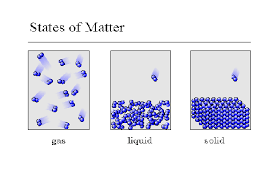
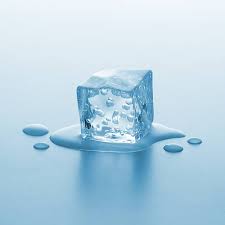
What state of matter is pictured?

a)

Solid

b)

Liquid

c)

Gas

d)

Plasma

66.
When a substance melts, the kinetic energy _____________.
a)
decreases
b)
stays the same
c)
increases
d)
decreases then increases
67.
5. What is it called when a solid turns directly into a gas?
a)
Sublimation
b)
Condensation
c)
Liquid
68.
When the temperature of matter decreases the particles ...
a)
speed up and move farther apart
b)
speed up and move closer together
c)
slow down and move farther apart
d)
slow down and move closer together
69.
All changes in the state of matter of a substance requires
a)
vibration
b)
water
c)
permission
d)
energy
70.

Which phase change absorbs energy to take place?

a)

freezing

b)

condensation

c)

evaporation

d)

all of the above

71.
calculate the following to the correct number of sig figs.
0.00401  x  2.00  x  501
a)
4.02
b)
4
c)
4.0
d)
4.0180
72.
To separate iron filings and sulfur what method should you use?
a)
filtration 
b)
sorting
c)
magnet
d)
boiling
73.

When dissolving sugar in water... the sugar can be separated from the water.

a)

true

b)

false

74.

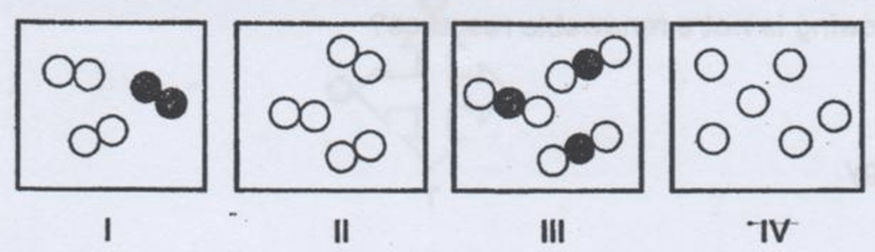
In the diagrams provided, the circles of different colors represent the atoms of different elements. Which diagram represents a mixture?

a)

I

b)

II

c)

III

d)

IV

75.

Which beaker(s) contain a pure substance? (check all that apply)

a)

A

b)

B

c)

C

d)

D