Wayground logo

Free Printable Worksheets

Font size

S
M
L
XL
Worksheets

Science Benchmark

Total questions: 74

Worksheet time: 1hrs 4mins

Name
Class
Date
1.
The process by which igneous rocks are formed...
a)
heat and pressure
b)
melting and cooling
c)
weathering and erosion
2.

You do not know an object's velocity until you know its...

a)

speed and distance

b)

reference point

c)

speed and direction

d)

acceleration

3.

If you know a car travels 30 km in 20 minutes, you can find its...

a)

acceleration

b)

average speed

c)

direction

d)

instantaneous speed

4.

Acceleration is a change in speed or...

a)

time

b)

direction

c)

slope

d)

distance

5.

TRUE OR FALSE: The basic SI unit of length is the meter.

a)

TRUE

b)

FALSE

6.

Two objects traveling at the same speed have different velocities if they...

a)

start at different times

b)

travel different distances

c)

have different masses

d)

move in different directions

7.

An object used as a reference point to determine motion should be...

a)

accelerating

b)

stationary

c)

decelerating

d)

changing direction

8.

WHAT TYPE OF FRICTION?: Rubber pads on a bicycle's brakes rubbing against the tire.

a)

Static

b)

Sliding

c)

Rolling

d)

Fluid

9.

WHAT TYPE OF FRICTION?: Ball bearings in skateboard wheels.

a)

Static

b)

Sliding

c)

Rolling

d)

Fluid

10.

Which of the following is not a projectile?

a)

a satellite

b)

a thrown ball

c)

a ball on the ground

d)

a soaring arrow

11.

The resistance of an object to any change in its motion is called...

a)

inertia

b)

friction

c)

gravity

d)

weight

12.

TRUE OR FALSE: Balanced forces are equal forces acting on an object in opposite directions.

a)

TRUE

b)

FALSE

13.

What force makes it less likely for a person to slip on a dry sidewalk as opposed to an icy sidewalk?

a)

air resistance

b)

friction

c)

inertia

d)

momentum

14.

If you know the weight of an object that floats, you know the...

a)

object's density

b)

object's mass

c)

object's volume

d)

buoyant force

15.

TRUE OR FALSE: Pressure is force per unit of mass.

a)

TRUE

b)

FALSE

16.

The upward force that acts on an airplane's wing is called...

a)

drag

b)

lift

c)

inertia

d)

pressure

17.

Why doesn't air pressure crush human beings at sea level?

a)

Air pressure at sea level is very low.

b)

Clothing on our bodies shields us from air pressure.

c)

Air is not as heavy as human beings.

d)

Pressure from the fluids inside our bodies balances the air pressure outside.

18.

TRUE OR FALSE: The distance an object travels per unit of time is called speed.

a)

TRUE

b)

FALSE

19.
What tool would a meteorologist use to determine the change in air pressure?
a)
thermometer
b)
barometer
c)
weather vane
d)
compass
20.
The layer of Earth that includes the crust and upper mantle is the:
a)
atmosphere
b)
lithosphere
c)
asthenosphere
21.
The one day of the year with the longest amount of sunlight is:
a)
vernal equinox
b)
summer solstice
c)
summer equinox
d)
all of the above
22.
What type of plate boundary forms mountains and volcanoes?
a)
divergent
b)
convergent
c)
transform
23.
What type of plate boundary forms rift valleys?
a)
divergent
b)
convergent
c)
transform
24.
What are the four different types of storms?
a)
tsunami, blizzard, hurricane, tornado
b)
blizzard, hurricane, tornado, thunderstorm
25.
Tides are caused by:
a)
rotation of planet Earth
b)
Earth's revolution
c)
Gravitational pull of the moon
26.

What part of the water cycle is A?

a)

evaporation

b)

condensation

c)

precipitation

d)

run off

27.

What part of the water cycle is B?

a)

evaporation

b)

condensation

c)

precipitation

d)

run off

28.

What part of the water cycle is C?

a)

evaporation

b)

condensation

c)

precipitation

d)

run off

29.
Look at the diagram. What would be the direction of the motion ?
a)
movement to the left
b)
movement to the right
c)
no movement
30.

Which object shows an energy transformation from electrical to mechanical?

a)
b)
c)
d)
31.

Wind turbines and windmills convert what type of energy to another?

a)

Mechanical to electrical

b)

Gravitational potential to electrical

c)

Mechanical to solar

d)
Thermal to sound
32.
Which is evidence that a chemical change has happened?
a)
Bending or Breaking
b)
Nothing happens
c)
The change can be reversed
d)
Color Change
33.
Which is an example of a physical change?
a)
Rusting of a bike
b)
Ice melting
c)
Cooking orange chicken
d)
Lighting a match
34.
Is sugar (C12H22O11) an element or a compound?
a)
Element
b)
Compound
35.
Is Iron (Fe) an element or a compound?
a)
Element
b)
Compound
36.

Particles move freely at a very fast speed are called a

a)

solid

b)

liquid

c)

gas

d)

atom

e)

molecule

37.

Consider the graph of a material's temperature versus it's energy below. In part B the state of matter has changed from a solid to a liquid. What can you say about the temperature?

a)

The temperature decreases.

b)

The temperature increases.

c)

The temperature remains constant.

38.

How is the energy transferred when warming your cold hands on a hot coffee mug?

a)

Cold is transferred to hot

b)

Hot is transferred to cold

39.

What charge does a neutron have?

a)

no charge

b)

positive

c)

negative

40.

What holds the galaxy together?

a)

gravity

b)

duck tape

c)

force

d)

air

41.
Which of the following are NOT found in animal cells
a)
chloroplasts and cytoplasm
b)
chloroplasts and cell wall
c)
cell wall and cell membrane
d)
mitochondria and nucleus
42.

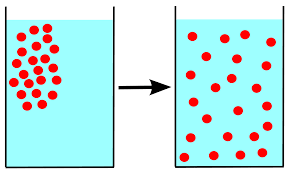
The picture below is an example of _________________.

a)

osmosis

b)

isotonic

c)

diffusion

d)

active transport

43.

A physical appearance is

a)

genotype

b)

heterozygous

c)

phenotype

d)

codominance

44.

This scientist studied pea plants and was considered to be the "Father of Genetics".

a)

Reginald Punnett

b)

Gregor Mendel

c)

Charles Darwin

d)

Rosalind Franklin

45.

Y= yellow pod

y= green pod


What is the percentage of yellow pod when you cross a hybrid pod plant with a purebred green pod plant?

a)

25%

b)

50%

c)

75%

d)

100%

46.
The shape of the DNA molecule is a double __________________?
a)
"S"
b)
helix
c)
rope
d)
curve
47.
Mutations are a change in what?
a)
DNA
b)
tRNA
c)
genotype
d)
phenotype
48.

I have cell walls

I am an autotroph

I am multicellular

What am I?

a)

Plant

b)

Animal

c)

Eubacteria

d)

Protist

49.
An organism that needs to eat other organisms to obtain energy is known as a:
a)
Autotroph
b)
Producer
c)
Consumer
d)
Mutualist
50.
What is the term for a feature that allows an organism to survive in its environment?
a)
adaptation
b)
variation
c)
homologous structure
d)
vestigial structure
51.
All the individuals of a species that live in a particular area are called a 
a)
group
b)
population
c)
variation
d)
fossil
52.
Rock that forms when sediment from older rocks get pressed and cemented together.
a)
Sedimentary Rock
b)
Metamorphic Rock
c)
Igneous Rock
53.
Cooling & crystalization produce
a)
igneous rocks
b)
metamorphic rocks
c)
sedimentary rocks
54.
What is the area where two tectonic plates meet called?
a)
collision
b)
mid-ocean ridge
c)
a boundry
d)
a rift zone
55.
The deep interior of the Earth can be mapped using
a)
seismic waves.
b)
sonar.
c)
information from drilling expeditions.
d)
ocean waves.
56.
According to the continental drift theory, a single, huge continent once existed called
a)
Pangaea.
b)
Wegener.
c)
Panthalassa.
d)
Euraisa.
57.
The heat from a lamp allows a lizard to remain warm. This is an example of which type of heat transfer?
a)
radiation
b)
conduction
c)
convection
d)
insulation
58.
The transmission of energy by two objects touching is called
a)
conduction
b)
convection
c)
contraction
d)
radiation
59.

What layer of earth changes because of the convection cycle?

a)

Crust

b)

Core

c)

Mantle

60.

Which material is more dense?

a)

solid

b)

liquid

c)

gas

61.

Which of these choices is the best definition of absolute dating?

a)

determining the age of a rock layer by studying the fossils present

b)

finding the age of an object compared to other objects

c)

measuring the age of an object in years using any method

d)

determining the amount of a radioactive isotope in an object

62.

How was the fossil of this insect formed?

a)

by being petrified

b)

by being trapped in asphalt

c)

by being trapped in hardened tree sap (amber)

d)

by being buried in sediment that slowly decays

63.

What geologic change is shown in the figure?

a)

erosion

b)

abrasion

c)

deposition

d)

volcanism

64.

Trace fossils are much more common than body fossils. Which of the following best explains why trace fossils are more common?

a)

Trace fossils take less time to form.

b)

Body fossils require soft sediment to form.

c)

An organism is more likely to live on soft sediment where trace fossils form.

d)

A single animal can leave thousands of traces in its lifetime but will leave only one body when it dies.

65.

Sometimes a fossil is formed as a result of the movement of an organism in soft sediment. What type of fossil is this called?

a)

bone fossil

b)

trace fossil

c)

frozen fossil

d)

petrified fossil

66.
The process by which gravity, water, wind, and ice deposit weathered and relocated sediment.
a)
Deposition
b)
Sedimentary rock
c)
Ocean trench
d)
Magma
e)
Erosion
67.
Deep and narrow depressions in the seafloor where the subducted plate moves into the asthenosphere.
a)
Ocean trench
b)
Mineral composition
c)
Metamorphic rock
d)
Weathering
e)
Volcanic eruption
68.
The mechanical or chemical processes that break rocks into smaller pieces, and sometimes change the chemical composition.
a)
Weathering
b)
Earth's evolution
c)
Erosion
d)
Cementation
e)
Deposition
69.
What happens to the air pressure (density) of air as you increase in altitude?
a)
density increases, this is due to the surface area of the atmosphere increasing as you increase altitude which allows for gas molecules to expand.
b)
density decreases, this is due to the surface area of the atmosphere increasing as you increase altitude which allows for gas molecules to expand.
c)
density stays the same
d)
density disappears
70.
What is another word for hypothesis?
a)
evidence
b)
graph
c)
investigation
d)
prediction
71.

If I wanted to live where it is warm and humid (amount of moisture in the air) which climate would I chose?

a)

temperate

b)

tropical

c)

polar

d)

desert

72.

An area of low rainfall on the downwind slope of a mountain is called what?

a)

climate

b)

the Gulf stream

c)

a microclimate

d)

a rain shadow

73.
Which of the following is NOT a type of chemical weathering?
a)
water
b)
carbon dioxide
c)
ice wedging
d)
living organisms secreting acid to break down rocks
74.
What is mechanical weathering?
a)
Process through which rocks are physically broken into smaller pieces.
b)
Rocks are broken down through chemical changes.
c)
Rocks are worn away from acid in plant roots.
d)
Rocks broken down by machinery.