
NEW
Font size
 Worksheets
Epithelial Tissue Review
Total questions: 40
Worksheet time: 22mins

What type of epithelium?
Stratified columnar.
Simple cuboidal.
Simple columnar.
Stratified cuboidal.

What type of epithelium?
Simple columnar epithelium.
Simple squamous epithelium.
Stratified squamous epithelium
Stratified columnar epithelium.

What type of epithelium?
Non-Ciliated pseudostratified columnar epithelium.
Ciliated pseudostratified columnar epithelium.
Simple squamous epithelium
Stratified squamous epithelium.

What type of epithelium?
Non-Ciliated pseudostratified columnar epithelium.
Ciliated pseudostratified columnar epithelium.
Stratified columnar epithelium.
Simple columnar epithelium.

What type of epithelium?
Simple squamous epithelium.
Simple cuboidal epithelium.
Stratified squamous epithelium.
Stratified cuboidal epithelium.

What type of epithelium?
Relaxed transitional epithelium.
Stratified columnar epithelium.
Simple columnar epithelium.
Distended transitional epithelium.
Epithelial tissue that can stretch and change in shape when subjected to stress would be
stratified squamous
pseudostratified columnar
simple columnar
transitional
Stratified epithelium consist of
multiple layers
a single layer
a single layer that appears to change shape when tissues are stretched
multiple layers that appears to change shape when tissues are stretched
Pseudostratified columnar


Simple Columnar


Transitional (unstretched)


Stratified Columnar


Simple Cuboidal


Simple Squamous


Stratified Cuboidal


All of the above
None of the above
Stratified Squamous


none of these

The type of tissues pictures is _____
simple squamous
stratified squamous
cuboidal
transitional

The type of epithelium pictured is _____.
simple squamous
stratified squamous
transitional
cuboidal

The type of epithelium pictured is _____.
simple squamous
stratified squamous
cuboidal
transitional

The type of epithelium pictured here is ______.
stratified squamous
simple squamous
transitional
cuboidal

The type of epithelium pictured is ______.
simple columnar
stratified columnar
cuboidal
pseudostratified

The type of epithelium pictured here is ______.
cubiodal
columnar
simple squamous
stratified squamous

________ epithelium includes a single layer of flattened cells that line the lungs, the blood vessels, and the heart.
cuboidal
pseudostratified
simple squamous
transitional

___________ epithelium is tissue that changes in response to tension and is found in organs that need to stretch.
simple squamous
transitional
stratified squamous
cuboidal

________ cells appear to be layered due to irregularly placed nuclei but each cell touches the basement membrane.
transitional
pseudostratified
cuboidal
columnar

These types of epithelial cells are located on the outer layers of the skin and line the various orifices of the body.
simple squamous
stratified squamous
columnar
cuboidal
The lining of the bladder contains which type of epithelium?
Simple Cuboidal
Simple Columnar
Transitional
Psuedostratified Columnar
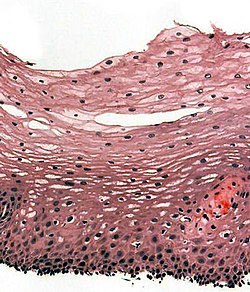
What type of epithelium is this and where might you find it?
stratified squamous ; skin
pseudostratified columnar ; trachea
simple squamous ; lung
simple cuboidal ; kidney tubules
Which of the following is NOT a main function of epithelial tissues?
covering exposed surfaces
lining internal passageways
producing glandular secretions
contracting to produce movement
The difference between endocrine and exocrine glands can best be described by which of the following?
exocrine secretions are released into surrounding tissues and blood whereas endocrine secretions are discharged onto the surface of the skin or other epithelial surfaces
endocrine secretions are released into the surrounding tissues and blood whereas exocrine secretions are discharged onto the surface of the skin or other epithelial surfaces
exocrine secretions and endocrine secretions are both released directly into the blood at all times
exocrine secretions and endocrine secretions are both released directly onto the surface of the skin at all times

