
 Worksheets
ES U0 and U1 Study Help 2022
Total questions: 75
Worksheet time: 2hrs 31mins

Read the statement and decide if it's an observation or inference:
The car seems to be a VW Buggy
Observation
Inference
Read the statement and decide if it's an observation or inference:
The man's tongue is sticking out.
Observation
Inference
Read the statement and decide if it's an observation or inference:
The dog has long ears.
Observation
Inference
Read the statement and decide if it's an observation or inference:
The car is on the right side of the road.
Observation
Inference
Read the statement and decide if it's an observation or inference:
The car seems to be moving very fast.
Observation
Inference
Read the statement and decide if it's an observation or inference:
The dog is annoyed by the human.
Observation
Inference
T/F: A quaLitative observation does include a number quantity.
True
False

A gray elephant stampeding across the Savannah is an example of a observation.
Quantitative
Qualitative
Neither quantitative nor qualitative

Steve used a ruler to measure the length of a cube. He found the cube to be 3 cm. This is an example of a observation.
Quantitative
Qualitative
Neither qualitative nor quantitative

What kind of observation is in the picture?
Quantitative
Qualitative
Neither quantitative nor qualitative

What kind of observation is in the picture?
Quantitative
Qualitative
Neither quantitative nor qualitative
What kind of observation is this: 30 mL of water
Quantitative
Qualitative
Neither quantitative nor qualitative

What kind of observation is this: 10 grams of sugar in a snack
Quantitative
Qualitative
Neither quantitative nor qualitative
"A ball falling from the sky" is an example of a observation
Quantitative
Qualitative
Neither quantitative nor qualitative
"A ball falling 10 meters per second" is an example of a observation
Quantitative
Qualitative
Neither quantitative nor qualitative

What is the mass of this object?
615.3 grams
516 grams
165.3 grams
165.3 inches

What is the mass of this object?
421.5 grams
241.5 grams
1.524 grams
421.5 inches

What is the mass of this object?
58 grams
85 grams
185 grams
80.5 grams

What is the mass of this object?
328 grams
300.2.8 grams
333 grams
302.8 grams

What is the mass of this object?
320.5 grams
321 grams
231.5 grams
230.5 grams

What is the mass of this object?
111.5 grams
1.5 grams
2 grams
1 gram

What is the mass of this object?
1 gram
0 grams
0.1 gram
1.1 gram

What is the mass of this object?
(a)
1.3 x 10²⁰
2.9 x 10²¹
9.5 x 1032
8.4 x 10¹⁹
54 km is equal to ______________ m.
5,400
54,000
540
.054
What is the biggest unit of mass in the metric system?
gram
milligram
kilogram
What is the smallest unit of length in the metric system?
millimeter
centimeter
meter
It is a measurement that tells the amount of liquid a container can hold.
weight
volume
length
How many grams are there in 1 kilogram?
100 grams
1,000 grams
10 grams
Which of the following is the heaviest?
3,500 g
3 kg
4,000 g

648 g = ____ mg
6,480
64,800
648,000
64.8

68 cm = ___________ mm
0.68
6.8
68
680

32.9 km = ___________ cm
32,900
329,000
3,290,000
32,900,000

The line of latitude at 90 Degrees North is called the...
Equator
Prime Meridian
South Pole
North Pole


Which letter is located at
(60°N, 60°E)?
A
B
C
D

Which letter is located at
(0°, 150°W)?
D
E
F
G

Which letter is located at
(15°S, 75°E)?
H
I
G
D
Which is a cardinal direction?
Down
Right
Northeast
South
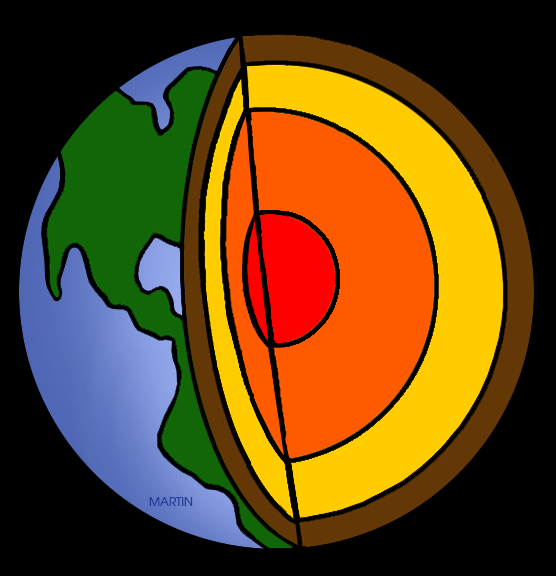
Which layer is shown in red?
crust
mantle
outer core
inner core
Which layer is shown in orange?
crust
mantle
outer core
inner core
Which layer is shown in yellow?
crust
mantle
outer core
inner core
Which layer is shown in brown?
crust
mantle
outer core
inner core

Sarah is bringing treats to her elementary school class on her birthday. The number of treats she brings in is based on the number of students in her class.
t = the number of treats
s = the number of students
Which of the variables is INDEPENDENT?
s
t
The information you collect in an experiment in order to answer a question is called
Charts
Graphs
Data
Hypotheses
This type of variable is what you DON'T change in a lab
Control
Independent
Dependent
A variable that is unchanged throughout the experiment is the:
Controlled Variable
Experimental Variable
Independent Variable
Dependent Variable
Jack is doing an experiment to see which shoes help him run the fastest. What will his independent variable be?
The shoes he wears
The track he runs on
The time of day he runs
Sally is doing an experiment to see which brand of sunscreen works best. What is not a controlled variable for this experiment?
The time of day she is in the sun
The amount of time she is in the sun
The amount of sunscreen she uses.
The brand of sunscreen.
The variable that is being tested, counted or measured and is responding to the independent variable is known as:
Control
Independent Variable
Constant
Dependent Variable
Zach wants to know if the amount of time he spends on social media has an effect on his grades. What is the independent variable?
Time on social media
His grades
Beth wants to know if increasing her exercise will decrease the time it takes her to run a mile. What is the independent variable?
Distance
amount of exercise
Brad sets up an experiment to see how the mass of a ball affects the distance it rolls off a ramp. Identify the independent variable.
distance traveled by the ball
mass of the ball
height of the ramp
weight of the ball
Mr. Pransky wants to see how different surfaces affect how high a tennis ball can bounce. What is the independent variable?
the different surfaces
how high they bounce
A group of parts that work together...
sphere
organism
geosphere
system
The __________interact to effect Earth's systems and processes, and they are constantly changing each other.
systems
atmosphere and geosphere
spheres
asthenosphere and cryospehre

