wayground logo

Free Printable Worksheets

NEW

Font size

S
M
L
XL
Worksheets

Atomic Theory Unit

Total questions: 58

Worksheet time: 54mins

Name
Class
Date
1.
Which of these is NOT a basic piece of an atom?
a)
proton
b)
neutron
c)
electron
d)
quantron
2.
Which of these phrases best describes an atom?
a)
a positive nucleus surrounded by a hard negative shell
b)
a positive nucleus surrounded by a cloud of negative charges
c)
a hard sphere with postive and negative charges on the outside
d)
a negative nucleus surrounded by protons and neutrons
3.
In Dalton's Atomic Theory, all elements consist of __________ that cannot be divided.
a)
Atoms
b)
Parts
c)
Molecules
d)
Hydrogen
4.
In the Thomson Model, he discovered the existence of what particle?
a)
Electrons
b)
Protons
c)
Neutrons
d)
Quarks
5.
Which model is this?
a)
Thomson Model
b)
Cloud Model
c)
Bohr Model
d)
Rutherford Model
6.
Which model is this?
a)
Thomson Model
b)
Rutherford Model
c)
Cloud Model
d)
Bohr Model
7.

Which of the following is/are conclusions based on Rutherford’s gold foil experiment?

a)

Atom is mostly empty space

b)

The nucleus is positively charged

c)

The atom has a small dense nucleus

d)

All answers are correct

8.
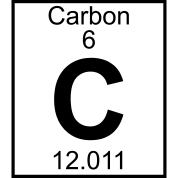
What does the 6 represent?
a)
atomic mass
b)
atomic number
c)
element name
d)
chemical symbol 
9.
What does the C represent?
a)
atomic mass
b)
atomic number
c)
element name
d)
chemical symbol 
10.
The atomic number of this pictured element is
a)
28
b)
58.6934
c)
Ni
d)
Nickel
11.
How many neutrons are in a Gold atom?
a)
79
b)
196
c)
118
d)
275
12.
Which scientist developed the atomic theory
a)
Aristotle
b)
Dalton
c)
Democritus
13.
Atoms are made up of three basic parts, which are -
a)
Protons, neutrons, electrons
b)
neutrinos, protons, neutrons
c)
quarks, protons, electrons
d)
electrons, neutrons, and quarks
14.
The nucleus is made up of -
a)
neutrons and electrons
b)
protons and neutrons
c)
protons and electrons
d)
electrons and quarks
15.
Protons have this charge -
a)
positive
b)
negative
c)
neutral
d)
no charge
16.
Electrons have this charge - 
a)
positive
b)
negative
c)
neutral
d)
no charge
17.
Neutrons have this charge -
a)
positive
b)
negative
c)
neutral
d)
They don't exist
18.
An atom's overall charge is ________.
a)
positive 
b)
depends
c)
neutral 
d)
negative 
19.
Ernst Rutherford discovered which part of the atom through the use of gold foil?
a)
Proton
b)
Neutron
c)
Electron
d)
Orbitals
20.
Believed that atoms of the same element are identical to each other
a)
Bohr
b)
Rutherford
c)
Dalton
d)
Thomson
21.

What subatomic particle has a negative charge and is found outside of the nucleus?

a)

Electron

b)

Proton

c)

Nucleus

d)

Neutron

22.

True or False: Electrons are found in the nucleus.

a)

True

b)

False

23.

Who discovered the neutron?

a)

JOSEPH JOHN THOMSON

b)

ERNEST RUTHERFORD

c)

NEILS BOHR

d)

JAMES CHADWICK

24.
How did Rutherford discover the proton?
a)
Cathode tube ray experiment
b)
Gold Foil Experiment
c)
Planetary Model
d)
Plum Pudding Model
25.
The central region of an atom where its neutrons and protons are is its 
a)
Nucleus 
b)
Electron Cloud
c)
Core 
d)
Center 
26.
How many neutrons would Fe-56 have?
a)
56
b)
26
c)
30
d)
33
27.
If X is the symbol for an element, which of the following two symbols represent    isotopes of the same element?     I. 7735X  II. 7733X  III. 8137X  IV. 8135 X
a)
I and II
b)
III and IV
c)
I and IV
d)
I and III
28.
An isotope has three forms.  30% have a mass of 4 amu, 20% have a mass of 5 amu and 50% have a mass of 3 amu.  Average atomic mass will be closest to
a)
2 amu
b)
3 amu
c)
4 amu
d)
5 amu
29.

How many neutrons are in the isotope pictured above?

a)

29

b)

34

c)

63

d)

92

30.
How many neutrons does the isotope of lithium have?
a)
8
b)
3
c)
5
31.
If a hydrogen atom has 1 proton, 1 electron, and 1 neutron, its atomic number is:
a)
1
b)
2
c)
3
32.
How is carbon-12 different from carbon-14?
a)
They have a different number of protons
b)
they have a different number of electrons
c)
they have a different number of neutrons
33.
What do carbon-12 and carbon-14 have in common?
a)
they have same number of protons
b)
they have the same number of neutrons
c)
they have the same atomic mass
d)
they have the same atomic weight
34.
What can you conclude about carbon-14 from its name?
a)
It has 14 electrons
b)
it has 14 neutrons
c)
it has 14 protons
d)
it has an atomic mass of 14 u
35.

12 protons and 13 neutrons

a)

Mg-12

b)

Mg-13

c)

Mg-25

d)

Mg-24.305

36.

Using the picture from a periodic table, what is the Atomic Number?

a)

26

b)

Fe

c)

55.845

d)

56

37.

When two atoms of the same element have different masses, they are called ______, and have a different number of ______.

a)

Neutrons; Isotopes

b)

Atoms; Isotopes

c)

Isotopes; Protons

d)

Isotopes; Neutrons

38.

Calcium has the atomic number 20. If it has a mass number of 46, how many neutrons are present?

a)

46

b)

20

c)

26

d)

We cannot tell

39.
If a sulfur atom has 16 protons, 16 electrons, and 16 neutrons, its atomic mass is:
a)
16
b)
32
c)
48
d)
64
40.
An atom of fluorine has an atomic mass of 19 u. Keeping in mind that its atomic number is 9, what can you infer about this atom?
a)
it has 9 neutrons
b)
it has 10 electrons
c)
it has 10 neutrons
d)
it has 10 protons
41.
On the periodic table, how is atomic mass represented?
a)
As an average of the mass of different isotopes
b)
as the exact mass of every atom
c)
as the mass of the most common isotopes
d)
As the masses of all protons added together
42.

Which is the best nuclear symbol for a potassium atom with 21 neutrons?

a)
b)
c)
d)
43.

Which of the following is the nuclear symbol for lithium-6

a)
b)
c)
d)
44.

The hyphen notation of an atom of calcium with 20 protons, 20 electrons, and 22 neutrons is

a)

calcium - 20

b)

calcium - 40

c)

calcium - 62

d)

calcium - 42

45.

The element Z that exits in an exoplanet has two known isotopes, Z-35 with a percent abundance of 25%, and Z-38 with a percent abundance of 75%. What is the average atomic mass of element Z?

a)

37.25 amu

b)

35.75 amu

c)

73 amu

d)

100 amu

46.

Write the hyphen notation for the isotope that has 39 protons and 50 neutrons.

a)

Yttrium-11

b)

Tin-39

c)

Tin-89

d)

Yttrium-89

47.

An element has three isotopes. Given the abundances and relative masses, calculate the average atomic mass and determine (from the periodic table) which element it is.


Abundances | Relative masses

0.005% | 234.04 amu

0.720% | 235.04 amu

99.275% | 238.05 amu

a)

Uranium (#92, Atomic Mass: 238.03 amu)

b)

Fluorine (#9, Atomic Mass: 19.00 amu)

c)

Mercury (#89, Atomic Mass: 200.59 amu)

d)

Polonium (#84 209 amu)

48.
How many protons does P-30 have?
a)
30
b)
16
c)
12
d)
15
49.
What element has 42 protons?
a)
Ca
b)
Mo
c)
Zr
d)
Po
50.
How many protons does Pb-209 have?
a)
127
b)
209
c)
82
d)
291
51.
Which of the following could have 14 neutrons?
a)
Al-27
b)
Si-29
c)
Mg-25
d)
Na-22
52.
Which of the following could have 82 neutrons?
a)
W-182
b)
Ta-181
c)
Cs-132
d)
Ba-138
53.
What is the mass number of an atom of gold with 117 neutrons?
a)
117
b)
196
c)
196.97
d)
197
54.
An element with 4.35% have a mass of 49.9461 amu, 83.79% have amass of 51.9405 amu, 9.50% have a mass of 52.9407 amu, and 2.36% have a mass of 53.9389amu.
a)
51.99 amu
b)
52.19 amu
c)
53.45 amu
d)
17.33 amu
55.
An element has two naturally occurring isotopes. One is 10.013 amu and is 19.9% abundant. The other is 11.01 amu and is 80.1% abundant. What is the average atomic mass? What element is it?
a)
9.012, Beryllium
b)
12.011, Carbon
c)
6.941, Lithium
d)
10.812, Boron
56.

Compute the average atomic mass for this element.

a)
27.977
b)
28.09
c)
28.976
d)
The average mass cannot be determined from provided information.
57.

An element exists as the three isotopes shown. What is the average atomic mass?

a)

20.74 amu

b)

22.56 amu

c)

18.39 amu

d)

24.31

58.

An atom's nucleus's charge is ________.

a)
positive 
b)
depends
c)
neutral 
d)
negative