
 Worksheets
Unit 3 Chemistry Review
Total questions: 46
Worksheet time: 4hrs 50mins
Subatomic particles with a negative charge
Electrons
Neutrons
Protons
Quarks

The smallest particle of an element.
Element
Molecule
Atom

What is one way Neutrons are different from electrons?
they both are negative
neutrons have no charge, while electrons have a negative charge
Both are in the nucleus( center of atom)
Electrons are inside nucleus and neutrons are outside the nucleus.

What is the atomic number?
35
18
17
52

How many protons and electrons does this element have?
35
18
17
52

How is the mass number of an atom determined?
Look on the periodic table
Add protons and neutrons
Add protons, neutrons, and electrons
Double the number of protons

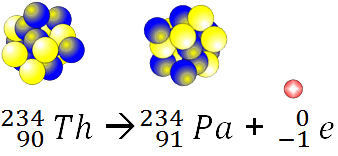
Gamma rays have
no mass
a huge mass
a small mass
an average mass
146C --> 0-1e + ________
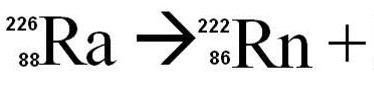
What is the name of the force holding the nucleus together?
strong force
weak force
medium force
What is the name of the force that acts within protons and neutrons?
strong force
medium force
weak force

What happens by changing the number of neutrons?
The atomic mass changes
The number of electrons changes
The atomic number changes
The number of protons changes
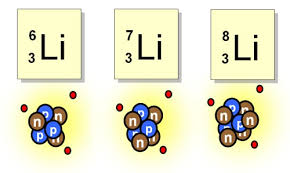
If a proton is added or removed from an atom, what happens?
It becomes a different element.
It becomes a different isotope.
Nothing happens.
What is the difference between Neon-20 and Neon-22?
They have different numbers of electrons.
They have different numbers of neutrons.
Only 1 is radioactive.
No difference.
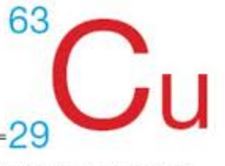
An atom's atomic number is equal to
The number of protons in the atom's nucleus
The number of neutrons in the atom's nucleus
The number of electrons in the atom
The total of protons + neutrons
An atom has 12 protons and 13 neutrons in its nucleus. Which is the correct symbol?


Who was the first to state the concept of an atom?
Bohr
Dalton
Rutherford
Democritus
What did Rutherford's gold-foil experiment help him conclude?
The mass of the atom is equivalent to the number of protons alone.
The mass of the atom is negligible.
The mass of the atom is mostly located in a small nucleus.
The mass of the atom is equivalent to the number of neutrons alone.
What are the subatomic particles of an atom?
protons, neutrons, and nucleus
protons, neutrons, and electrons
electrons, orbitals, and neutrons
electrons, neutrons, and nucleus
Metals typically form ___________, which are positive ions.
cations
anions
onions
unions
Nonmetals typically form _____________, which are negative ions.
cations
anions
onions
unions
In the current model of the atom, the nucleus contains
protons and electrons
protons and neutrons
protons only
neutrons and electrons
The current model of the atom shows electrons
moving in perfect orbit
free to move where they like
in an electron cloud; an area of high probability
there are no electrons in the current model
Rubidium has two common isotopes, 85Rb and 87Rb. If the abundance of 85Rb is 72.2% and the abundance of 87Rb is 27.8%, what is the average atomic mass of rubidium?
85.468 amu
37 amu
85.6 amu
86.4 amu
There are two primary isotopes found in any sample of copper: copper-63 and copper-65. The isotope 65Cu composes 69.2% of the sample and 63Cu comprises the other 30.8%. Based on this data, what is the atomic mass of copper?
29 amu
63.546 amu
64.4 amu
63.6 amu

A new element (Regnerium) is discovered. Regnerium has 2 natural isotopes, with mass numbers of 90.0 and 92.0 amu. If the average atomic mass is 91.7 amu, what are the percent abundances of each?
Regnerium 90-- 80.0%
Regnerium 92-- 20.0%
Regnerium 90-- 12.0%
Regnerium 92-- 88.0%
Regnerium 90-- 1.00%
Regnerium 92-- 99.0%
Regnerium 90-- 15.0%
Regnerium 92-- 85.0%

