
 Worksheets
Re-Assessment: Lesson 2-2 Proving Lines Parallel
Total questions: 77
Worksheet time: 1hrs 16mins


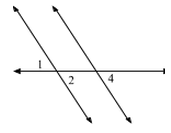
Find the measure of angle 4


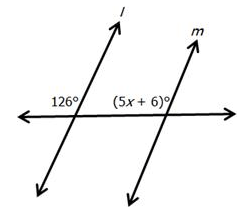

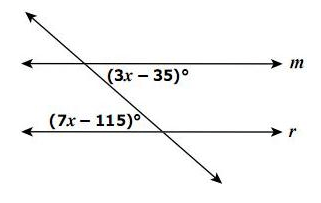
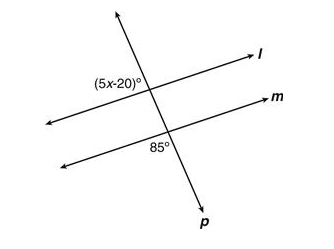

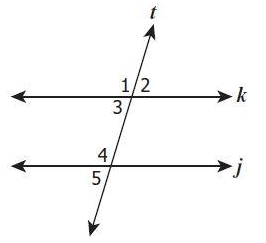


Find the measure of the angle indicated that makes
u∥v .44 °
97undefined
120undefined
134undefined
Find the measure of the angle indicated that makes
u∥v .44 °
97undefined
120undefined
134undefined

Find the measure of the angle indicated that makes
u∥v .61 °
78undefined
89undefined
95undefined

Find the measure of the angle indicated that makes
u∥v .58 °
64undefined
68undefined
115undefined

Use the figure to determine if lines u and v are parallel.
If m∠A=10x+5 and m∠B=75 , determine the value of x that supports
-10
-3
5
7

Use the figure to determine if lines u and v are parallel.
If m∠A=11x and m∠B=12x−5 , determine the value of x that supports
4
5
7
10

Use the figure to determine if lines u and v are parallel.
If m∠A=39x+3 and m∠B=40x , determine the value of x that supports
2
3
5
10

Use the figure to determine if lines u and v are parallel.
If m∠A=4x+6 and m∠B=3x+17 , determine the value of x that supports
-9
6
8
11

Use the figure to determine if lines u and v are parallel.
If m∠A=8x+12 and m∠B=10x−6 , determine the value of x that supports
2
7
9
12

Which lines are parallel, and why?
m || n because corresponding angles are congruent
m || n because alternate interior angles are congruent
p || q because corresponding angles are congruent
p || q because alternate interior angles are congruent

Which lines are parallel, and why?
m || n because corresponding angles are congruent
m || n because alternate interior angles are congruent
p || q because corresponding angles are congruent
p || q because alternate interior angles are congruent

Which lines are parallel, and why?
m || n because corresponding angles are congruent
m || n because alternate interior angles are congruent
p || q because corresponding angles are congruent
p || q because alternate interior angles are congruent

Which condition would prove s || t?
Angle 1 is 108 degrees.
Angle 2 is 108 degrees.
Angle 3 is 72 degrees.
Angle 1 is 72 degrees.
Angle 2 is 72 degrees.
Which condition would prove u || v?
Angle 1 is 108 degrees.
Angle 2 is 108 degrees.
Angle 3 is 72 degrees.
Angle 1 is 72 degrees.
Angle 2 is 72 degrees.

Which condition would prove a || b ?
Angle 1 is 60 degrees.
Angle 2 is 120 degrees.
Angle 3 is 120 degrees.
Angle 1 is 120 degrees.
Angle 3 is 60 degrees.
Which condition would prove g || h ?
Angle 1 is 60 degrees.
Angle 2 is 120 degrees.
Angle 3 is 120 degrees.
Angle 1 is 120 degrees.
Angle 3 is 60 degrees.

Which line is parallel to c ?
a
b
d
none

According to the angle measurements given, which lines are parallel?
e || f
e || g
e || h
f || g
f || h
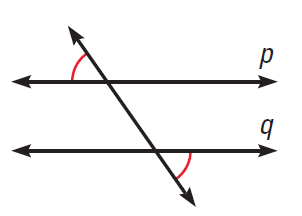
Which reason explains why the two lines are parallel?
Corresponding Angles Converse
Alt. Interior Angles Converse
Alt. Exterior Angles Converse
Consecutive Int. Angles Converse
Not Enough Information to Prove Parallel

Which reason explains why the two lines are parallel?
Corresponding Angles Converse
Alt. Interior Angles Converse
Alt. Exterior Angles Converse
Not Enough Information to Prove Parallel
Vertical Angles Theorem

Which reason explains why the two lines are parallel?
Corresponding Angles Converse
Alt. Interior Angles Converse
Alt. Exterior Angles Converse
Consecutive Interior Angles Converse
Not Enough Information to Prove Parallel
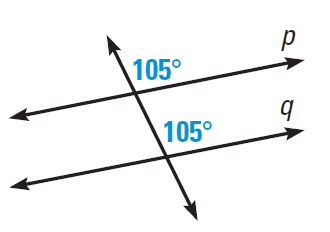
Which of the following is the reason the two lines are parallel?
Corresponding Angles Converse
Alt. Interior Angles Converse
Alt. Exterior Angles Converse
Consecutive Int. Angles Converse
Not Enough Information to Prove Parallel
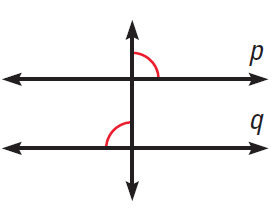
What is the reason the two lines are parallel?
Corresponding Angles Converse
Alt. Interior Angles Converse
Alt. Exterior Angles Converse
Consecutive Int. Angles Converse
Not Enough Information to Prove Parallel

What is the reason the two lines are parallel?
Corresponding Angles Converse
Alt. Interior Angles Converse
Alt. Exterior Angles Converse
Consecutive Int. Angles Converse
Not Enough Information to Prove Parallel

What is the reason the two lines are parallel?
Corresponding Angles Converse
Alt. Int. Angles Converse
Alt. Ext. Angles Converse
Consecutive Interior Angles Converse
Vertical Angles

Why are the two lines parallel?
Corresponding Angles Converse
Alternate Interior Angles Converse
Alternate Exterior Angles Converse
Consecutive Interior Angles Converse
Linear Pair Postulate

Why are the two lines parallel?
Corresponding Angles Converse
Consecutive Interior Angles Converse
Alt. Ext. Angles Converse
Alt. Ext. Angles Converse
Not Enough Information to Prove Parallel

Why are the two lines parallel?
Corresponding Angles Converse
Alt. Int. Angles Converse
Alt. Ext. Angles Converse
Consecutive Int. Angles Converse
Not Enough Information to Prove Parallel

What is the reason these two lines are parallel?
Corresponding Angles Converse
Alt. Int. Angles Converse
Alt. Ext. Angles Converse
Vertical Angles Theorem
Consecutive Int. Angles Converse

Why are these two lines parallel?
Vertical Angles Theorem
Corresponding Angles Converse
Alt. Int. Angles Converse
Alt. Ext. Angles Converse
Not Enough Information to Prove Parallel

What value of x would make the lines parallel?
13
35
37
78
102


No
Yes, corresponding angles are congruent
Yes, consecutive interior angles are congruent
Yes, Alternate exterior angles are congruent

No
Yes, corresponding angles are congruent
Yes, consecutive interior angles are congruent
Yes, Alternate interior angles are congruent

No
Yes, Corresponding angles are congruent
Yes, Alternate Interior angles are congruent
Yes, Alternate Exterior angles are congruent

No
Yes, Corresponding angles are congruent
Yes, Alternate Interior angles are congruent
Yes, Alternate Exterior angles are congruent

No
Yes, Corresponding angles are congruent
Yes, Alternate Interior angles are congruent
Yes, Alternate Exterior angles are congruent

No
Yes, Corresponding angles are congruent
Yes, Alternate Interior angles are congruent
Yes, Alternate Exterior angles are congruent

No
Yes, Consecutive Interior angles are supplementary
Yes, Alternate Interior angles are congruent
Yes, Alternate Exterior angles are congruent

No
Yes, Consecutive Interior angles are supplementary
Yes, Consecutive Interior angles are congruent
Yes, Alternate Exterior angles are congruent

m∥n because Alternate Interior angles are congruent
p∥q because Alternate Interior angles are congruent
m∥n because Consecutive Interior angles are congruent
Neither pair of lines is parallel

m∥n because Alternate Exterior angles are congruent
p∥q because Alternate Exterior angles are congruent
p∥q because Corresponding angles are congruent
Neither pair of lines is parallel

m∥n because Corresponding angles are congruent
m∥n because Consecutive Interior angles are congruent
p∥q because Corresponding angles are congruent
Neither pair of lines is parallel

m∥n because Alternate Exterior angles are congruent
m∥n because Alternate Interior angles are congruent
p∥q because Alternate Interior angles are congruent
Neither pair of lines is parallel

Converse of Corresponding Angles Postulate
Corresponding Angles Postulate
Converse of Consecutive Interior Angles Theorem
Converse of Alternate Interior Angles Theorem

Consecutive Interior Angles Theorem
Converse of Consecutive Interior Angles Theorem
Converse of Alternate Interior Angles Theorem
Converse of Corresponding Angles Theorem

Yes, vertical angles are congruent
No, vertical angles are not enough to prove lines parallel
Yes, corresponding angles are congruent
Yes, alternate interior angles are congruent

Yes, corresponding angles are congruent
Yes, alternate exterior angles are congruent
Yes, alternate interior angles are congruent
No, those angles have no relationship

100° - Consecutive Interior Angles are congruent
80° - Consecutive Interior Angles are supplementary

126° - Corresponding Angles are congruent
54° - Corresponding Angles are supplementary
126° - Alternate Interior Angles are congruent

71° - Alternate Exterior Angles are congruent
109° - Alternate Exterior Angles are supplementary
71° - Alternate Interior Angles are congruent

97° - Alternate Exterior Angles are congruent
83° - Alternate Exterior Angles are supplementary
97° - Corresponding Angles are congruent

x = 6
x = 10
x = 30
x = 5

x = 7
x = 3
x = 1/7
x = 9

x = 72/17
x = 12
x = 6
x = 4.2

x = 8
x = 68/9
x = 12.4
x = -3

