
 Worksheets
Test in Scienec
Total questions: 60
Worksheet time: 1hrs 3mins

Smooth
Rough


What happens to light in a prism
The light is refracted.
The light is reflected
The light is absorbed
The light does not change at all.

The bouncing of light off an object
basketball
refraction
reflection
echo

What happens to light passing through a hand lens that makes the image of the penny appear larger? The light is-

What is the light in the middle doing?
Reflecting
Refracting
Absorption

Observe the image. After reflecting off of the mirror, which object will the light
coming from the laser most likely strike next?
marble
apple
laser
rock
The arrows in the diagrams below represent light. Which diagram best shows how a
glass mirror would reflect light?


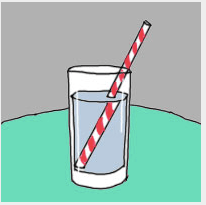
Why does the straw appear to be bent?
light is reflected
light is absorbed
light is turned
light is refracted
What do we call a material that light can travel through?
air
water
medium
pathway
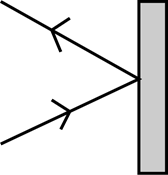
In the illustration, the light ray striking the object is-
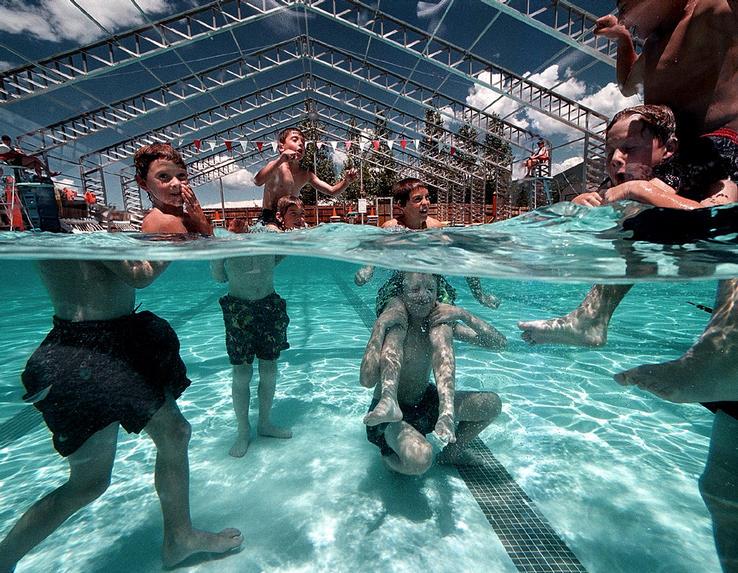

What might explain why light travels in a straight line?
If there is nothing to interfere with light waves, they should travel in a straight line.
Light waves will always travel in a straight line, even if they come into contact with another object.
Light waves don't travel in a straight line.
Light waves travel in a straight line because sound waves travel in a straight line.
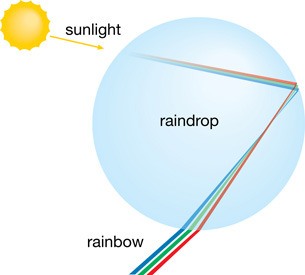
Reflection is when light...
Bends
Bounces
Absorbs
transmits
Refraction is when light...
Bounces
Transmits
Bends
Absorbs
___________ travels in a straight line until something changes its path
Medium
Refract
Reflect
Light

What is happening in this picture?
Reflection
Refraction

What is happening in this picture?
Reflection
Refraction

Students often use a hand lens to make small objects appear larger. A hand lens makes objects appear larger because the lens-
increases the light’s strength
changes the color of the light
bends light passing through it
converts light energy to heat


What happens to light passing through a hand lens that makes the image of the penny appear larger? The light is-
Identify the part of the eye being described.
It is the outer layer of the eye where light passes through.
cornea
iris
retina
pupil
Identify the part of the eye being described.
It is the colored part of the eye.
cornea
iris
retina
pupil
Identify the part of the eye being described.
It is the opening behind the cornea.
cornea
iris
retina
pupil
Identify the part of the eye being described.
It changes light to signals and forms an upside-down image.
cornea
iris
retina
pupil
Identify the part of the eye being described.
It carries signal to the brain for interpretation.
optic nerve
pupil
cornea
retina
Identify the part of the eye being described.
It bends and focuses light to the retina.
lens
pupil
cornea
retina

What is the part of the eye pointed in number 4?
cornea
retina
lens
iris
What is the part of the eye pointed in number 2?
cornea
retina
iris
pupil
What is the part of the eye pointed in number 5?
cornea
retina
iris
pupil
What is the part of the eye pointed in number 3?
cornea
retina
iris
pupil
A relationship between two organisms in which one organism benefits and the other is unharmed...
Mutualism
Commensalism
Parasitism
A relationship between two organisms in which both organisms benefit.
Mutualism
Commensalism
Parasitism
A relationship between two organisms in which one is benefited and the other is harmed.
Mutualism
Commensalism
Parasitism

Ostriches and gazelles eat together. They both watch for predators and danger. Since they see things differently, they each can identify threats the other animal may not see. Both species are benefited.
mutualism
commensalism
parasitism

Yucca flowers are pollinated by yucca moths. The moths lay their eggs in the flowers and the eggs hatch. The larvae eat some of the seeds, and spread them around. Both species are benefited.
mutualism
commensalism
parasitism

Mistletoe takes water and nutrients from the oak tree. This is good for the mistletoe but bad for the tree.
mutualism
commensalism
parasitism

A bison walks through the grass, insects fly up and are seen and eaten by egrets. This neither harms nor helps the bison, but it is easier for the egrets to get food.
mutualism
parasitism
commensalism

A flea feeds on a mouse’s blood. This is good for the flea but bad for the mouse.
mutualism
commensalism
parasitism

Hermit crabs live in shells that snails don't use anymore. The hermit crab gets a nice free home. This neither harms nor helps the snails.
mutualism
commensalism
parasitism

Birds build nests out of dead twigs and leaves. They build their nests in living trees. This doesn't hurt the tree.
mutualism
commensalism
parasitism


Mosquitoes are parasitic with humans because: (choose 2)
They feed off human blood
The human host is harmed
They are annoying
they spread disease

Bromeliads and trees are in a commensal relationship because: (choose 2)
the tree provides shelter and an environment for the bromeliad
the tree is harmed from the bromeliad taking food from it
the tree is not harmed or helped by the bromeliad
the tree takes nutrients from the bromeliad
Predation is similar to _______________ in that both types of relationship benefit one of the interacting species while the other is harmed.
Parasitism
Commensalism
Mutualism
Which of the following best describes a difference between a mutualistic relationship and a parasitic
relationship?
Parasitism harms both organisms, while mutualism harms only one organism.
Parasitism benefits only one organism, while mutualism benefits both organisms.
Parasitism involves only two organisms, while mutualism involves many organisms.
Parasitism continues for many generations, while mutualism is limited to one generation.

