
 Worksheets
📍Test Ready (10.2)
Total questions: 50
Worksheet time: 42mins

Which occurs in a chemical reaction due to the Law of Conservation of Mass?
The reaction causes the destruction of atoms and a decrease in total mass.
The reaction causes the creation of atoms and an increase in total mass.
The mass of atoms do not change even if the atoms form new arrangements.
The mass of atoms do not change, and the atoms cannot form new arrangements.

Root wedging is a type of weathering, where the roots of a plant slowly break apart rocks. Which statement explains the type of change that occurred to the rock?
Physical change due to the size and shape of the rock changing.
Chemical change due to production of gas bubbles
Chemical change due to the rock being dissolved
No change occurred to the rock.

What is the evidence that a chemical change occurred in rock oxidation, also known as, rust?
Gas Bubbles
Ash was produced
Change in color
Change in shape or size

A student kept a notebook during an investigation. Which recorded observation
was most likely a physical change?
The solution was heated for two minutes until it boiled.
A solid formed when two liquids were mixed together.
Two solutions were mixed and the resulting solution felt hot.
The color of two mixed solutions changed from clear to white.

When frozen carbon dioxide is heated, it changes directly into a gas.
Which statement best indicates that a physical change has taken place?
Heat caused an increase in gas production.
Heat caused a new substance to form.
Heat caused a decrease in energy.
Heat caused a change in state.

The key difference between Hydrogen (H) & water (H2O) is?
Hydrogen is an element & water is a compound
Hydrogen is a compound & water is an element
Hydrogen is a pure substance & water is a mixture
Hydrogen is a mixture & water is a pure substance

The two main parts of any chemical reaction like the one shown below are?
Reactants & Compounds
Reactants & Elements
Reactants & Products
Reactants & Symbols

What does the term, "Exothermic" mean?
Heat is being created
Heat is being released
Heat is being absorbed
Heat is changing into cold

What part is Label A of the Atom?
Nucleus
Proton
Electron
Electron Orbit
Neutron
What part is Label B of the Atom?
Nucleus
Proton
Electron
Electron Orbit
Neutron
What part is Label C of the Atom?
Nucleus
Proton
Electron
Electron Orbit
Neutron
What part is Label D of the Atom?
Nucleus
Proton
Electron
Electron Orbit
Neutron
What part is Label E of the Atom?
Nucleus
Proton
Electron
Electron Orbit
Neutron

What is a homogeneous mixture?
a mixture that is the same throughout.
a mixture that is made up of one type of atom.
a mixture that is made up of one type of compound
a mixture that cannot be separated through physical changes

Counting Atoms. How many total atoms are in: 2C7H5(NO2)3
21
14
6
42

How many Nitrogen atoms are in (NH₄)₂CrO₄?
1
2
8
16

Metals (select all that apply)
are found on the right side of the periodic table.
are found on the left side of the periodic table.
are good conductors of heat and electricity.
are brittle.
are malleable and ductile.

Nonmetals (select all that apply)
are found on the right side of the periodic table.
are found on the left side of the periodic table.
are good conductors of heat and electricity.
are brittle.
can be solid, liquids, or gases at room temperature.

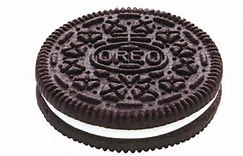
An oreo cookie has a mass of 20 grams. It gets crushed into crumbs for a recipe. What is the mass of the crumbs?
15 grams
25 grams
20 grams

If reaction starts with 20g of reactants, it will produce ---
a total of 40g of product
a total of 10g of product
a total of 80 g of product
a total of 20g of product

In a reaction A + B ----> C.
Reactant A has 5g and product C has 9g.
How many grams does reactant B should have?
4g
5g
9g
14g

After steaming a bag of frozen broccoli in the microwave, the mass of the bag of vegetables went from 300 grams to 250 grams. What explains the decrease in mass?
The mass is less because ice inside turned to steam that escaped.
The mass is greater because when the ice melted, the vegetables absorbed the water.
The mass is less because none of the contents escaped.
The mass is greater because the water that formed when the ice melted has greater mass than ice.

What evidence can be used to explain that energy is not created or destroyed but only changes from one form to another?
Pour water from a bottle onto ice cubes in a bowl and use the thermometer to show the change in temperature of the water.
Stir water in a bottle using a copper wire and use a digital scale to show no change in mass from the motion.
Attach a battery to a light bulb using copper wire and use a thermometer to show the change in temperature near the bulb.
Warm ice cubes in a bowl using a light bulb and use a digital scale to show no change in mass of the bowl of melting ice.

How many Carbon atoms on the Product side of the equation?
5C4O8→2C5O20
4
5
10
20

Identify if the following equation is unbalanced or balanced.
4K+P3→3KP+K
Unbalanced
Balanced

Identify if the following equation is unbalanced or balanced.
O3+2C→3OC
Unbalanced
Balanced

Identify if the following equation is unbalanced or balanced.
2(N)2→4N
Unbalanced
Balanced

Identify if the following equation is unbalanced or balanced.
5C4O8→10C+2C5O20
Unbalanced
Balanced

Identify if the following equation is unbalanced or balanced.
HeC4O8→C4+2HeO
Unbalanced
Balanced

The melting point of the sample is
-60 ºC
-100 ºC
60 ºC
100 ºC

How many protons are there for an atom with 16 neutrons and atomic mass of 33?
16
17
18
33

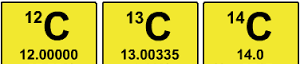
What is the atomic mass of element 5 if it has 6 neutrons?
5
6
11
30
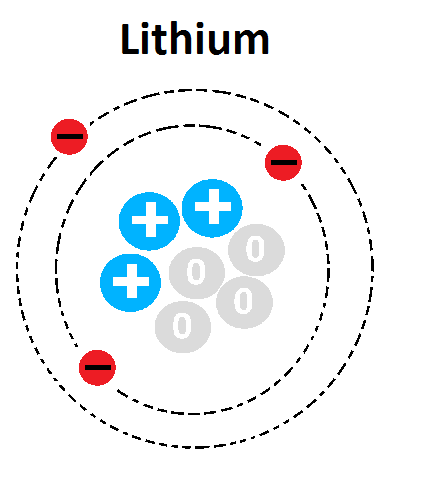
What is the mass number of this atom?
1
3
4
7

Which of the following are physical properties of metal?
Luster
Conductivity
Malleability
Ductility

Name this group: These metals are the most reactive.


Name this group: These metals are the second most reactive.

Which of the following could be properties of nonmetals?
Poor electrical conductivity
Poor thermal conductivity
Dullness
Brittleness

Locate Lanthanides and Actinides.


What is the name of highlighted elements?
Noble Gases
Metalloids
Non-Metals
Metals

Iron combines with oxygen to form rust. Given the chemical reaction, how many grams of rust would be produced if 3 grams of reactants were consumed?
0 grams
1 grams
3 grams
7 grams

According to the Law of Conservation of Matter, we know that the total number of atoms does not change in a chemical reaction and thus mass is conserved. The reactant in this this model is hydrogen peroxide. Hydrogen peroxide decomposes to produce water and oxygen gas. How many water molecules must be added to complete this model?


In the physical science lab, Ben and Jerry added small pieces of magnesium to hydrochloric acid. They noticed that bubbles formed, the test tube got hot, and the magnesium disappeared. What is the sign that a chemical reaction has taken place in this experiment?
Oder
Gas is produced
Magnesium disappeared
Decreased in temperature.

Base on The Law of Conservation of Matter, describe the relationship between the mass of the reactants and the mass of the products.
The mass of the reactants equals the mass of the product
The mass of the reactant is less than the mass of the products.
The mass of the reactants is greater than the mass of the products.
The mass of the products is always greater than the mass of the reactants.

These are examples of (shape, odor, color, density, melting point, solubility)
physical properties
chemical properties

Which of the following is a quantitative observation?
The dog has two legs.
The dog is small.
The dog is cute.
The dog is fuzzy.

Tellurium (Te) and Iodine (I) would NOT have similar chemical properties because
they are in the same period
they are in the same family
they do not start with the same level
they are not in the same group

What is the density of the rock sample shown in the illustration?
4.0 g/mL
4.5 g/mL
5.0 g/mL
5.5 g/mL

How many atoms of oxygen are in
3Fe2O3
6
9
18
2

