
NEW
Font size
 Worksheets
UNIT 2 EXAM STUDY GUIDE
Total questions: 40
Worksheet time: 25mins
Inertia is Newton's _______ Law of Motion.
First
Second
Third
What keeps the planets in orbit around the sun?
gravity and inertia together
gravity
inertia
neither gravity or inertia
The force that pulls things down to the surface of the Earth and keeps them from floating away into space.
force
gravity
net force
inertia
Which has the MOST inertia?


Which one has the LEAST inertia?


A skateboard rolls down a hill, reaches the level surface and eventually comes to a stop. The fact that the skateboard ultimately stops is best explained by ________.
the skateboard needs an additional unbalanced force to continue its motion
the presence of an unbalanced force can cause a moving object to stop
the presence of inertia causes it to stop
the natural tendency of any object is to stop at some point
What type of force would be present if you were to win a tug of war?
Balanced Force
Unbalanced Force
Gravity
Net Zero Force
What do we called it when something is pushed or pulled?
a Force
movement
density
Speed
A balanced force is when
is when there is no net force.
There is a lot net force,
there is a small amount of net force.
there is some net force.
What is a Net Force?
the sum of all forces that are acting on a object.
The total force multiplied together.
The total amount of force that is applied to the object.

Which boy will have an easier time getting down the hill?
Boy A , because he is experiencing less friction than boy B.
Boy B, because he is experiencing more friction than boy A.

What will the net force on the soccer ball be?
50 N to the left
50 N to the right
200 N to the left
200 N to the right

Person on the left = 45 N
Person on the right = 32 N
What is the net force?
zero N
10 N
77 N
13 N
A 5 kg object is moving with an acceleration of 2 m/s squared. What is the force of the object? (F=ma)
20 N
10 N
2 N
5 N
If a force of 50 Newton's was applied to an object with a mass of 500 grams, what will the object's acceleration be? (HINT - UNITS!)
10 m/s^2
.1 m/s^2
100 m/s^2
1 m/s^2
What is a scalar?
A quantity described by direction only
A quantity described by magnitude only
A quantity described by both a magnitude and a direction
A quantity with a magnitude of one
An empty quantity
Which of the following measurements is a scalar measurement?
Speed
Velocity
Force
Acceleration
Momentum
What is a vector?
A quantity described by direction only
A quantity described by magnitude only
A quantity described by both a magnitude and a direction
A quantity with a magnitude of one
An empty quantity
What symbol is typically used to draw a vector?
Plus sign
The letter X
Box
Arrow
Hash tag
Which of the following measurements is a vector measurement?
Volume
Mass
Speed
Temperature
Velocity
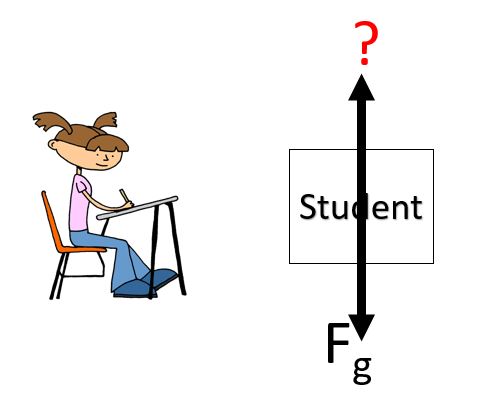
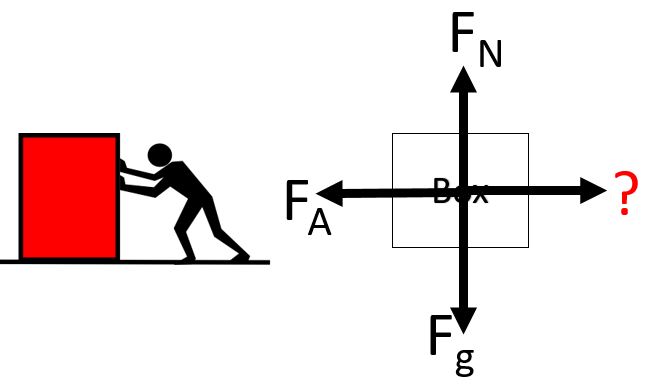
Whenever an object is moving, there is always this force opposing the motion:
inertia
momentum
friction
applied force

What forces are on a leopard laying on a log?
Fg & Fapp
Fb & Fg
Fg & FN
Ff & FN
Which of the following is an example of an unbalanced force?


-6 N

What does this picture represent
Force,magnetism,acceleration
Force, money, Apples
Force, Mass, Acceleration
Funny, monkeys, Arrive
1st
Law of Motion
2nd
Law of Motion
3rd
Law of Motion
Letting go of a balloon full of air is demonstrating Newton's ______ _______ ________ _________ because the air comes out of the back and the balloon moves forward.
1st law of motion
2nd law of motion
3rd law of motion
13th law of motion
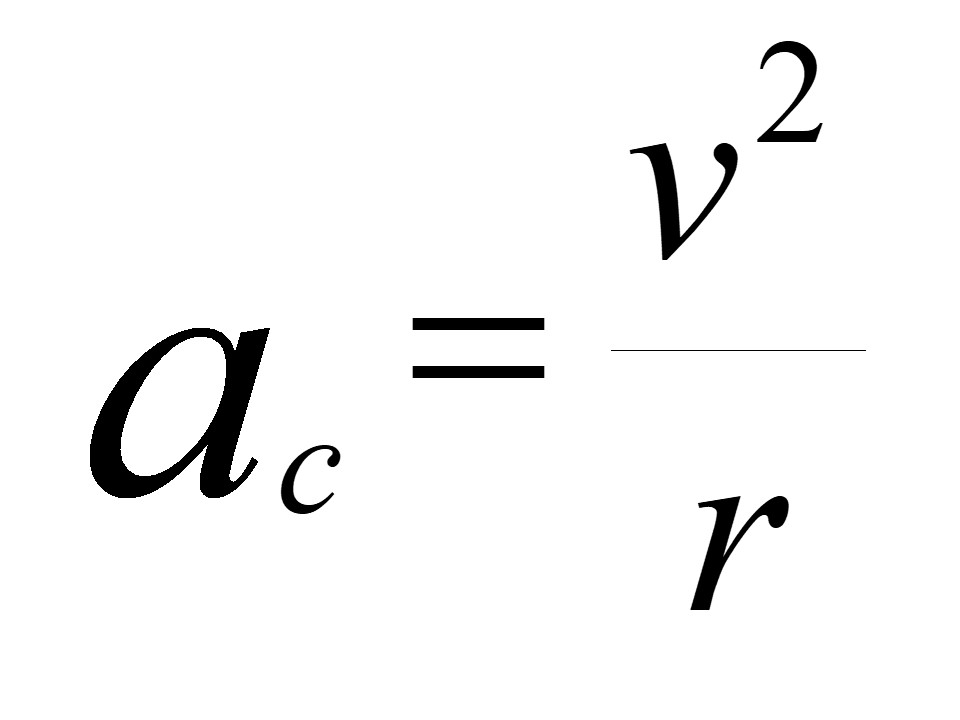
What's the centripetal acceleration of an object traveling 2.3 m/s around a circle of diameter 0.6 m?
5 m/s2
17.63 m/s2
10 m/s2
8.81 m/s2
A toy car is following a circular path with a constant speed of v=3 m/s . If the radius of the circular path is 1 m, find The centripetal acceleration of the car
30 m/s2
3 m/s2
9 m/s2
6 m/s2
An object traveling in uniform circular motion has a centripetal acceleration due to the change in
Speed
Kinetic energy
Direction
Mass

