wayground logo

Free Printable Worksheets

NEW

Font size

S
M
L
XL
Worksheets

Unit 2 Test

Total questions: 40

Worksheet time: 40mins

Name
Class
Date
1.
Which of the following units are repeatedly joined together to form a strand of DNA?
a)
amino acids
b)
nucleotides
c)
fatty acids
d)
polysaccharides
2.
The enzyme that unwinds the DNA to prepare for replication
a)
helicase
b)
replicase
c)
polymerase
d)
synthase
3.
DNA replication results in two DNA molecules,
a)
each one with two original strands
b)
each one with two new strands
c)
each one with one new strand and one original strand
d)
one with two new strands and the other with two original strands
4.
order of replication
a)
3, 4, 2, 1
b)
3, 1, 4, 2
c)
2, 1, 4, 3
d)
3, 4, 1, 2
5.
In what phase of the cell cycle does DNA replication take place?
a)
G1
b)
S
c)
G2
d)
M
6.
Which enzyme is responsible for adding nucleotides?
a)
Topoisomerase
b)
DNA Polymerase
c)
Ligase
d)
Primase
7.
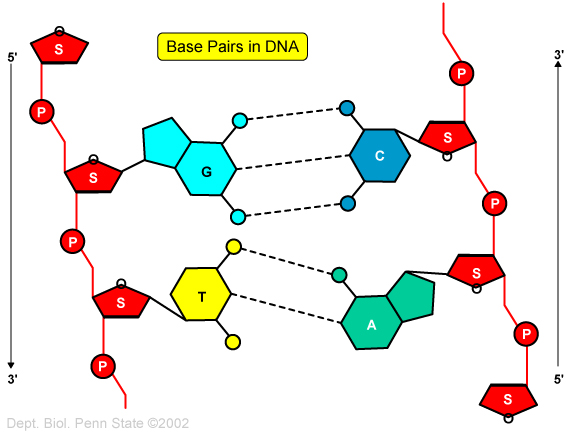
Nitrogenous bases are joined by which type of bond?
a)
polar bonds
b)
ionic bonds
c)
covalent bonds
d)
hydrogen bonds
8.
Adenine bonds with ______________.
a)
Guanine
b)
Thymine
c)
Cytosine
d)
Adenine
9.
Guanine bonds with ______________.
a)
Adenine
b)
Guanine
c)
Cytosine
d)
Thymine
10.
Why is DNA important?
a)
it is very small and very complicated
b)
it's in everything
c)
it serves as the blueprint for traits of all living things
d)
because we eat it every day for energy
11.
Mitosis is the process by which
a)
Cells get bigger
b)
Cells get smaller
c)
Body cells divide into two
d)
Cells die
12.
True or false: When cells divide, they help to repair damaged tissue in your body.
a)
True
b)
False
13.
A cell spends most of its life in what stage?
a)
Interphase
b)
Telophase
c)
Anaphase
d)
Metaphase
14.
How many cells are created at the end of Mitosis?
a)
1
b)
2
c)
3
d)
4
15.

Name the phase

a)

telophase

b)

metaphase

c)

anaphase

d)

prophase

16.

What is the next phase of mitosis after the picture?

a)

telophase

b)

metaphase

c)

anaphase

d)

prophase

17.
What phase of mitosis is occuring in the picture?
a)
Prophase
b)
Metaphase
c)
Cytokinesis
d)
Telophase
18.

All human have _________ chromosomes

a)

23

b)

46

c)

Diploid

d)

Haploid

19.

Squirrels have 40 chromosomes in its diploid cells. How many chromosomes will you find in their egg cells

a)

40

b)

23

c)

20

d)

Not enough information to answer the question

20.
How many daughter cells are produced at the end of mitosis?
a)
1
b)
2
c)
3
d)
4
21.
The purpose of sexual reproduction and meiosis is to form ________ cells.
a)
body
b)
sex
c)
somatic
d)
brain
22.
What process, and which type of resulting cells are represented?
a)
mitosis, gametes
b)
mitosis, body cells
c)
meiosis, gametes
d)
meiosis, body cells
23.
Meiosis makes sperm and egg cells. In humans, sperm and egg cells each have _____ chromosomes. Therefore a fertilized human egg cell (sperm and egg cell combined) would create a cell with _____ chromosomes.
a)
23, 46
b)
46, 23
c)
2, 4
d)
50, 100
24.

The products of meiosis are genetically...

a)

different.

b)

identical.

25.

The diagram below represents a change that occurred in a pair of chromosomes during the formation of an egg cell. The alteration that occurred will most likely be passed on to every cell that develops from the egg cell. Why would this type of alteration result in offspring with combinations of traits that differ from those found in either parent?

a)

It converts sex cells into body cells.

b)

It results in the formation of diploid gametes.

c)

. It results in new combinations of genes on each chromosome.

d)

It changes the chromosome number of the body cells that develop from the egg cell.

26.

The diagram shows the process of crossing over. Which claim about crossing over in chromosomes is best supported by the diagram?

a)

Crossing over increases genetic diversity through deletion.

b)

Crossing over decreases genetic diversity through mutation.

c)

Crossing over increases genetic diversity by creating new combinations of genes.

d)

Crossing over decreases genetic diversity by inserting nucleotides into gene sequences.

27.

A process by which bacteria reproduce asexually

a)

binary fission

b)

endospores

c)

pasteurization

d)

conjugation

28.
Bacteria exchange genetic information during 
a)
asexual reproduction
b)
binary fission
c)
conjugation
d)
photosynthesis
29.

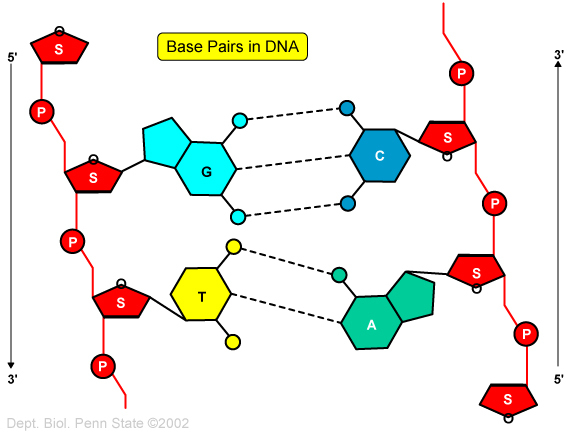
What makes up the SIDES of a DNA ladder?

a)

nitrogen bases

b)

sugars & phosphates

c)

genes & chromosomes

d)

RNA

30.
Nitrogenous bases are joined by which type of bond?
a)
polar bonds
b)
ionic bonds
c)
covalent bonds
d)
hydrogen bonds
31.
Cytosine always pairs with
a)
Adenine
b)
Thymine
c)
Uracil
d)
Guanine
32.
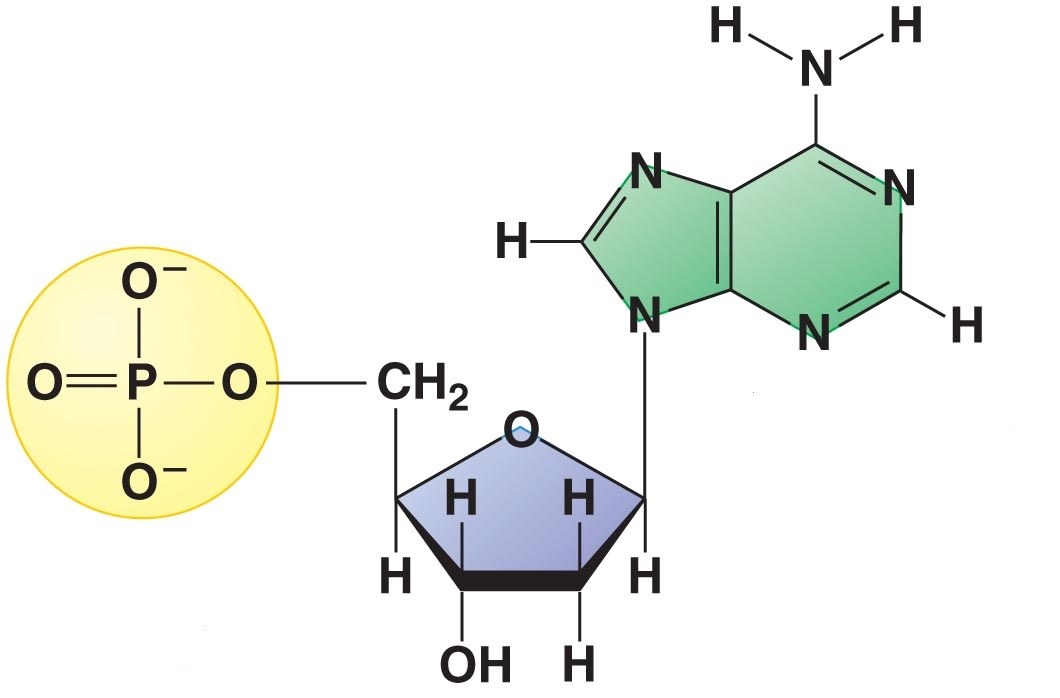
Name this structure
a)
double helix
b)
nucelotide
c)
twisted ladder
d)
hydrogen bond
33.
The division of the nucleus is known as:
a)
Synthesis
b)
Mitosis
c)
G1
d)
G2
34.
The cell spends most of it's life in ________________.
a)
mitosis
b)
cytokinesis
c)
Interphase
d)
None of the above
35.
Put the following stages of mitosis in order: anaphase, prophase, metaphase, and telophase. 
a)
prophase, metaphase, telophase, anaphase
b)
prophase, anaphase, metaphase, telophase
c)
prophase, metaphase, anaphase, telophase
d)
prophase, telophase, metaphase, anaphase
36.
Put the following stages of the cell cycle in order: G2, S, G1, M. 
a)
G1, S, G2, M
b)
S, G1, G2, M
c)
G1, M, G2, S
d)
M, G1, S, G2
37.
Identify the Cell Cycle Stage.
a)
Anaphase
b)
Cytokinesis
c)
Telophase
d)
Metaphase
38.
In mitosis, the two resulting cells are
a)
different from the starting cell and identical to each other.
b)
different from the starting cell and different from each other.
c)
identical to the starting cell and different from each other.
d)
identical to the starting cell and identical to each other.
39.
What happens during the S phase?
a)
A checkpoint over the connection of the spindle fibers
b)
The cell grows
c)
DNA is replicated
d)
The cell enters the G0 phase
40.
Put the following actions in order: DNA replicates, cell grows, cell divides, cell prepares for mitosis. 
a)
DNA replicates, cell grows, cell prepares for mitosis, cell divides
b)
cell grows, cell prepares for mitosis, DNA replicates, cell divides
c)
cell grows, DNA replicates, cell prepares for mitosis, cell divides
d)
DNA replicates, cell prepares for mitosis, cell grows, cell divides