
 Worksheets
colonialism part 2
Total questions: 139
Worksheet time: 1hrs 17mins
Indentured servant would be free once a (a) finished.
Which cash crop led to the spread of slavery in the southern colonies?
tobacco
rice
indigo
all of these are true

What was it called when you paid off your boat ticket by working for another family?
slacve
indentured servant
apprentice
good deal

A government ruled by a king or queen
democracy
oligarchy
republic
monarchy

Colonists who received free passage to North America in exchange for working without pay for a certain number of years
Debtors
Pilgrims
Catholics
Indentured Servants

farm crop raised to be sold for money
products
agriculture
exports
cash crop

An economic policy under which nations sought to increase their wealth and power by obtaining large amounts of gold and silver and by selling more goods than they bought
Mercantilism
Capitalism
Communism
Imperialism

A voyage that brought enslaved Africans across the Atlantic Ocean to North America and the West Indies
Middle Passage
Atlantic Passage
Africa Passage
New World Passage

Laws that controlled the lives of enslaved African Americans and denied them basic rights.
slave codes
colonist codes
indentured servants code
religious code

an account of an event created by someone who took part in or witnessed the event
biography
secondary source
primary source
credible source

a document or written work created after an event
primary source
secondary source
biography
credible source
Trade routes that connected North America, Europe, and Africa
Triangular Trade
Middle Passage
Indentured Servants
Slaves
Because of the Triangular Trade, ______ were exchanged between Africa and North America.
Indentured Servants
Slaves
Colonists
Eskimos
Europeans who signed a contract with an American colonists to gain passage to North America.
Native Americans
Slaves
Indentured Servants
Colonists
This was known as the slave's' journey from Africa to North America.
Triangular Trade
Gullah
Columbian Exchange
Middle Passage
Where were indentured servants from?
North America
Asia
Europe
Africa
How are indentured servants and slaves similar?
Came from Europe
Some were likely mistreated by colonists
Came from Africa
Were paid by colonist
How are indentured servants and slaves different?
Indentured servants came from Europe
Indentured servants were not paid
Slaves came from Europe
Slaves were paid

This is a chart that diagrams the differences between two different sources of labor in early American history.
Which title would best match the second column?
Explorers
Royale High
Colonists
Indentured Servants
worked for life
slaves
indentured servants
Passed on their condition to their children
slaves
indentured servants
Agreed to work for around 7 years in exchange for passage to the New World
slaves
indentured servants
Came by boat
slaves
indentured servants
Which colonial region had rocky soil and a cold climate?
New England colonies
Middle colonies
Southern colonies
New France
Which colonial region was settled by Puritans and Pilgrims?
New England
the Middle Colonies
the Southern Colonies
New France
Slavery was less used in the New England colonies than in the Southern colonies because
they were behind the South in business and industry
they did not rely heavily on cash crops
they were religiously opposed to slavery
the above statement is incorrect
As the number of indentured servants brought to the colonies to work on plantations DECREASED, where did colonists go to find workers?
France
Africa
Spain

Which three continents (North America, Europe, Africa) were involved in the Triangular Trade system in the 1500s-1800s?
North America, Europe, and Africa
Europe, Africa, South America
Asia, Europe, North America
Compare the life of an indentured servant to the life of a slave. Be sure to include at least one way they were alike AND one way they were different. Write in complete sentences.

A person whose voyage to America was paid for by a colonial landowner. The servant had to work off their debt for a period of 7 years.
Slave
Voyager
Sailor
Indentured Servant

1st Permanent English Settlement
Plymouth
Massachusetts Bay
Jamestown
Pennsylvania
In which region of the colonies were there many plantations?
New England
Sounthern
Mid Atlantic
Which region featured the coldest winters?
New England
Mid Atlantic
Southern
Which Colony were fishing, whaling, and shipbuilding important jobs?
Mid Atlantic
Southern
New England
Massachusetts is located in which region?
Southern
Mid Atlantic
New England
These people who were given free passage to the New World and then worked for a period for time to pay off their journey.
Slaves
Indentured Servants
Maids
New York, Pennsylvania, New Jersey, Delware
New England
Southern
Mid-Atlantic
Maryland, Virginia, North Carolina, South Carolina, and Georgia.
Southern
Mid-Atlantic
New England
What country ruled the 13 colonies?
England
Spain
France
Russia
New Hampshire, Massachusetts, Rhode Island, and Connecticut formed which group of colonies?
New England
Middle
Southern
Atlantic
Why were the Middle Colonies nicknamed the "Bread Basket?"
They ate tons of sandwiches
They made lots of baskets
There were lots of bread baskets sold there
They grew lots of grain
What items were mostly grown on Plantations?
squash, beans, potatoes, cucumbers
bananas, grapes, strawberries, oranges
tobacco, rice, indigo, cotton
peanuts, soybeans, corn, tomatoes
People who were owned by the master of a plantation and made to work for life were called
indentured servants
maids
butlers
slaves
I voluntarily signed a contract to work in the 13 Colonies. Who am I?
An Indentured Servant
An Enslaved African
I am of European descent (lineage). Who am I?
An Indentured Servant
An Enslaved African
My status was lifelong. Who am I?
An Indentured Servant
An Enslaved African
a settlement controlled by a separate country
state
colony
fort
country
This caused conflict between settlers and American Indians.
trading goods
teaching them how to plant crops
sharing land
population growth of the Europeans
What was the major impact of conflict between European settlers and the American Indians?
They worked together
They shared the land and materials
The American Indians were forced to leave their homes
The Europeans were forced to return to Europe
Who would say this? "Their numbers keep increasing, I fear this might end badly."
Native Americans
European settlers
How did the European exploration of North America have a NEGATIVE impact on the Native Americans?
New diseases destroyed much of the Native American population.
New ideas about land ownership led to alliances
Farming increased the Native American population

The original 13 colonies were located along what geographical feature?
Caribbean Islands
Gulf of Mexico
Pacific Coast
Atlantic Ocean
Why did the Virginia Company send colonists to start Jamestown?
To find wealth and make a profit
To increase the glory of the Spanish King
To teach Christianity to the American Indians
To discover what happened to the Roanoke colony
Which group of American Indians lived near Jamestown?
Croatoan
Iroquois
Pawnee
Powhatan
Which caused many settlers to die in colonial Jamestown?
storms
disease
contaminated water
civil war
Which was a primary reason why the Virginia Company settled the colony at Jamestown?
to grow tobacco and rice
to search for gold and silver
to educate the native peoples
to seek religious freedom
A three way system of trade during 1600-1800s where Africa sent slaves to America, America sent raw materials to Europe, and Europe sent guns and rum to Africa.
Middle Passage
Triangular Trade
Mercantilism
European settlers exposed natives to _______ and wiped out entire settlements.
Weapons
Disease
Education
Money

Which colonial region was made up of Georgia, Maryland, North Carolina, South Carolina, and Virginia?
Southern Colonies
Middle Colonies
New England Colonies
Northern Colonies

Which colonial region was made up of Connecticut, Massachusetts, New Hampshire and Rhode Island?
Southern Colonies
Middle Colonies
New England Colonies
Northern Colonies

Which colonial region was made up of Delaware, New Jersey, New York and Pennsylvania?
Southern Colonies
Middle Colonies
New England Colonies
Northern Colonies
Fishing, Shipbuilding, and Whaling were a huge part of which of the followings economy?
Northern
Southern
New England
Middle
Industries and grain crops were a huge part of which of the followings economy?
Middle
Southern
New England
Georgian
Cash Crops on big plantations were a huge part of which of the followings economy?
Massachusetts
Southern
Middle
New England
Which section of colonies survived on the labor of mostly slaves?
New England
Middle
Southern
What was the FIRST successful British colony in North America?
Jamestown, Virginia
Plymouth Colony, Massachusetts
Massachusetts Bay Colony, Massachusetts
Philadelphia, Pennsylvania
True or False: The Europeans started to arrive after the Native Americans were already here & well established;
TRUE
FALSE
TRUE OR FALSE: The British founded the 13 Colonies;
TRUE
FALSE
The route that brought enslaved Africans from Africa to the Americas across the Atlantic. The conditions aboard these slave ships were cruel and inhumane.
Middle Passage
Columbian Exchange
Slave Trade
African Exchange

According to the map, which items were introduced to the Americas from Europe and Africa?
horses, disease, bananas
pumpkins, squash, corn
pumpkins, grapes, vanilla
cattle, turnips, pineapples
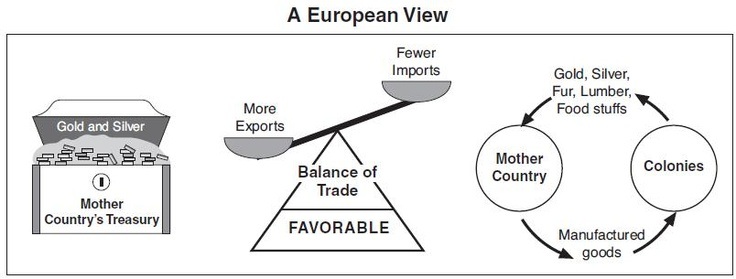
What is mercantilism?
A system where a mother countries gains money and power from natural resources that come from its colonies.
where colonies trade gold and silver with each other.
Wars that start over money.
Plantation colonies trading slaves for money.
European settlers exposed natives to _______ and wiped out entire settlements.
Weapons
Disease
Education
Money
Which colonial region was made up of Georgia, Maryland, North Carolina, South Carolina, and Virginia?
Southern Colonies
Middle Colonies
New England Colonies
Northern Colonies
Which colonial region was made up of Connecticut, Massachusetts, New Hampshire and Rhode Island?
Southern Colonies
Middle Colonies
New England Colonies
Northern Colonies
Which colonial region was made up of Delaware, New Jersey, New York and Pennsylvania?
Southern Colonies
Middle Colonies
New England Colonies
Northern Colonies
1st English attempt at Colonization in the New World was known as
The Perfect Colony
The First Colony
The Last Colony
The Lost Colony
In a way to replace Indentured Servants, this institution was brought to the New World in 1619?
Capitalism
Joint-Stocks
Slavery
Socialism

What is the most appropriate title for this map?
The Industrial Revolution
Imperialism in America
The Age of Discovery
Triangular Trade
Which of the following is NOT true of the trade pattern shown on the map above?
Colonies provided natural resources for the mother country
Captives from Africa were transported to North America
England was home to more natural resources than North America
England had colonies in North America
The belief that colonies exist to benefit the economy of the mother country (Old World) is known as....
Triangular Trade
Mercantilism
Free Trade
Nativism
After contact with Europeans, the vast majority of Native Americans died of...
disease
famine
drought
dehydration
The term "mother country" refers to...
the country of indigenous people
the country importing (receiving) manufactured goods
the country using its colonies for profit
the land being colonized
A belief that a country’s security depended on selling more products than it bought (maintaining a positive trade balance); establishing colonies who would sell raw materials to the home country at low prices and who would in turn buy what they needed ONLY from the mother country
Navigation Acts
Mercantilism
Triangular Trade
Middle Passage
.
A trade route that developed between Britain, Africa and British colonies in the Americas during the colonial era
Navigation Acts
Middle Passage
Triangular Trade
Colonization
Farm crop raised be sold for money
Navigation
Mercantilism
Back Country
Cash Crop
A person under contract to work, usually without pay, in exchange for free passage to the colonies.
African Slave
Separatist
Indentured Servants
Self-governance
A material or substance found in nature that can be used to sustain a society or exploited for economic gain, such as trees, minerals or living things.
Natural Resource
Charter
Mercantilism
Cash crop
Transatlantic trade network formed by Europe, West Africa and the Americas for the transport and trade of goods and enslaved Africans.
Navigation Acts
Joint-Stock Company
Triangular Trade
Economic Activity
What is a raw material?
A completed product
A resources used to make a product
What did the European countries do with the raw materials?
Turn them into finished products
Re-sell them to other Colonies
Re-sell them to other Countries
Trade them away
Which three continents were involved in the Triangular Trade Route?
North America, South America and Africa
North America, Africa and Europe
North America, South America and Europe
North America, Africa, and Asia
America provided ____ material Europe needed to produce products like furniture and tools.
iron
metal
agricultural
raw
Goods sold to other countries
export
import
mercantilism
triangle trade
Goods brought in from other countries
export
import
mercantilism
triangle trade
A person who makes money by selling goods.
commerce
merchant
charter
joint stock company
Combining raw materials and processed goods into finished products
manufacturing
triangle trade
intolerant
charter

The impact of mercantilism was that
The rate of slavery in the Americas went down
Trade was limited in the Atlantic
The Colony grew wealthy
The Mother Country grew wealthy

What is a example of a raw material
cars
clothes
computers
cotton
Mercantilism benefited which country the most
Mexico
England
Colombia
Indonesia
Who benefitted from mercantilism?
The Colonies
Spain
Africa
Mother Country (Great Britain)
Why did the Transatlantic Slave Trade develop?
Slaves were needed to grow cash crops
Slaves were needed to build a rail road
Slaves were needed for textile manufacturing
Slaves were used in shipyards
Where were slaves forced to work?
Manufacturing in the New England colonies
Fishing in the harbors of Boston
Plantations in the southern colonies
Were the colonies allowed to manufacture their own products?
Yes
No
What was the most accurate description of the conditions on the slave ship?
moderate to clean
clean and comfortable
filthy and disease infested
very clean


Which geographic feature allowed the Mid-Atlantic (Middle Colonies) colonies to have a longer growing season than the New England colonies?
thick forests
flat lands with rocky soil
navigable rivers (Able to travel)
milder climate
What was the reason labor needed more workers in the colonies?
to keep up with the French colonies
to keep up with the Spanish colonies
to keep up with agricultural demand
to keep up with manufacturing demand
What was the Middle Passage?
A sea route from Africa to the Americas carrying slaves
A bridge over the Mississippi River to help westward expansion
A trail through the Appalachian Mountains to open up the fur trade
A route in the colonies for trade along the rivers
Small farms, rocky soil, cold winters, short growing season describes
Western Colonies
Southern Colonies
New England Colonies
Middle Colonies
Which became the most profitable agricultural crop of colonial Virginia?
Tobacco
Corn
Wheat
Cotton
The economy of the Southern colonies was based on?
Grains, "The Bread Basket"
Ship building, fishing, and metal products
Plantations, cash crops
Iron ore and the whaling industry
According to the theory of Mercantilism, colonies existed to
provide luxury goods
provide new trade routes
provide a place to rehouse convicts
provide raw materials

Laborer who agreed to work without pay for a certain period of time in exchange for passage to America
Apprentice
Indentured Servant
Slave
Patricians
Which colonial region is nicknamed "The Bread Basket"?
Middle
New England
Southern
None
Which colonial region was known for its plantation system and large cash crops?
New England
Middle
Southern
Western
Which colonial region is known for shipbuilding and fishing industry?
Southern
New England
Middle
New York
Which colonial region was the most culturally and religiously diverse?
New England
New Southern
Middle
Eastern
Which economic system/idea impacted the economic development of the colonies?
Mayflower Compact
Mercantilism
Communism
Glorious Revolution

