
 Worksheets
CHAPTER 7 Communication and Interpersonal Skills
Total questions: 70
Worksheet time: 1hrs 10mins

Communication is a _____-way process or exchanging of information between the sender and the receiver of the message.
one
two
three
four

___________ is a the process of exchange of information, ideas and feelings between two or more people through verbal or non- verbal methods.
Conversation
Dialog
Interview
Interpersonal Communication

It is a spoken exchange of thoughts, opinions and feelings.
Conversation
Interview
Dialog
Communication

Interpersonal communication is dyadic in nature but it is often extended to a small group such as family. Dyadic in nature means?
Two persons are involved in communication.
Three persons are involved in communication.
Four persons are involved in communication.
Five persons are involved in communication.
These are an examples of conversation EXCEPT.........
siblings recalling fond memories
friends talking about various topics
writing articles
family buying at the shopping malls
Emotional barrier happens to most of us
Yes
No
Perceptual is not a barrier in communication
Yes
No
The four elements of communication are:
Message, sender, receiver and feedback
Sender, message and receiver
Message, feedback, verbal and nonverbal
Books, television, computers and radio
You can help control prejudice by:
believing your first impression and not allowing others to influence your thoughts.
believing only what your parents taught you about other races.
evaluating all information before making a judgement.
doing all of the above.
Good listening skills include:
a message, a sender, and a reveiver.
labeling, cultural sensitivity, and talking slowly.
verbal message, written communication and a receiver
showing interst, hearing the message, and not interrupting
It is a communication between individuals in a personal relationship which builds through time and involves their thoughts and feelings to a certain level.
Intrapersonal communication
Public communication
Interpersonal communucation
Small group communication
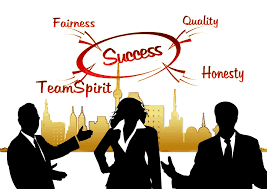
How we sit, stand, and use facial expressions all send nonverbal messages.
True
False
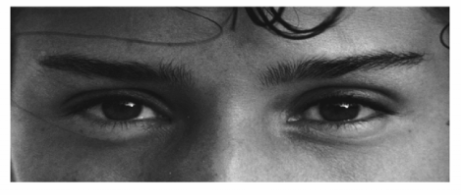
What emotion are the eyes showing?
Playful
Comforting
Irritated
Boring
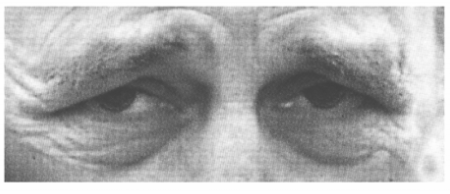
What emotion are the eyes showing?
Terrified
Upset
Arrogant
Annoyed
Listening improves business by
Increases interpersonal trust
Encourages timely feed back
Increases perceptions of integrity
improves costumer service and loyalty
All of the above
For the activity described, indicate the direction of the formal communication.
Human Resources sends an email to all employees to clarify the casual Friday policy.
Upward Communication
Downward Communication
Lateral Communication
Telepathy Communication
For the activity described, indicate the direction of the formal communication.
A sales manager prepares a weekly sales report to submit to the division vice president.
Upward Communication
Downward Communication
Lateral Communication
Telepathy Communication
old ways of communication:


Choose all you need ................... to send a letter.
book
stamp
bag
envelope

when you speak with your friends , this is ................... communication.
Formal
Informal
When you talk to the seller, this is ....................... communication.
Formal
Informal

Emotions ...........
Verbal communication
non- verbal communication

Talking is............ communication
Verbal
non-verbal

when you speak to the seller, this is ................... communication.
Formal
In-formal
Business communication is ___________.
anything written in the form of an email or memorandum.
the process of sharing information between people within and outside a company in order to promote an organization’s goals, objectives, aims, and activities, as well as increase profits.
any verbal communication used in conference calls and meetings.
when the leader of the organization speaks to his/her employees.
What is informal communication?
structured and official flow of information between leaders, employees, and colleagues
communication that sounds aggressive and loud
spontaneous, casual, and an unofficial flow of information
a soft spoken conversation
Which communication style is a structured and official flow of information?
Formal communication
Leadership communication
Diagonal communication
Informal communication

What type of communication does the picture describe?
Informal Communication
Formal Communication
Business Meeting
Lateral Communication
What is non-verbal communication?
A type of communication other than words.
Communication that conveys the feeling, emotions, and attitude of a person to another.
Communication that uses gestures, facial expressions, and eye contact.
All of the choices.
A video chat with your best friend.
FORMAL COMMUNICATION
INFORMAL COMMUNICATION
It involves personal and ordinary conversations with friends, family members, or acquaintances about anything under the sun.
Informal Communication
Organizational Communication
Extended Communication
You are Inviting your old teacher to an event to give a short speech for 10 minutes. What type of email are you going to send?
Formal Email
Informal Email
Both
10. Delivering a formal speech takes the longest time of preparation.
TRUE
FALSE
An insurance agent convincing a customer to avail of life insurance.
FORMAL COMMUNICATION
INFORMAL COMMUNICATION
Monica shares her personal frustrations with Chandler.
Regulation/Control
Social Interaction
Information
Emotional Expression
Phoebe shares her insights on how to live peacefully despite a
complicated life.
Social Interaction
Motivation
Information
Emotional Expression
The geometry teacher lectures about mathematical concepts.
Regulation/Control
Social Interaction
Motivation
Information
Clean the room, then you can go to the mall.
Regulation/Control
Information
Motivation
Emotional Expression
Very nice! Keep up the good work.
Motivation
Information
Regulation/Control
Social Interaction
You really need to take 3 glasses of milk a day in order to keep the baby healthy.
Regulation/Control
Information
Emotional Expression
Motivation

What communication function is presented in this image?
Regulation/Control
Social Interaction
Emotional Expression
Motivation
Information Dissemination

What communication function is presented in this image?
Regulation/Control
Social Interaction
Emotional Expression
Motivation
Information Dissemination

What communication function is presented in this image?
Regulation/Control
Social Interaction
Emotional Expression
Motivation
Information Dissemination

What communication function is presented in this image?
Regulation/Control
Social Interaction
Emotional Expression
Motivation
Information Dissemination

What communication function is presented in this image?
Regulation/Control
Social Interaction
Emotional Expression
Motivation
Information Dissemination
Don't be afraid to fail because we strive for progress, not perfection.
Regulation/Control
Information
Emotional Expression
Motivation
The one who sends the message.
Speaker
Receiver
Message
The process of converting the message into words, actions, or other forms that the speaker understands.
Decoding
Channel
Encoding
Interference that keeps the message from being understood or correctly interpreted by the receiver.
Setting
Channel
Barrier/Noise
The means or way on how the sender sends the message to other person.
Feedback
Channel
Message
It is caused by people’s emotional response / reaction to words.
Feedback
Setting
Message
The receiver’s response to the message he/ she received.
Feedback
Channel
Barrier/Noise
It is the process to converts those words into thought to understand the message.
Encoding
Decoding
Message
The process of interpreting the encoded message of the speaker by the receiver
Message
Decoding
Encoding
Is made up of ideas and feelings that sender-receivers want to share.
Channel
Message
A communication barrier causes enhances the communication process.
True
False
Barriers caused by both sender and recipient can result from:
incomplete understanding of the information
incomplete understanding of the situation
the vocabulary and attitudes of the other party
all of these
none of these
Distortion occurs only when a message is being decoded.
True
False
Barriers that lead to negative communication experiences very rarely lead to negative consequences for the patient
True
False
One way a message may be unclear for the receiver is if there is a difference between verbal and non-verbal cues
True
False
One way to help you build credibility is through effective nonverbal communication.
True
False
There are certain words that are only appropriate at certain times and places.
True
False
To achieve clarity, we must speak the same language as our listeners.
True
False
The use of too many fillers can distract your listeners.
True
False
Verbal communication is better than nonverbal communication.
True
False
When you talk to others, you should not assume too quickly that they understand the
message that you convey.
True
False

