
 Worksheets
Gen Chem Exam 2 Review
Total questions: 41
Worksheet time: 40mins
Which expression can be used to solve a mass-to-mole conversion for the equation HCL -----> H2 + Cl2? Given: Mass of HCl and unknown: Mol of Cl2
mass HCl x molar mass HCl1 mol HCl x 2 mol HCl1 mol Cl2
mass HCl x2 mol HCl1 mol Cl2
In the reaction represented by the equation CH4(g) + O2(g) ----> CO2(g) + H2O(g), a mass of 125 g CH4is reacted with excess oxygen. The expression:
125 g CH4 ×16.05 g CH41 mol CH4×1 mol CH42 mol H2O ×1 mol H2O18.20 g H2O
is used to calculate the:
mass of oxygen redacted.
mass of carbon dioxide produced.
mass of water produced.
none of the above.
What is the mole ratio of H2O to H3PO4 in the following chemical equation?
P4O10+6H2O → 4H3PO4
1 to 6
3 to 2
4 to 6
2 to 3
In the equation 6CO2+6H2O → C6H12O6+6O2 the mole ratio of water to oxygen is:
2 : 1
1 : 1
3 : 2
6 : 8
For the reaction represented by the equation Pb(NO3)2+2KI → PbI2+2KNO3 how many moles of lead iodide (PbI2) are produced of 300 grams potassium iodide (KI) when Pb(NO3)2 is in excess?
114.78 mol PbI2
0.904 grams PbI2
0.904 mol PbI2
114.78 grams PbI2
For the reaction represented by the equation 2KClO3→ 2KCI+302 how many grams of potassium chlorate are required to produce 160. g of oxygen?
408 g KClO3
804 g KClO3
598 g KClO3
There is not enough information.
How much water can be made if 8 moles of NH3 react with 6 moles of NO?
4NH3+6NO --> 5N2 + 6H2O
5 moles
6 moles
12 moles
18 moles

In a lab, a scientist calculated that he should produce 12.3 grams of product in his experiment. When he is finished collecting his product it weighs 10.1 grams. What is his percent yield?
82.1%
22.8%
18.7%
12.2%
In a balanced equation, the ratio between the coefficient of any two substances is called the _______.
mole ratio
stoichiometry
limiting reactant
excess reactant

In the image, which reactant is limiting?
The white molecules, because there are extra.
The black atoms, because they are completely used up.
The white molecules, because they are completely used up.
The black atoms, because there are extra.
A student burns 1.50 mol C3H8 according to the following reaction:
C3H8 + 5O2 → 3CO2 + 4H2O
How many grams of carbon dioxide are produced?
44.0 g
66.1 g
132 g
198 g
What is the actual yield?
the maximum amount of product from a reaction
the amount of product recovered from a lab experiment
amount of product that causes the reaction to stop
the amount of product needed to reverse the reaction
What reaction has the following general formula:
A + CD --> C + AD
Combination
Decomposition
Single Replacement
Double Replacement
Combustion
What reaction has the following general formula:
AB --> A + B
Combination
Decomposition
Single Replacement
Double Replacement
Combustion
What reaction has the following general formula:
A + B --> AB
Combination
Decomposition
Single Replacement
Double Replacement
Combustion
What reaction has the following general formula:
CxHy + O2 −>CO2 + H2O
Combination
Decomposition
Single Replacement
Double Replacement
Combustion
What is the general reaction scheme for a double replacement reaction?
A + B --> AB
AB --> A + B
A + CD --> C + AD
AB + CD --> CB + AD
CxHy+O2 −> CO2+H2O
What type of reaction is the following:
BaCl2+2KI −> 2KCl + BaI2
Combination
Decomposition
Single Replacement
Double Replacement
Combustion
What type of reaction is the following:
C11H24+17O2−> 11CO2 + 12H2O
Combination
Decomposition
Single Replacement
Double Replacement
Combustion
What type of reaction is the following:
Zn + 2HCl −> ZnCl2+H2
Combination
Decomposition
Single Replacement
Double Replacement
Combustion
Which option is correctly balanced?
Fe + H2O --> Fe3O4 + H2
3 Fe + H2O --> Fe3O4 + H2
3 Fe + 4 H2O --> Fe3O4 + 4 H2
3 Fe + 2 H2O --> Fe3O4 + H2
Which Option is Correctly Balanced?
Hg + O2 --> Hg2O2
2 Hg + 2O2 --> Hg2O2
2 Hg + O2 --> Hg2O2
Hg + 2 O2 --> Hg2O2
What are the coefficients that will balance the skeleton equation below?
__Na + __MgF₂ → __NaF + __Mg
2,1,1,2
1,2,1,2,
2, 1, 2, 1
1,2,2,1
What are the coefficients that will balance the skeleton equation below?
__Fe +__O₂ → __Fe₂O₃
3,4,2
4, 3, 2
2,3,4
4,2,3
Which of the following values would represent the pH of a strong base?
1
8
7
13
Complete the definition below:
Acids are....
hydrogen donors.
hydrogen acceptors.
proton donors.
proton acceptors.
Acids which dissociate almost completely in aqueous solutions are known as:
Dilute acids
Strong acids
Weak acids
Concentrated acids
Predict the products for the following reaction: LiOH + H2SO4 -->
(Hint: it is a neutralization reaction)
LiSO4 + H2O
Li2SO4 + H2O
do not dissociate into ions (non-electrolyte)
partially dissociate into ions (weak electrolyte)
completely dissociate into ions (non-electrolyte)
completely dissociate into ions (strong electrolyte)
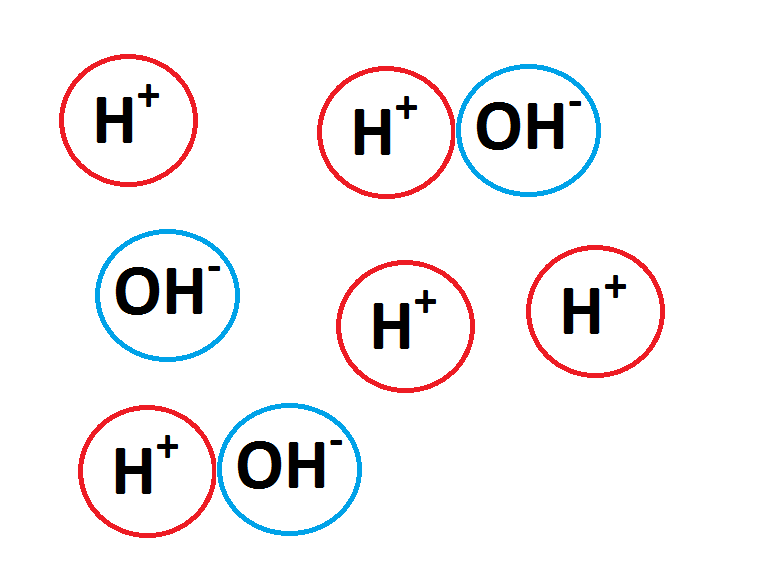
A substance that does not dissociate completely. Ranges from 4-7 on the pH scale.
Hydrochloric (HCl) is a
Weak Acid
Weak Base
Strong Acid
Strong base
Sodium hydroxide (NaOH) is a
Weak Acid
Weak Base
Strong Acid
Strong base
Which of the following is NOT a strong acid
Sulfuric acid
Hydrochloric acid
Perchloric acid
Hydrofluoric acid
Which of the following is a weak base
Sodium hydroxide
Rubidium hydroxide
Magnesium hydroxide
Strontium hydroxide
What is the molarity of a 0.5L sample of a solution that contains 60.0 g of sodium hydroxide (NaOH)
0.8 M
1.5M
3.0M
6.0M
Which equation is used to find molarity?
Moles solute/L solution
Moles solute/kg solution
Moles solute/kg solvent
Grams solute/L solution

