wayground logo

Free Printable Worksheets

Font size

S
M
L
XL
Worksheets

Biomolecules (EXCEPT PROTIENS)

Total questions: 41

Worksheet time: 40mins

Name
Class
Date
1.

Which of the following is a term that refers to the building blocks of all cells?

a)

Macromolecules

b)

Micromolecules

c)

Molecules

d)

DNA

2.

Which form of glucose is stored in the human liver and muscle?

a)

Cellulose

b)

Glycogen

c)

Lipids

d)

Starch

3.

Lipids are insoluble in water because lipid molecules are _________?

a)

hydophilic

b)

hydrophobic

c)

neutral

4.

Which of the following term refers to the combination of two types of monosaccharides?

a)

Monosaccharide

b)

Disaccharide

c)

Polysaccharide

5.

Which of the following is a term that refers to an energy source obtained from plants?

a)

Cellulose

b)

Glycogen

c)

Lipids

d)

Starch

6.
Which biomolecule contains pastas and breads?
a)
Lipid
b)
Protein
c)
Nucleic Acid
d)
Carbohydrate
7.
Which biomolecule is made of nucleotides and contain you DNA?
a)
Carbohydrate
b)
Lipids
c)
Protein
d)
Nucleic Acid
8.
Which biomolecule helps form muscles?
a)
Nucleic Acid
b)
Carbohydrate
c)
Protein
d)
Lipids
9.
Which biomolecule is responsible for insulation and energy storage?
a)
Protein
b)
Nucleic Acid
c)
Lipid
d)
Carbohydrate
10.
What is the function of nucleic acids?
a)
Stores energy
b)
Stores genetic information
c)
Movement
d)
Physical structure
11.
What biomolecule do enzymes belong to? 
a)
Carbohydrate
b)
Lipid
c)
Nucleic Acid
d)
Protein
12.
Carbon, Hydrogen, Oxygen and Nitrogen are elements in what biomolecule?
a)
Carbohydrate
b)
Lipid
c)
Protein
d)
Nucleic acid
13.
What elements are common to all 4 biomolecules?
a)
Carbon, hydrogen, nitrogen
b)
Carbon, Nitrogen, Phosphorus
c)
Carbon, Hydrogen, Oxygen
d)
Carbon, Hydrogen, Phosphorus
14.
What are the four biological molecules?
a)
proteins, carbohydrates, lipids, nucleic acids
b)
A, T, C, G
c)
water, air, earth, and fire
d)
Joe, Nick, and Kevin Jonas
15.

The function of the nucleic acid is --

a)

to store and transmit genetic information inherited from your parents

b)

to maintain our body temperature

c)

to build up muscles bones and other body parts

d)

to regulate sugar in your blood and give your cells energy

16.

Which biomolecule is important for insulation?

a)

Lipid

b)

Proteins

c)

Carbohydrates

d)

Nucleic acid

17.

Your friend is really irritable while sitting in class. He feels lightheaded and dizzy. He is also feeling a bit of confusion and brain fog.


What inferences are most realistic to make about the biomolecules in your friend's body?

a)

He is running low on fast sources of energy

b)

Proteins are being broken down or reshaped

c)

The coding information in the cell is incorrect or incomplete

d)

There is not enough insulation or energy storage

18.

10. Your friend is feeling irritable, lightheaded and dizzy. They are also feeling a bit of confusion and brain fog. Which biomolecule would you recommend your friend consume?

a)

Protein

b)

Carbohydrates

c)

Nucleic Acid

d)

Lipid

19.
Which biomolecule is also known as enzymes?
a)
Carbohydrate
b)
Lipid
c)
Nucleic Acid
d)
Protein
20.

Which are examples of proteins?

a)

glucose, pasta, bread

b)

fats, oils, waxes

c)

meats, enzyme, lactase, eggs

d)

DNA, RNA

21.

How many calories are in the food label?

a)

240

b)

220

c)

0

d)

53

22.

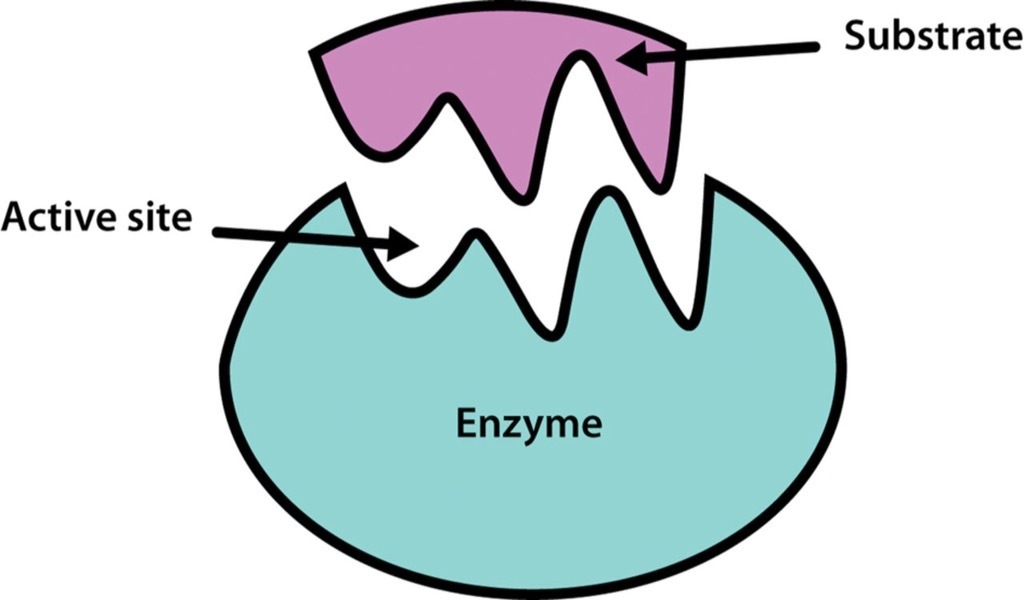
What is represented by letter A

a)

Enzyme

b)

Substrate

c)

Active Site

d)

Enzyme Substrate Complex

23.

What is it called when one strain of bacteria is CHANGED by a gene

a)

Translation

b)

Mutation

c)

Transformation

d)

Hox Gene

24.

What is the nucleic acid that stores and transmits the genetic information from one generation to another?

a)

DNA

b)

RNA

c)

mRNA

d)

tRNA

25.

What is a monomer of nucleic acids made of 3 parts, a 5-carbon sugar, a phosphate group and a nitogenous base

a)

DNA

b)

Nucleotide

c)

Deoxyribose

d)

RNA

26.

Chromatin consistsof DNA that is tightly coiled around protiens called

a)

Hox Genes

b)

Histones

c)

Nucleosomes

d)

Plasmid

27.

What is the job of the RNA molecule?

a)

Make up ribosomes

b)

Carry copies of instructions

c)

Protien Synthesis

d)

Unzip the double helix

28.

What are genes?

a)

Coded DNA instructions that control the production of protiens

b)

set of plans for their specific job

c)

Sequence of genetic messages

d)

A blueprint

29.

What are the "messengers" from DNA to the rest of the cell?

a)

Nucleotides

b)

Ribose

c)

DNA

d)

mRNA

30.

The name of the large molecule contained in chromosomes is called

a)

RNA

b)

DEA

c)

DNA

d)

DVD

31.

In a base pair, C stands for what?

a)

Creator

b)

Cytosine

c)

Cooty

d)

Cetirizine

32.

What is the Shape of DNA

a)

Spring

b)

Double Helix

c)

Single Helix

d)

A twist knot thing

33.

Which of the following is found on RNA but not DNA?

a)

Deoxyribose

b)

Uracil

c)

Phosphate

d)

Adenine

34.
How does RNA differ from DNA?
a)
RNA contains uracil and deoxyribose
b)
RNA contains ribose and thymine
c)
RNA contains uracil and ribose
d)
RNA contains adenine and ribose
35.
The process by which the genetic code of DNA is copied into a strand of RNA is called
a)
translation
b)
transcription
c)
transformation
d)
replication
36.
Which of the following statements about the genetic code is true?
a)
A codon can specify more than one amino acid
b)
Every codon specifies a different amino acid
c)
Some codons specify the same amino acid
d)
Some codons have no function at all
37.
Which of the following units are repeatedly joined together to form a strand of DNA?
a)
amino acids
b)
nucleotides
c)
fatty acids
d)
polysaccharides
38.
Why does DNA replicate?
a)
To create another copy for the new cell
b)
To create a duplicate copy in case the original gets damaged
c)
To create a new copy to replace the damaged original
39.
Nitrogenous bases are joined by which type of bond?
a)
polar bonds
b)
ionic bonds
c)
covalent bonds
d)
hydrogen bonds
40.
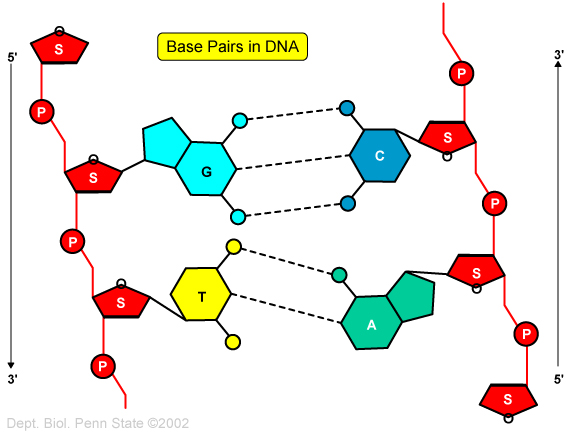
Guanine bonds with ______________.
a)
Adenine
b)
Guanine
c)
Cytosine
d)
Thymine
41.
Which 2 molecules form the sides (backbone) of the DNA ladder?
a)
deoxyribose sugar and adenine
b)
deoxyribose sugar and a hydrogen bond
c)
deoxyribose sugar and the nucleus
d)
deoxyribose sugar and phosphate