Wayground logo

Free Printable Worksheets

Font size

S
M
L
XL
Worksheets

Skeletal System

Total questions: 47

Worksheet time: 25mins

Name
Class
Date
1.
What type of bone is the scapula
a)
long bone
b)
short bone
c)
flat bone
d)
sesamoid bone
2.
What is the name of this bone?
a)
Femur
b)
Humerous
c)
Skull
d)
Shin
3.
What is another name for the kneecap?
a)
Patella
b)
Tibia
c)
Fibia
d)
scapula
4.

Which of the following bones is NOT part of the axial skeleton?

a)

clavicle

b)

frontal

c)

vertebrae

d)

sternum

5.
what type of bone is the femur
a)
Long bone
b)
Short bone
c)
Flat bone
d)
Irregular bone
6.

What bone is highlighted?

a)

Radius

b)

Ulna

c)

Humerus

d)

Carpals

7.

What bone is highlighted? (hint: inside of your leg)

a)

Tibia

b)

Fibula

c)

Femur

d)

Humerus

8.
What is the place where two bones meet?
a)
hinge
b)
bone
c)
spot
d)
joint
9.

What bone is highlighted?

a)

Radius

b)

Ulna

c)

Humerus

d)

Carpals

10.

Which of the following is not a function of bones?

a)

Protection

b)

Blood cell formation

c)

Storage

d)

Absorption

11.
Which mineral makes up our bones?
a)
Calcium
b)
Vitamin D
c)
Blood Cells
d)
Bone Marrow
12.
The human skeleton can be subdivided into two parts, what part is made up of the skull, sternum, vertebral column and rib cage?
a)
appendicular
b)
axial
13.
The ______________ is made up of arms, wrists, hands, fingers, legs, ankles, feet, and toes.
a)
Axial
b)
Appendicular
14.

What is the function of red bone marrow?

a)

Produces oxygen

b)

“Makes blood cells.”

c)

“Stores fat.”

d)

“Supplies minerals.”

15.

Red bone marrow is responsible for

a)

hematopoiesis

b)

bone remodelling

c)

growth ad repair

d)

production of fat

16.

Which of the following is NOT a function of the skeletal system?

a)

“Helps with movement.”

b)

“Supports the body.”

c)

“Assists with blood flow.”

d)

“Protects organs.”

17.

What is the function of yellow bone marrow?

a)

“Cushions the joints.”

b)

“Supplies minerals.”

c)

“Stores fat.”

d)

“Produces energy.”

18.

Which of the following is not naturally produced by the body?

a)

“Vitamin D”

b)

“Yellow marrow”

c)

“Calcium”

d)

“Blood cells”

19.

What is hematopoiesis?

a)

production of blood cells

b)

blood clotting

c)

an oxygen-carrying compound found in red blood cells

d)

a unit that measures the amount of hemoglobin in your blood

20.

What bone is highlighted?

a)

Skull (Mandible)

b)

Clavicle

c)

Mandible

d)

Scapula

21.

Where are red blood cells produced?

a)

bone marrow

b)

heart

c)

liver

d)

white blood cells

22.

What makes up the skeletal system?

a)

bone

b)

ligaments

c)

blood

d)

tissue

23.

What is the end of bone called?

a)

diaphysis

b)

epiphysis

c)

compact bone

d)

osteon

24.

This type of bone tissue is arranged in a lattice like form and has a porous appearance.

a)

compact

b)

spongy

c)

long bone

d)

endosteum

25.

What fills the hollow part of bones?

a)

bone blood

b)

calcium

c)

compact bone

d)

bone marrow

26.

The formation of bone in the body

a)

ossification

b)

osteoprogenitor

c)

articulation

d)

erythopoiesis

27.

Another name for a "growth plate"

a)

tectonic plate

b)

epiphyseal plate

c)

upper plate

d)

periostium plate

28.

Flat Bones protect the

a)

vital organs

b)

muscles

c)

skin

d)

ligaments

29.

short bones are

a)

cubed shaped

b)

protect vital organs

c)

support weight

d)

facilitate movement

30.

Babies are born with more bones than adults because some of their bones haven't _____________ yet

a)

fused

b)

calcified

c)

ossified

d)

developed

31.

These type of bones have a variety of shapes.

a)

Long

b)

Short

c)

Irregular

d)

Flat

32.

These type of bones have roughly equal widths and lengths; cube shaped.

a)

Long

b)

Short

c)

Flat

d)

Irregular

33.
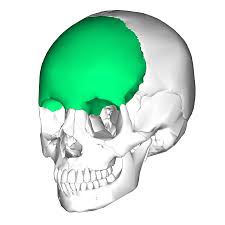
What is this?
a)
Frontal
b)
Mandible
c)
Occipital
d)
Parietal
34.
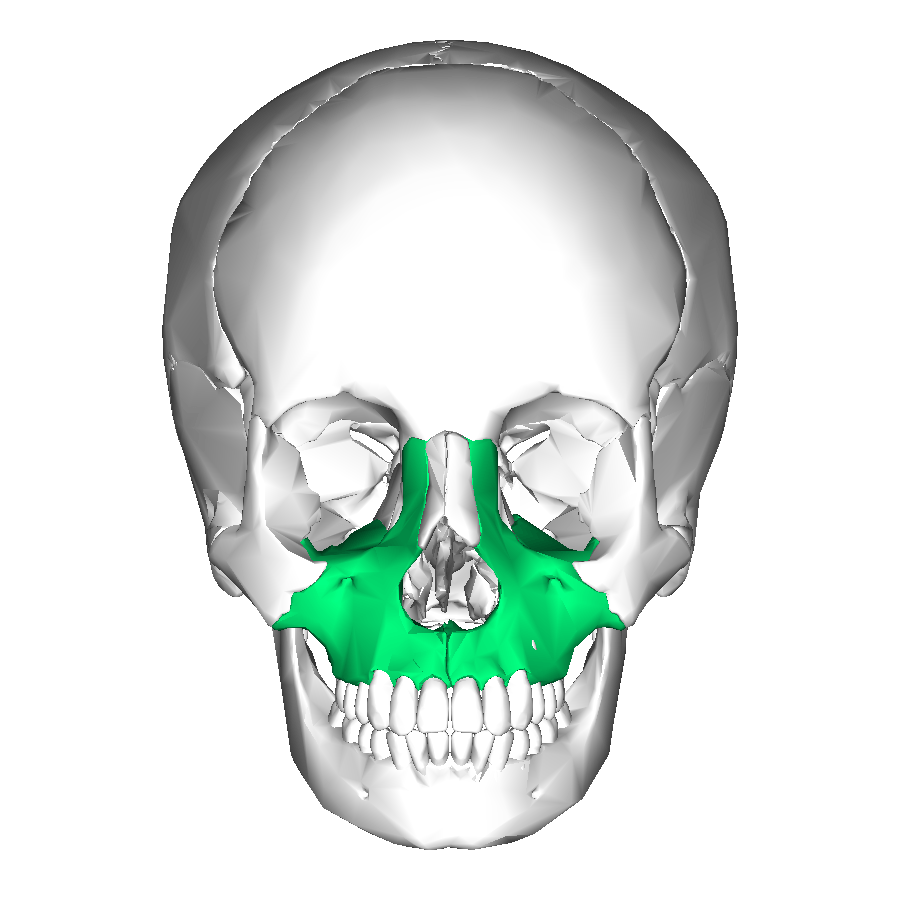
What is this?
a)
Mandible
b)
Maxillae
c)
Zygomatic
d)
Lacrimal
35.
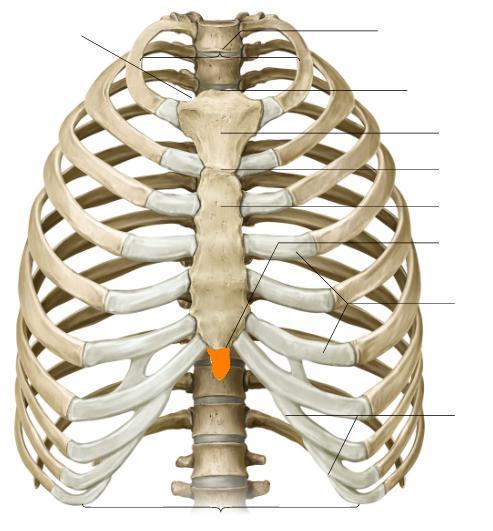
What is this?
a)
Manubrium
b)
Xiphoid Process
c)
Body
d)
Costal Cartilage
36.

The name of the pink bone on the side of the head

a)

zygomatic bone

b)

occipital bone

c)

maxilla

d)

temporal bone

37.

A round or oval opening through a bone

a)

process

b)

foramen

c)

fissure

d)

tuberosity

38.

Any bony projection that sticks out on side of the bone

a)
Process
b)
Facet
c)
Fissure
d)
Meatus
39.
a)
Occipital
b)
Parietal
c)
Temporal
d)
Sphenoid
40.
a)
Mandible
b)
Parietal
c)
Temporal
d)
Sphenoid
41.
The shaft of the bone is also called the
a)
epiphysis
b)
diaphysis
c)
endosteum
d)
periosteum
42.
The hardest, most dense part of the bone tissue is the
a)
periosteum
b)
spongy bone
c)
osteoblast
d)
compact bone
43.
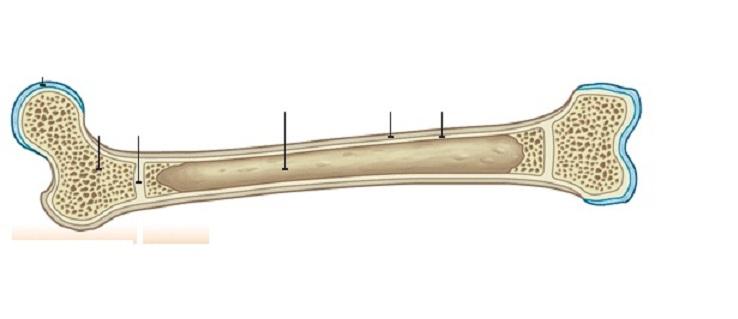
What is structure 8?
a)
trabecular bone
b)
periosteum
c)
yellow marrow
d)
medullary cavity
44.
Where are blood cells made? 
a)
Yellow marrow 
b)
Red marrow
c)
Spongy Bone 
d)
Periosteum
45.
If cartilage remains in this "specific" area, then growth is still occurring; it is located at the end of long bone
a)
Epipyseal plate
b)
 Medulary Cavity 
c)
Diaphysis 
d)
Endosteum 
46.
The ends of the long bone are anatomically referred to as the: 
a)
Epiphyseal plate 
b)
Medulary Cavity 
c)
Periosteum 
d)
Epiphysis 
47.
Spongy bone would primarily be found where in a bone?
a)
diaphysis
b)
epiphysis
c)
periosteum
d)
endosteum