
 Worksheets
States of Matter Exam
Total questions: 41
Worksheet time: 25mins


This state of matter has a constant volume, but fits the space of the container holding it.
Solid
Liquid
Gas
Plasma
This state of matter has a firm, unchanging physical structure.
Solid
Liquid
Gas
Plasma
Carbon dioxide, nitrogen, oxygen, and hydrogen are this state of matter at room temperature.
Solid
Liquid
Gas
Plasma
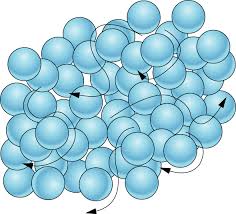
Which is not true about the liquid state of matter?
The liquid state has a definite volume and a definite shape.
The liquid state takes on the shape of its container.
The liquid state has a definite volume and an indefinite shape.
The particles in a liquid can easily move past each other.
The particles in a gas are very ____________________ packed together.
shapely
tightly
loosely
The amount of space that matter takes up.
matter
volume
mass
Anything that takes up space.
matter
volume
mass

Matter is made of tiny particles called atoms and molecules.
True
False
It is everything that is around you
Matter
Mass
Properties
Volume
It is the amount of matter in an object.
volume
mass
weight
density
What is a gas?
Matter that has fixed shape but no fixed volume
Matter that has no fixed shape and no fixed volume
Matter that has no fixed shape but fixed volume
compounds
What percentage of your atoms are replaced each year
99%
98%
100%
0%
A rock has a mass of 210 grams and occupies a volume of 70 cm3. What is its density? *Remember the formula for density is mass/volume=density^3
3g/cm^3
4g/cm^3
5g/10cm^3
An unknown liquid occupies a volume of 5 ml and has a mass of 40 grams.
*remember the formula mass/volume=density
8g/cm^3
8g/cm^2
16g/cm^3
The (a) theory of matter states that "particles that make up matter are in continual random motion
Plasma has no definite shape or volume and is (a)
______________ refers to the way a metal can be hammered or rolled into thin sheets.
Luster
Malleable
Metalloids
Solid
ability of matter to drawn into thin wires
malleability
ductility
porosity
bouyancy
ability of matter to compressed , hammered, and flattened
brittleness
malleability
ductility
porosity
ability to dissolve in liquid
solubility
porosity
buoyancy
tenecity

the ability to pass electricity or heat through a substance
conductivity
ductility
oxidation
malleability

a resistance to being scratched or dented.
Luster
Flammability
conductivity
hardness
What was though to be the reason of the Hindenburg crash?
Positive(+) Charges are called
Protons
Ions
Electrons
Neutrons
Positrons
Negative Charges are called
Protons
Electrons
Neutrons
Negativtrons
Ions
The number of ____ determines the element
Protons
Neutrons
Electrons
Protons & Neutrons

What is the atomic number of the element shown?
8
15.99
7.99
23.99
How protons does this element have?
8
16
4
24

What is the atomic mass of this element?
35
80
115
45

Has a definite/fixed shape and definite/fixed volume. It holds its shape.
solid
liquid
gas
plasma

Has an indefinite shape. It takes the shape of its container.
Has a definite/fixed volume.
solid
liquid
gas
plasma

Has an indefinite shape and volume. It takes the shape of its container.
It has the volume of its container.
solid
liquid
gas
plasma

When heat is added -- water changes into steam or water vapor
evaporation
freezing
deposition
condensation

When heat is removed -- water changes into ice
evaporation
freezing
deposition
condensation

When heat is removed -- water vapor changes into water. Drops form on the outside of the glass.
evaporation
freezing
deposition
condensation

