
 Worksheets
Novare Physical Science Review (Ch 1-5)
Total questions: 52
Worksheet time: 40mins
What has mass and takes up space
Matter
Energy
Elements
Molecules
To push or pull is an example of
energy
force
work
scientific method
The stored ability to create force
energy
force
molecule
element
Which of the following best represents the Law of Conservation of Energy?
Energy CAN be created but NOT destroyed
Energy CAN be destroyed but NOT created
Energy can NOT be created Nor destroyed
Energy CAN be created and CAN destroyed

__________ are negatively charged particles that are in the orbitals around the nucleus.
protons
nucleus
neutrons
electrons
Who proposed a model with electrons moving in specific layers?
Dalton
Rutherford
Bohr
Thomson
Who first came up with the idea of an atom and called them "atomos"?
o Democritus
o Thomson
o Rutherford
o Bohr

What did Rutherford discover in his experiment?
nucleus
electrons
neutrons
protons
What is force in physics?
A power in star wars
A push or pull on an object
A stop on an object
The start of an object

Which boy will have an easier time getting down the hill?
Boy A , because he is experiencing less friction than boy B.
Boy B, because he is experiencing more friction than boy A.
Magnetism: Magnetic field :: Electricity: ________.
pole
charge
field lines
electric field
How many poles does a magnet have?
2
4
6
8
What do you call the region space where a magnet is capable of exerting force?
magnetic field
magnetic force
magnetism
geomagnetism
What happens when you bring like poles together?
the poles repel each other
the poles attract each other
nothing happens
none of the choices
What happens when you bring unlike poles together?
the poles repel each other
the poles attract each other
nothing happens
none of the choices
The area of electric force around an electrically charged particle is called an...
Electric Force
Electric Field
Electricity
Attract and Repel
Particles with opposite charges...
Repel
Attract
are neutral
do nothing.
Particles with like charges...
Repel
Attract
are neutral
like to go to parties.
Particles without a charge...
Attract
Repel
are neutral.
are broke.

Which diagram correctly shows the electric field around a negative charge?
A
B
they are both positive


Which diagram correctly shows the field lines between two like charges?
A
B
Both
Neither
Where can an electric field be found?
below a force field
in a gravitational field
in the space surrounding a charged object
outside of a magnetic field
Force fields are...
Invisible
Visible
Not Real
Dangerous
Substances can interact without touching.
True; they can interact by exchanging particles
False; they must touch to exchange particles
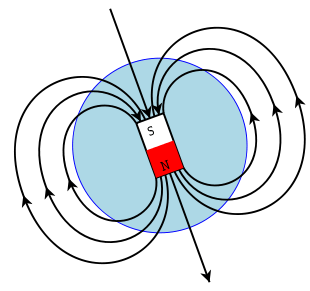
The area of magnetic force around a magnet is known as its _____________.
magnetic field
magnetic declination
magnetic fan lines
magnetic tan lines

Are the magnetic field lines in the picture correct?
Yes, because they point from north to south.
No, because they point from north to south (they're supposed to go the other way).
Yes, because the North pole is on the left in all pictures.
No, because the North pole is on the left in all pictures (it's supposed to be on the right).

Looking at the field lines in this picture, these two magnets are ________
Attracting
Repelling
Attracting and Repelling
Doing nothing

Which of the diagrams shows the least gravitational force?
I
II
III
IV

Which of the diagrams shows the greatest gravitational force?
I
II
III
IV
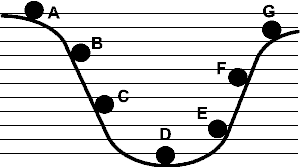
At which point does the ball has the greatest gravitational potential energy (GPE)?
A
G
D
C
G

Which EM waves have the longest wavelength?
radio
x-rays
ultraviolet
gamma rays
Which EM waves have the shortest wavelength?
radio
x-rays
ultraviolet
gamma rays

The lower the frequency the ______ the energy.
higher
lower
neither, stays the same

What do all waves transfer?
Matter
Heat
Electricity
Energy
What part of the electromagnetic spectrum can be seen by humans?
Visible Light
Microwaves
Ultraviolet Waves
Infrared Waves
What are the colors of the visible spectrum in order?
red, yellow, pink, blue, violet, green
red, orange, yellow, green, blue, violet
red, green, yellow, blue, indigo, violet
What is the saying to help you remember the colors of the visible spectrum?
ROG Y BIV
ROB I VYG
ROY G BV

