
NEW
Font size
 Worksheets
Matter and Separation Techniques
Total questions: 44
Worksheet time: 30mins
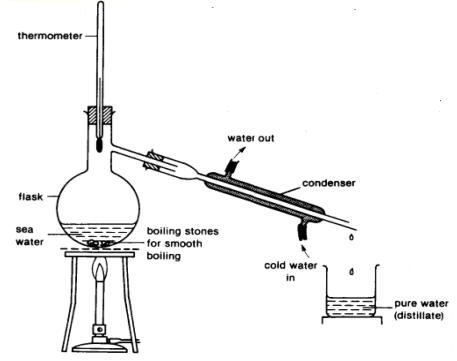
What is the name of this separation technique?
Simple distillation
Fractional filtering
Boiling
Evaporation
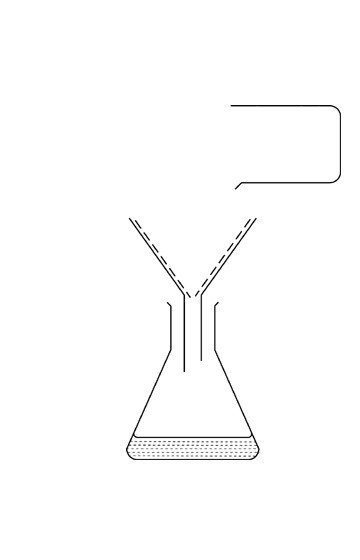
What is the name of this separation technique?
distillation
filtration
evaporation
chromatography
Which separation technique is used to obtain salt from seawater?
fractional distillation
Filtration
Chromatography
Evaporation
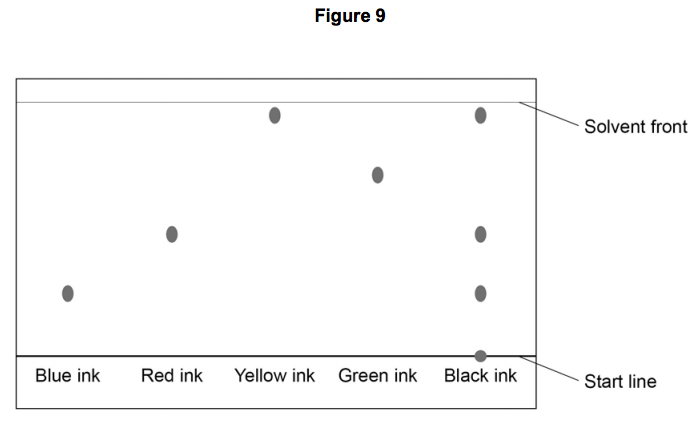
Referring to the chromatogram, black ink contains
Blue, red and yellow ink only
Blue, red, yellow and green ink
Blue and yellow ink
Black ink only
What method would you use to separate a mixture of salt and water so that you can get keep the salt AND the water?
sorting by hand
distillation
chromatography
Dyes in a felt-tip pen may be separated by....
Distillation
Decanting
Chromatography
Centrifuge

No matter what you do, sand will not dissolve in water, because sand is _________.
dissolved
soluble
insoluble
aqueous
Filtration can be used to separate...
an insoluble solid from a solution
a soluble solid from a solution
a dissolved solid from a solution
Combination of multiple substances is a...
pure substance
mixture
colloid
suspension
A mixture of an insoluble substance dispersed in a liquid or gas
sediment
suspension
dilution
colloid
What separation technique did you use to separate the iron filings?
Sieving
Filtration
Magnetic separation
What is the physical property on which distillation depends?
different boiling points
different melting points
different solubilities
different densities

Which separation technique is shown below
filtration
crystallization
sublimation
evaporation
Which of the following techniques can we use to separate homogeneous mixtures?
Crystallisation
Distillation
Evaporation
All of the above

Name the separation technique
Centrifuge
Crystallisation
Distillation
Evaporation
One practical application of distillation is the distillation of:
crude oil
Crystallisation
crude gasoline
crude salt

Name the separation technique
Filtration
Evaporation
Distillation
Separation
True or false: Magnets can be used to separate iron filings from sand
True
False
In a salt water solution ...
Salt is the solute and water is the solvent
Salt is the solvent and water is the solute
What is the basis for separating the components of a mixture through distillation?
freezing point of the substances
room temperature
decaying period
boiling point of the substances

The image shows a mixture of concrete nails and saw dusts. What technique is best to use to separate the nails from the saw dusts?
sieving
chromatography
decantation
magnetic separation

Water is the univeral ____.
solute
solvent
solution
solute + solvent =
solution
equation

Mixture of sugar and hot water.
Homogeneous
Heterogeneous

Homogeneous
Heterogeneous
What is a solvent?

Homogeneous
Heterogeneous

Unit 2: Matter & Energy
A compound is...
A physical combination of two or more substances with uniform distribution
a chemical combination of two or more elements in a fixed ratio
composed of only one type of atom

Which separation technique is shown?
Filtration
Evaporation
Chromatography
Distillation
None of the above

Boba tea is what kind of mixture?
Homogeneous
Heterogeneous

Pure water is an example of what?
Element
Solution
Compound
Mixture
A _________ is made of two or more substances that are together in the same place but their atoms are NOT chemically bonded.
compound
mixture
substance
filtration
Heterogeneous and Homogeneous are two types of what?
compounds
elements
mixtures
atoms

What has the lightest density?
lamp oil
honey
bolt
ping pong ball

Which item has a density less than 1 g/ml?
cherry tomato
milk
ping pong ball
bolt

What has the heaviest density?
ping pong ball
corn syrup
bolt
honey
Which of the following would NOT increase the rate at which a sugar cube dissolves?
Reducing the amount of solvent
Crushing the sugar cube
Stirring the solution
Heating the solvent
You can make a solute dissolve more quickly in a solvent by
adding more solute.
adding ice.
heating the solvent.
removing some solvent.
Stirring the solution...
decrease the rate of solubility
Doesn't change the rate of solubility
increase the rate of solubility
None of the above
Molecules that are water loving are called?
hydrophilic
hydrophobic
aquaphobic
?

